- Details
- Written by: Roger Fulton
Sponsored content
There are many reasons to take a cycling holiday in Gran Canaria – to test your legs on the fast, open coastal roads and challenging mountain climbs; to ride through stunning panoramic scenery with the wind in your hair. All the traditional romance of two wheels…
But another reason is to combine the exercise and scenery and dig deeper into the long history and culture of Gran Canaria.
The island’s cultural highlights blend indigenous heritage with Hispanic history, featuring UNESCO-listed prehistoric sites, and historic architecture. And, if you time it right, experience one of Gran Canaria’s vibrant festivals. Key experiences include exploring the Vegueta district and Casa de Colón (Columbus museum) in Las Palmas de Gran Canaria, and touring the Cueva Pintada Museum in Galtár.
Gran Canaria is not the biggest of the Canary Islands but for cyclists is the most interesting one, there's excellent road biking, a large network of mountain bike trails, and gentle cycle paths for families.
You could base yourself in one place for a week and do daily excursions, but to really get under the island’s skin, a seven-day itinerary that switches where you stay a couple of times is your best bet to give you more time to explore Gran Canaria’s different areas and landscapes.
Below is a seven-day walking and cycling itinerary that blends historic sites, traditional villages, and scenic routes. Distances are moderate and suitable for reasonably fit riders who could happily use a lightweight road bike. The mountains are steep, however, and a hybrid or even an e-bike may be preferred. Use panniers or arrange luggage transfers for the smoothest experience. Many rural hotels and guesthouses are bike-friendly and have secure storage and servicing facilities.
It’s also worth noting that although Gran Canaria’s average yearly temperature of around 24°C makes it a great year-round destination, the best time for a cycling or walking holiday on Gran Canaria is February–May or October–November, when the landscapes are greener and at its best.
- Day 1 – Las Palmas de Gran Canaria
- Day 2 – North Coast Ride: Las Palmas de Gran Canaria - Arucas - Agaete
- Day 3 – Valley Walks & Coffee Fincas (Agaete Valley)
- Day 4 – Into the Mountains: Agaete - Artenara - Tejeda
- Day 5 – Caldera & Sacred Landscapes
- Day 6 – Tejeda - Fataga - Maspalomas
- Day 7 – Coastal Ride: Maspalomas - Puerto de Mogán
Day 1 – Las Palmas de Gran Canaria
Distance: 8-12km, walking
A day for settling in and about 10-12km of gentle urban exploration on foot.
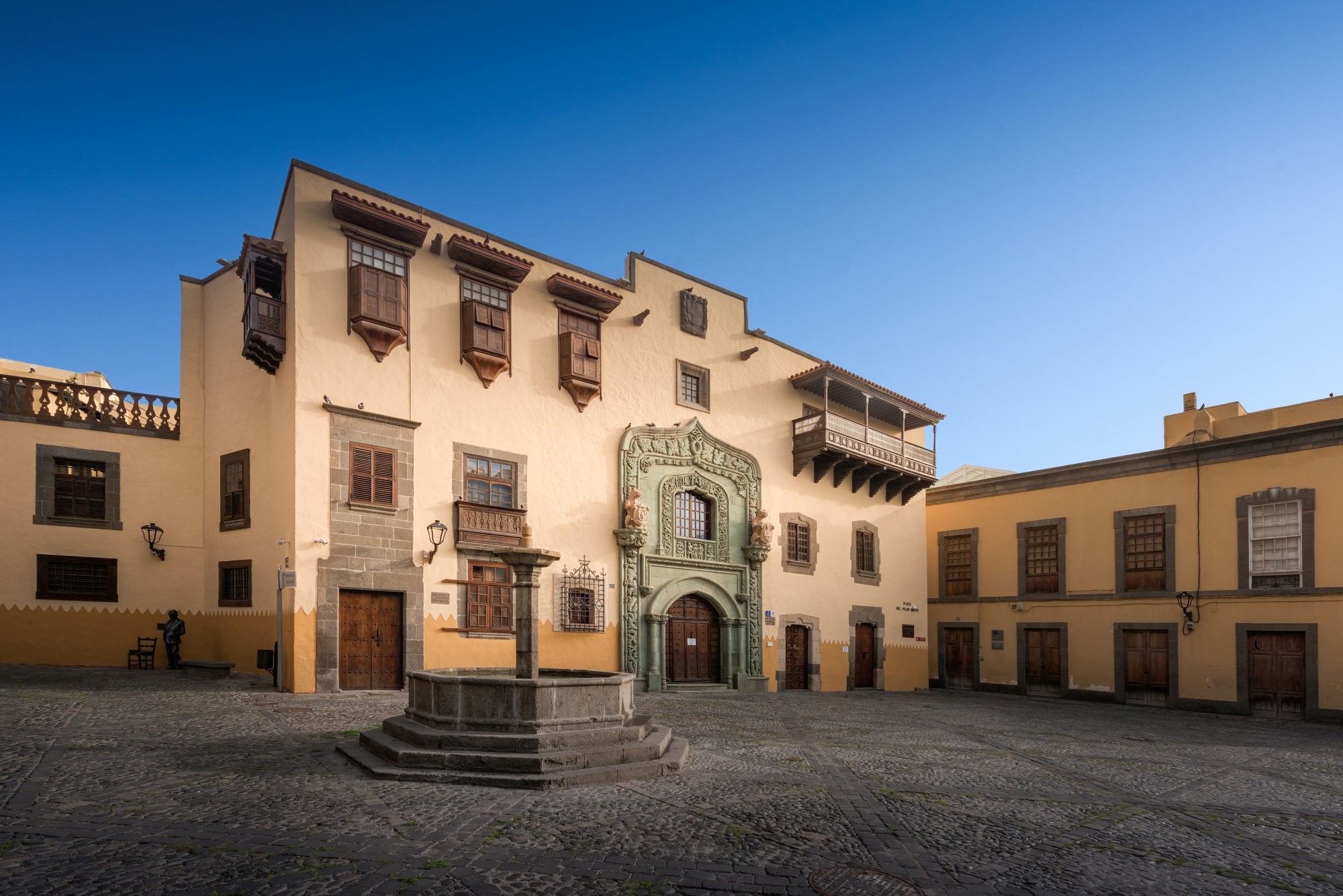
- Wander through the old town of Vegueta on foot — exploring cobbled streets, local cafés, artisan shops and historic sites such as the Case de Colón (a museum dedicated to Columbus's voyages and the island's role in connecting Europe and the Americas) and the famous Balconies street, where the first noble houses were built. Climb the tower of Santa Ana Cathedral for wonderful views over the city.
- For the full old quarter experience, walk round the nearby Triana district, known for its beautiful, preserved 19th and 20th-century buildings, featuring classic Canarian balconies and facades.
- Pop into Mercado del Puerto (the port market) for tapas-style bites and local products (seafood, Canarian cheese boards, olives). The market is set beneath ornate 19th century wrought-iron arches. Assembled and opened in 1891, it was designed by the French company Eiffel – the same people behind the Eiffel Tower.
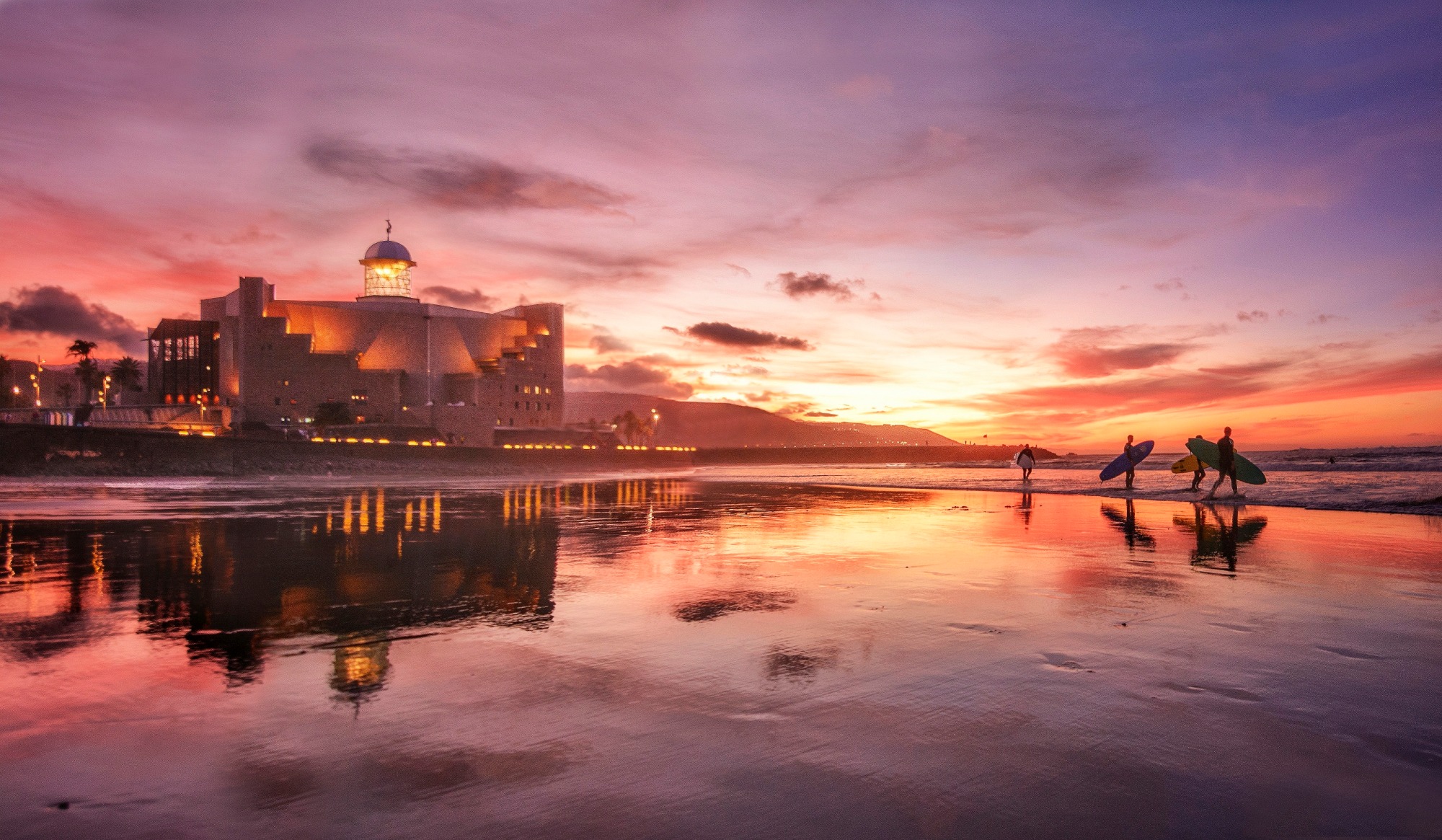
- Stroll along Playa de Las Canteras promenade and dip your toes in the sea. This is one of the top urban beaches in Spain, protected by the volcanic rift.
- End your day with a meal of typical Canarian dishes, before taking a sunset walk along Las Canteras Beach.
Overnight: Las Palmas de Gran Canaria
Day 2 – North Coast Ride: Las Palmas de Gran Canaria - Arucas - Agaete
Distance: 55-65km (A full day of cycling and sightseeing, amid rolling terrain).
- The first leg (avoiding the busier coastal road) takes you to Arucas, about 1.5 hrs ride. Here you can visit the neo-Gothic Iglesia de San Juan Bautista, architectural emblem of the town. Dating from 1487, it is an art-historical monument that, over time, has undergone multiple architectural changes to its structure based on contemporary trends.
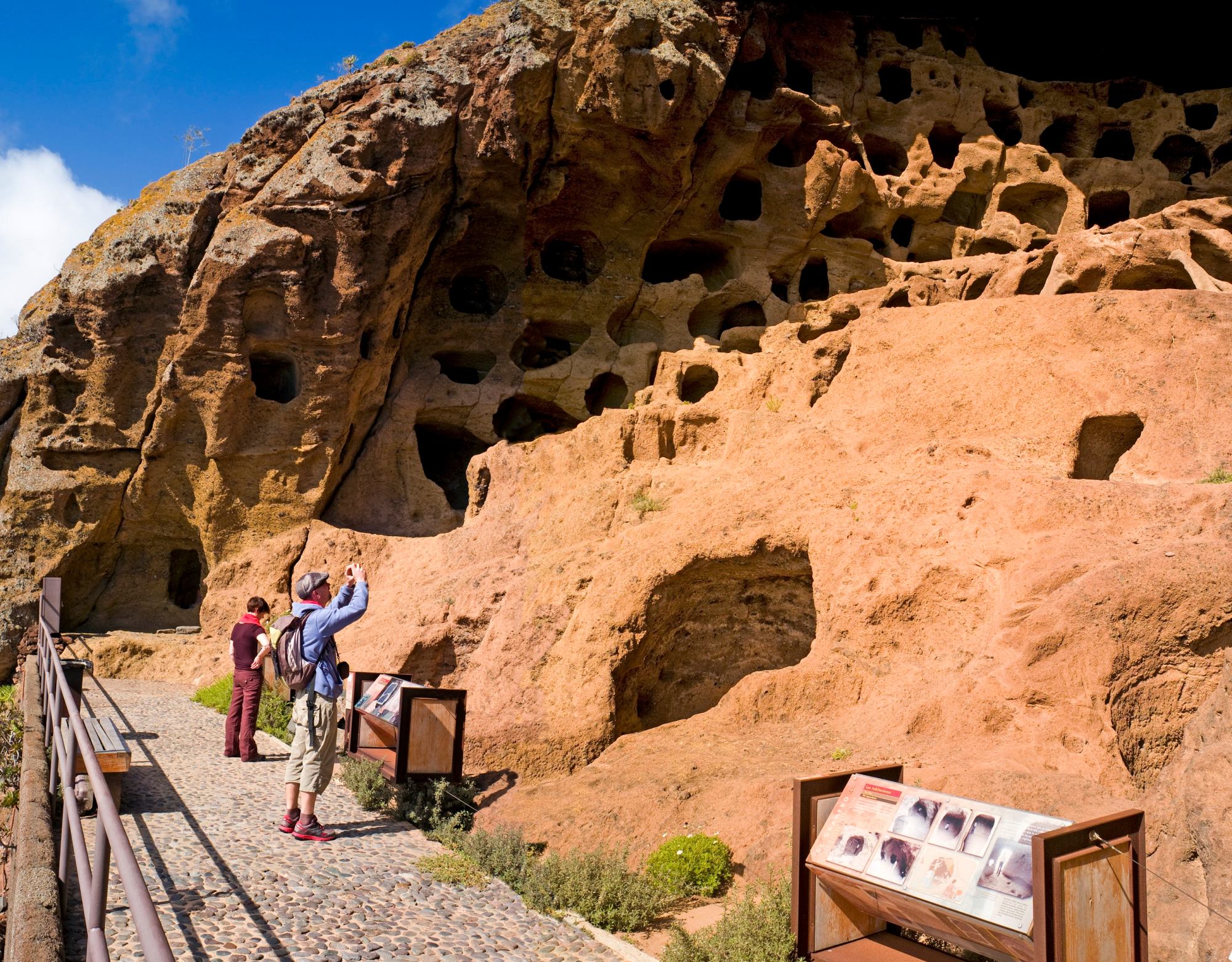
- After an optional visit to the well-known rum distillery at Arehucas, continue along the dramatic north coast towards Agaete, past Valerón Monastery (El Cenobio de Valerón) a spectacular pre-Hispanic communal granary carved into a cliff face.
- Next stop is at Gáldar to visit the Cueva Pintada Museum and Archaeological Park an historic site known for its painted cave. This is one of the most important archaeological sites in Gran Canaria and is situated right in the middle of the town centre, making access very straightforward.
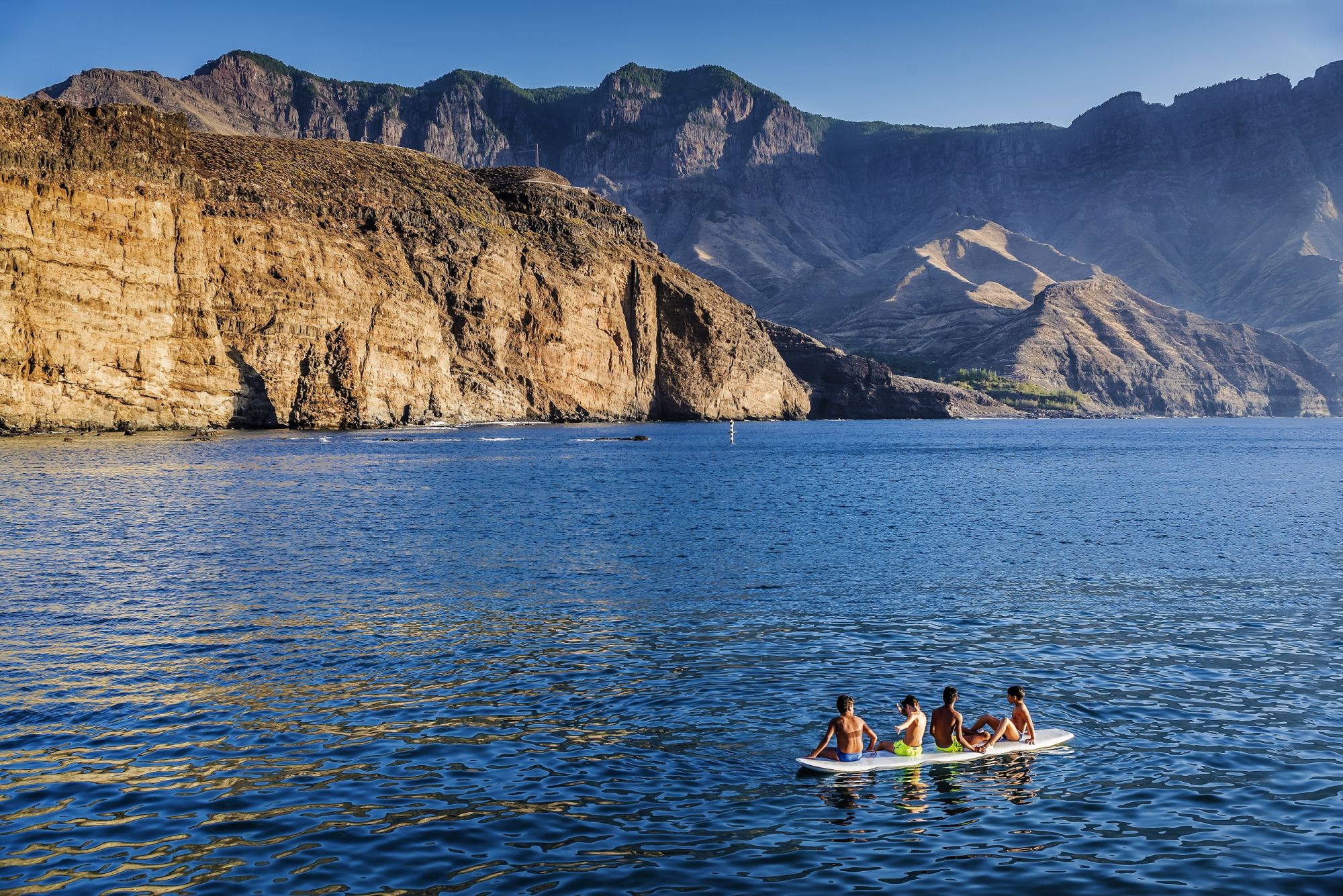
- When you reach Agaete, on the west coast, continue a few km further to the charming, whitewashed fishing village of Puerto de las Nieves where you can wash off the dust of the day with a reviving dip at the natural seawater pools.
Overnight: Agaete
Day 3 – Valley Walks & Coffee Fincas (Agaete Valley)
Distance: 10-15km walking (moderate)
- A day to explore the lush scenery and culinary heritage of the Valle de Agaete, which has preserved pre-tourism agricultural traditions.
- Cycle the 3-4 kms to Bodega Los Berrazales at Finca La Leja. One of Gran Canaria’s gastro gems, the Bodega Los Berrazales is Europe’s only coffee plantation, a 200-year-old farm and winery, where the coffee is grown under the shade of orange, mango, guava and avocado trees. Enjoy an hour-long tour, with wine and coffee tastings, and a short hike in the valley.
- The Agaete Valley also features significant archeological sites, including the Maipés Necropolis, a large burial ground on a volcanic lava field with 645 tombs built by indigenous Canarians more than 1,300 years ago.
- Agaete town is known for its whitewashed houses, 19th-century homes with inner patios, and the beautiful Huerto de las Flores botanical garden. Local cuisine centres on fresh fish, papas arrugadas (wrinkled potatoes) mojo sauce, and goat’s cheese.
- If you’re visiting in summer, the Fiesta de la Rama (4 August) is an iconic island tradition, featuring thousands of people dancing to the sea with tree branches, alongside papagüevos (big-headed figures). The San Pedro festivities on 29 June feature the Bajada de la Rama (Descent of the Branch). On the night of 27 June, pilgrims trek to the Tamadaba pine forest to cut branches, later dancing with them through the streets to the San Pedro parish to honour the saint.
Overnight: Agaete
Day 4 – Into the Mountains: Agaete - Artenara - Tejeda
Distance: 45km
From the coast, enjoy a complete change of scenery as you cycle 45km into the island’s highlands. The route is solidly uphill with some serious climbing. E-bikers will have bragging rights today.
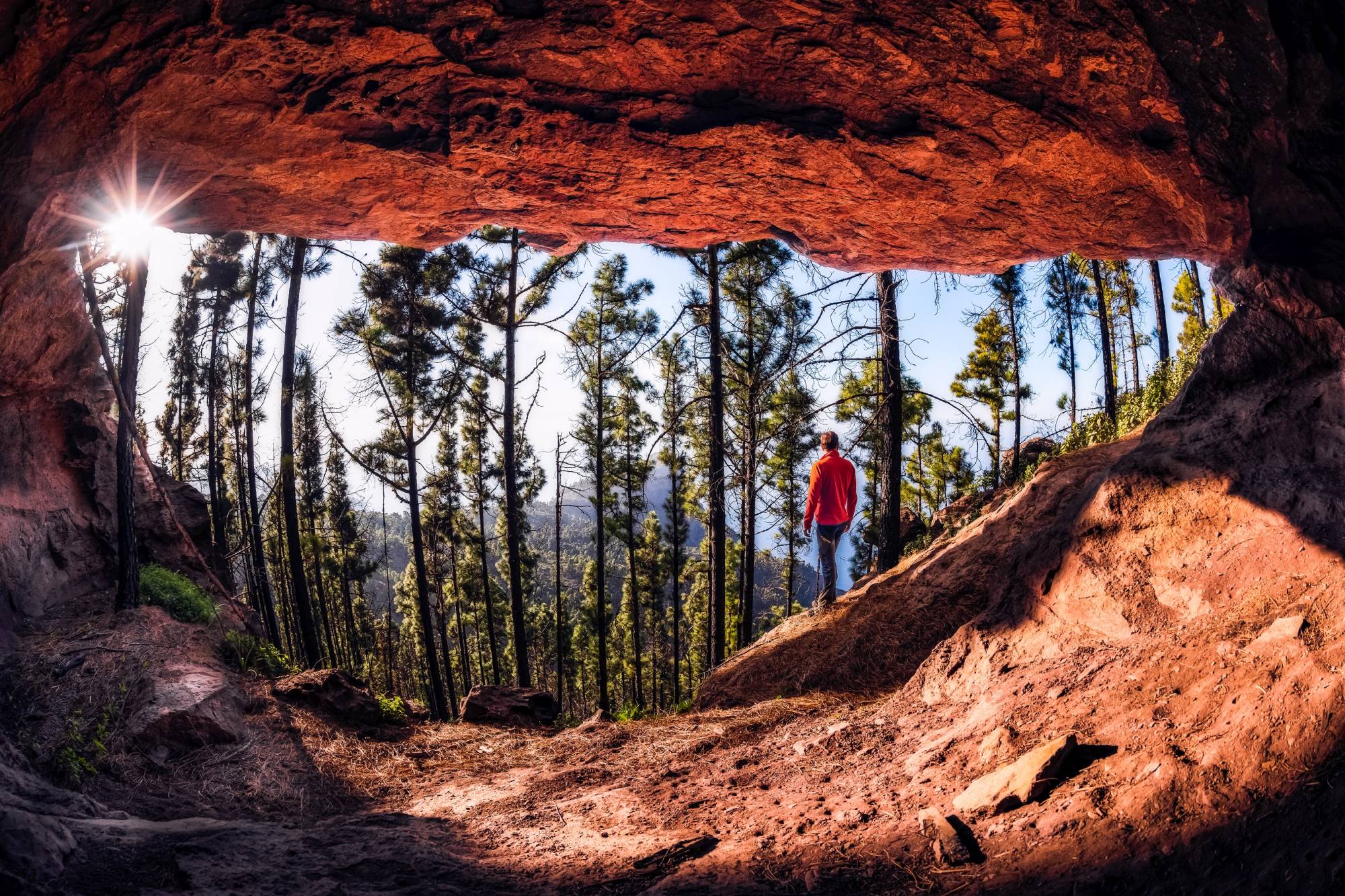
- From Artenara (the island’s highest village), you can take a guided detour to Risco Caido and the Sacred Mountains. This UNESCO World Heritage site features ancient cave dwellings, temples, and astronomical markers used by the island's indigenous population. In one of the caves, sunbeams enter through an upper window, illuminating the western wall and signalling sunrise from the Summer Solstice through the Autumn Solstice.
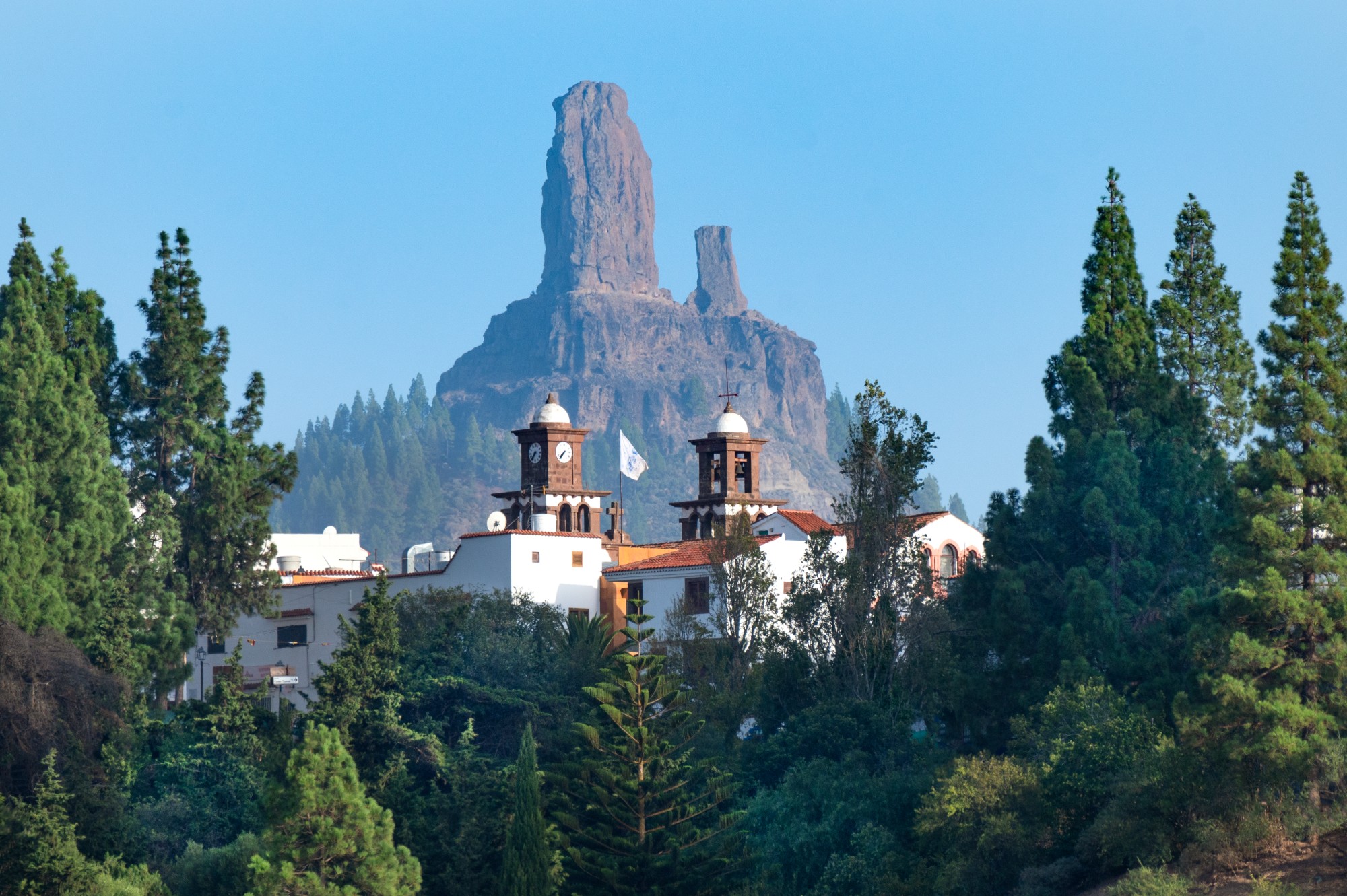
- Continue to Tejeda, renowned as one of Spain’s prettiest villages (and home to Dulceria Nublo, one of the most famous bakeries on Gran Canaria. After today’s effort, time to chill out an stroll around the village. Tejeda also makes a great base for exploring some of the famous mountain landmarks, but that’s for another day – tomorrow!
Overnight: Tejeda (cooler mountain climate).
Day 5 – Caldera & Sacred Landscapes
Distance: 30-50km
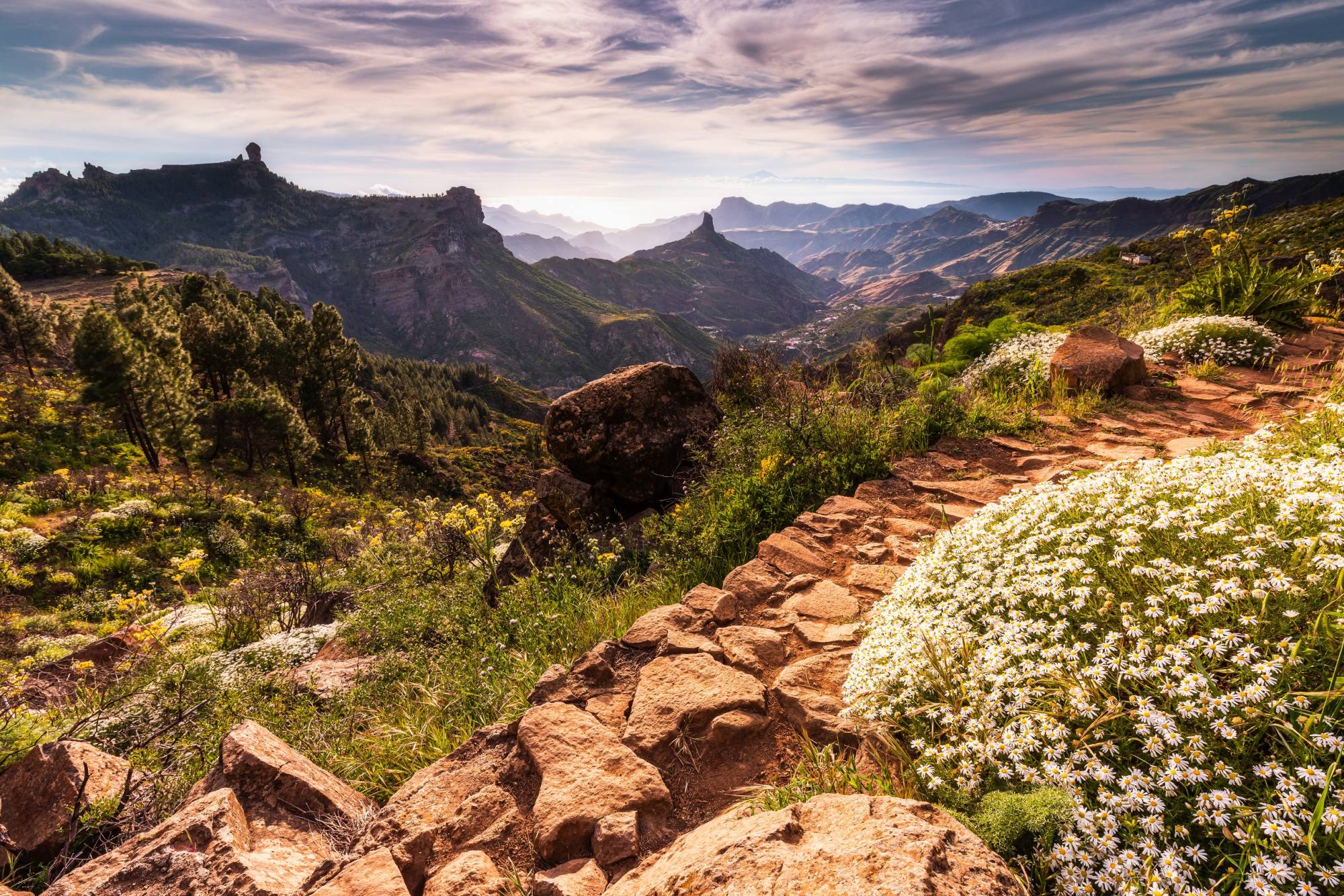
The village of Tejeda lies within a large, dramatic volcanic crater known as the Caldera de Tejeda. Formed millions of years ago by a volcanic collapse, this basin is surrounded by high peaks and steep volcanic scenery. The various hikes and bike rides here include some challenging climbs.
There are three important natural landmarks to see from Tejeda, beginning with Roque Nublo, the island’s iconic symbol. It’s a near 90m high rock monolith, which has long inspired painters, writers and composers. The second is Roque Bentayga, a sacred aboriginal site, and the third is the island’s highest point at Pico de las Nieves.
- If the weather is warm, ride out early before the heat really kicks in to get to Roque Nublo. It’s a 32km loop, for which you should allow 3-4 hrs. And whichever way you work it, you have an uphill to get there and a downhill to get back. If you want to fit in a one-hour diversion to and from the island highpoint at Pico de las Nueves (1949m), that’s best attempted on the return leg when you’re mostly going downhill. Both spots offer spectacular views across the island and on a clear day you can see Tenerife.
- After a short recovery in Tejeda, you can unkink your legs with a short 1.5km hike to the rock pillars of Roque Bentayga where you can learn about the island’s pre-Hispanic Canarii culture. Roque Bentayga and its surrounding area is just like plunging into a living location, where voices from the past, present and future speak together. It’s considered by experts to be one of the most important almogarén or sacred places from Gran Canaria’s aboriginal legacy and a place of vital importance for these ancient pre-Hispanic societies.
Worth noting that this central region is a UNESCO Biosphere Reserve.
Overnight: Tejeda
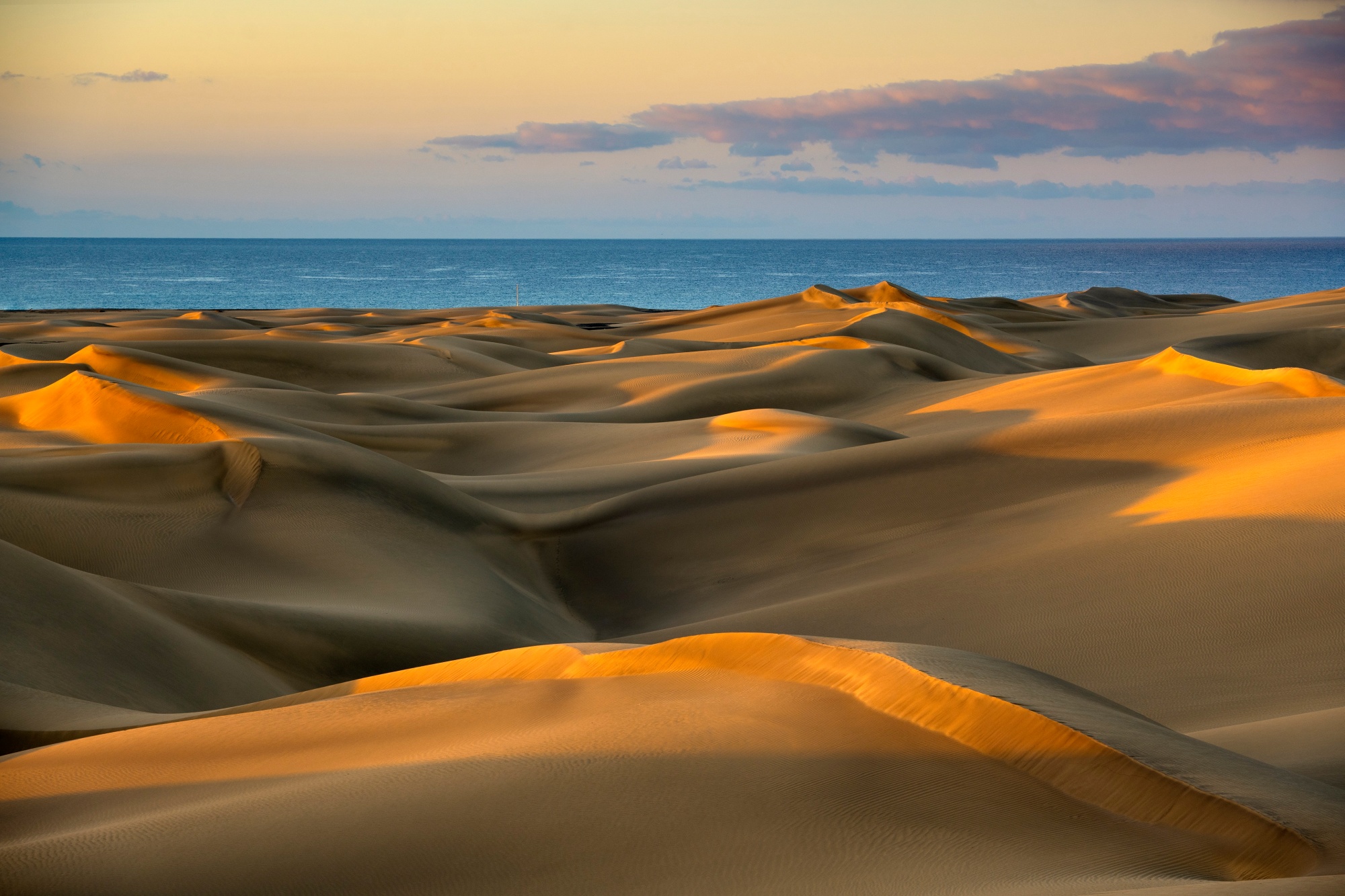
Day 6 – Tejeda - Fataga - Maspalomas
Distance: 60 km (mostly downhill after initial climbs)
A new part of the island beckons, as the mountains of the interior gradually give way to the flatter landscape of the southern coast.
- You will ride through the scenic ‘Valley of a Thousand Palms’ to Fataga, a beautiful little hamlet of bright, white walls, terracotta-tiled roofs, and narrow pebbled streets. It also features tiny family orchard allotments, with flowers in the windows, on the side of pavements and hanging on low walls. Fataga painstakingly conserves Gran Canaria rural architecture, maintaining local tradition and identity through the whiteness of its houses.
Nestling in the heart of the vast Fataga ravine, surrounded by steep cliffs, it’s the perfect rest stop for a coffee and a quiet stroll, alongside water irrigation channels. - Continue south to Maspalomas, the major resort on the island’s south coast. Although this is one of the main tourist areas with its extensive stretches of beach, such as the Playa del Inglés, it’s also renowned for its iconic 400-hectare nature reserve of Sahara-style sand dunes, and historic 19th-century lighthouse, which itself is well worth a visit.
- Explore Maspalomas Dunes at sunset. The dunes have a range of ecosystems, including a fantastic beach, a dynamic sand dune system, palm grove and a brackish lagoon, with abundant bird life to observe. Sunset and sunrise are the best time to explore the dunes, with cooler temperatures and better light, but you are required to stick to the marked paths.
Overnight: Maspalomas.
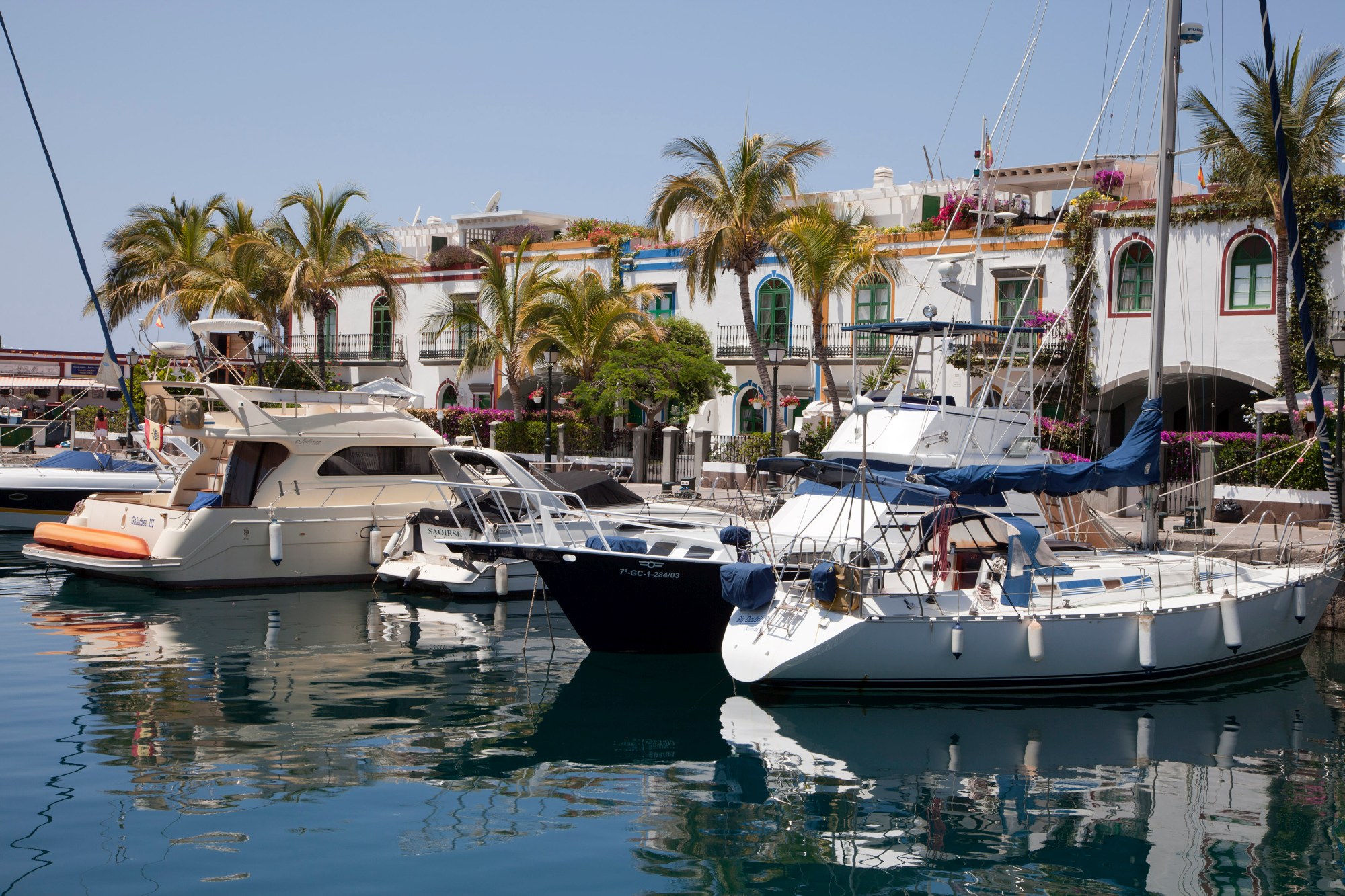
Day 7 – Coastal Ride: Maspalomas - Puerto de Mogán
Distance: 30–45 km (rolling coastal terrain)
The harder rides and hikes are behind you. This last day offers a chance for a leisurely cycle west on the coast roads to Puerto de Mogán, known as the prettiest village on Gran Canaria.
- After an hour or so of cycling it’s worth making a swim stop at Amadores Beach – a serene, crescent-shaped beach with fine sand and turquoise waters known for being very sheltered and sunny. Then it’s back on the bike for the last 10-12km.
- Finish in picturesque Puerto de Mogán, often referred to as ‘Little Venice’. Tucked away on the island's south-west coast, this charming fishing port is one of Gran Canaria's most enchanting coastal villages, captivating visitors with its romantic canals, whitewashed buildings adorned with colourful bougainvillaea, and peaceful marina. Popular activities here include taking a yellow submarine tour, scuba diving, snorkelling, and renting jet skis or kayaks. Or just chill out at one of the many seafood restaurants. You can also hike up to the viewpoint and watch the sun go down.
Overnight: Puerto de Mogán.
Tip: You can rent bikes in Las Palmas de Gran Canaria and drop them off in Playa de Mogán, primarily through specialized rental companies such as Free Motion, which has branches across Gran Canaria, including both locations.
Getting to the airport: Gran Canaria airport is approx. 40km from Playa de Mogán. The journey time is about 40min and a taxi costs about €90. The journey by bus takes an hour but will only set you back around €10.
Total Distances:
- Cycling: 240-270km
- Walking: 35-45km
For more information about taking a trip to Gran Canaria, go to grancanaria.com