- Details
- Written by: Mike Walker
Buy the latest issue of the magazine below with FREE UK P&P or head to your nearest good newsagents including WH Smith, WH Smith Travel and thousands of independent newsagents to pick up your copy now.
Please note: We ship within the UK only, and do not offer international posting.
Active Traveller 2026/27
READ OUR LATEST ISSUE HERE FOR FREE: active-traveller.com/digital
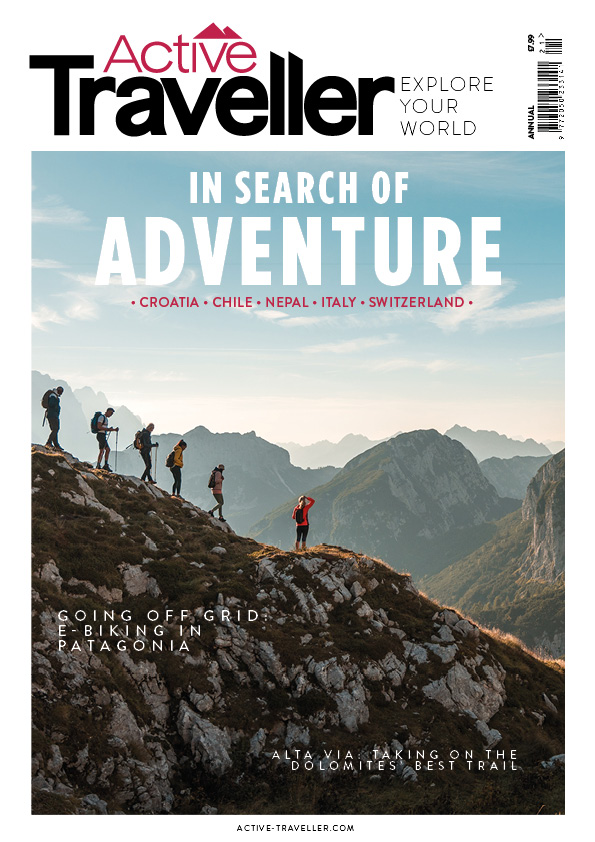
A month ago, I visited Seiser Alm: the high-alpine pasture, flanked by the dramatic peaks of the Dolomites, that’s become one of the most famous tourist attractions in Italy. Unfortunately, like many of the country’s best-known sites (Venice, San Gimignano, the Amalfi Coast), Seiser Alm has now become something of a poster child for the pitfalls of over-tourism.
I’m lucky enough to live close by, so I could visit during the off-season, when the hotels are shut and the place is largely empty. But in summer, despite cars being banned from the plateau, there are always long queues for the cable car, and the walking trails are unpleasantly rammed. The valley I visited the following weekend, by contrast (which also offers beautiful walks and breathtaking views over the Dolomites) attracts just a fraction of the visitors. Sarntal is just an hour’s drive away from Seiser Alm. And yet this “secret” valley is almost unknown, even to locals from the surrounding Süd-Tirol.
It’s a pattern that you see repeated elsewhere in Italy, and indeed, all around the world. Tourists will flock to the same Instagram-friendly spot, ignoring the attractions of similar, less-crowded sites nearby. This issue focuses on several lesser-known alternatives to world-famous destinations.
When Martin Bissig headed off on a mountain bike trip to Patagonia (p.54), he gave the Torres del Paine a swerve. Sophie Nicholson dodged the crowds in the Dolomites by running the Alta Via (p.40), and when Will Renwick flew into Dubrovnik, he didn’t even visit the historic Croatian city—instead, exploring the near-deserted hills and islands around it (p.48). The truth is that beauty is never confined to the most celebrated corners of a country: Dan Milner even found it in the oil-soaked scrapyards of Kathmandu (p.74).
And while seeing the headline attraction leaves you with the same selfie as everyone else, exploring lesser-known alternatives often leads to a more authentic, unfiltered experience. Which is exactly what I found in Sarntal. But we’ll keep that between us, agreed?
See you out there.
- Tristan Kennedy, Editor
Active Traveller 2025/26
Just before we sent this issue to the printers, a press release landed in my inbox with huge news from the world of conservation. Using techniques reminiscent of Jurassic Park, an American company called Colossal Biosciences had apparently achieved the impossible by bringing back the dire wolf—a species that had been extinct for over 12,000 years. The choice to revive an animal that features heavily in Game of Thrones was a deliberate one. Colossal knew the internet would lose its mind, and even went as far as to arrange a photoshoot with George R. R. Martin, author of the GoT books.
Reading the flurry of news reports that followed, I felt conflicted. It was slightly depressing that the world’s top geneticists felt compelled to specifically select a meme-able species for de-extinction. But Colossal depends on investor funding, and the publicity was invaluable. At the same time, their science was genuinely game-changing. The new gene-editing techniques they’d developed were already being used to in the conservation of other species, including critically-endangered red wolves.
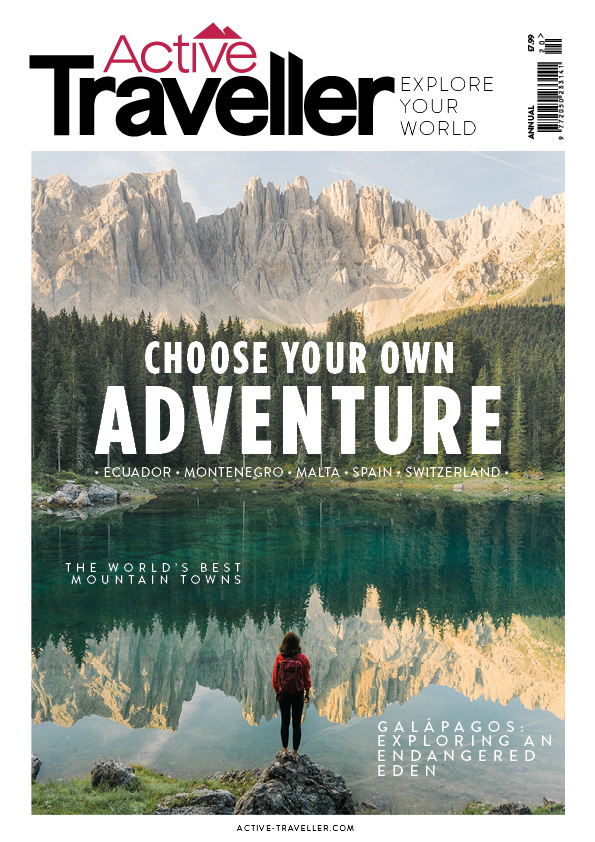
Similar questions about how to strike a balance between commercial imperatives and conservation goals underpin Stuart Kenny’s story about bears in this issue (p.40) and Natalie Berry’s article about the Galápagos (p.60),
She found that many of the creatures that inspired Darwin’s original theories of evolution and extinction are now endangered. As elsewhere, visitors often negatively impact the very wildlife they’ve come to see. And yet the income they bring helps fund conservation, and provides powerful financial incentives to protect animal habitats. In the face of the ongoing climate crisis and what scientists are calling the sixth mass extinction event, it’s easy to despair. Travel can seem like just another contributing factor. But the protection of biodiversity is one area where tourism can actually have a hugely positive impact. Of course, it has to be done right. But if we can bring back a 12,000-year-old wolf from the dead, finding the right balance shouldn’t be beyond us. We might be in dire straits, but the dire wolf gives me hope.
- Tristan Kennedy, Editor
Active Traveller 2024/25
 I’ve been thinking a lot about age recently. This is perhaps not surprising: my wife and I are expecting our first child, and about a month before the new arrival is due, my parents will be celebrating their joint 70th birthday. They say most people start noticing their age when they realise sports stars are suddenly younger than they are. I surpassed most footballers a decade ago, but for years, I clung to the idea that as long as the great fast bowler Jimmy Anderson was still playing cricket for England, I could still call myself young. Shortly before this issue went to press, however, Anderson announced his retirement. I can pretend no longer.
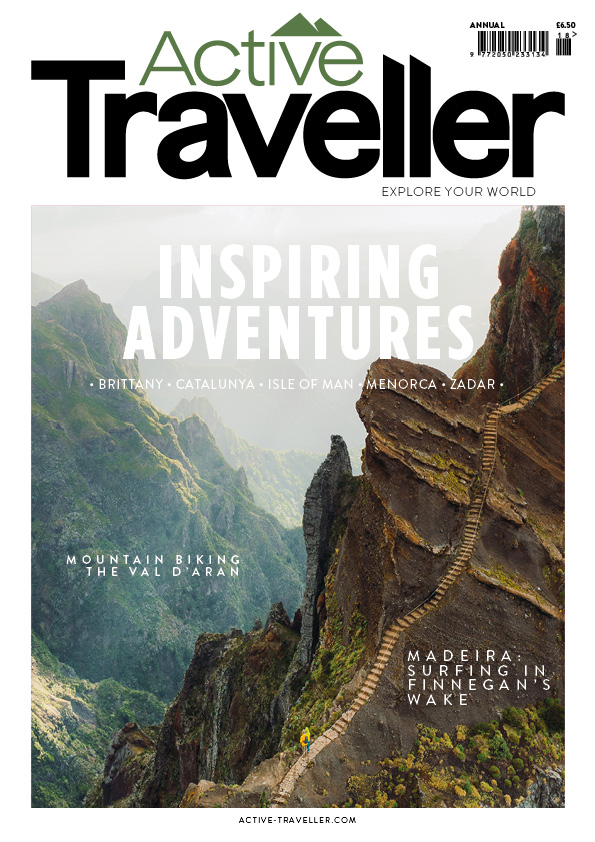
Far from feeling depressed at this long-overdue realisation, however, I’ve been thinking about how lucky we are as lovers of the outdoors. Unlike, say, professional cricket, there is no age limit on most of the activities covered in this magazine. At 41, Jimmy Anderson is an outlier, a complete one-off, who has played more matches than any other fast bowler in the entire 150-year history of test cricket. But no-one would bat an eyelid at someone 20 or even 30 years his senior going for a bracing sea swim, like Will Renwick did when he visited the Isle of Man (p.48), or jumping in a sea-kayak to cruise around the Costa Brava (p.84). Of course not everyone could (or should) attempt to mountain bike as fast as Callum Jelley did in the Catalan Pyrenees for this issue (p.62).
But older, less fit riders could use the same e-Bikes he did, and cover similar distances. In his brilliant feature on surfing in Madeira (p.76) Matt Carr, who is “approaching middle age at breakneck speed” (his words, not mine!) worries that the sport is a young man’s game. Yet he and his friends still manage to take on some of the island’s toughest waves. And as for hiking? Well, in the past few months I’ve found myself simultaneously googling baby-carry backpacks, and planning routes for my parents’ birthday celebration: a week-long walking trip to the Austrian Alps. Which shows there’s no such thing as being too old—or too young—for activity holidays. It’s just a matter of mindset.
See you out there.
- Tristan Kennedy, Editor
Active Traveller 2023/24
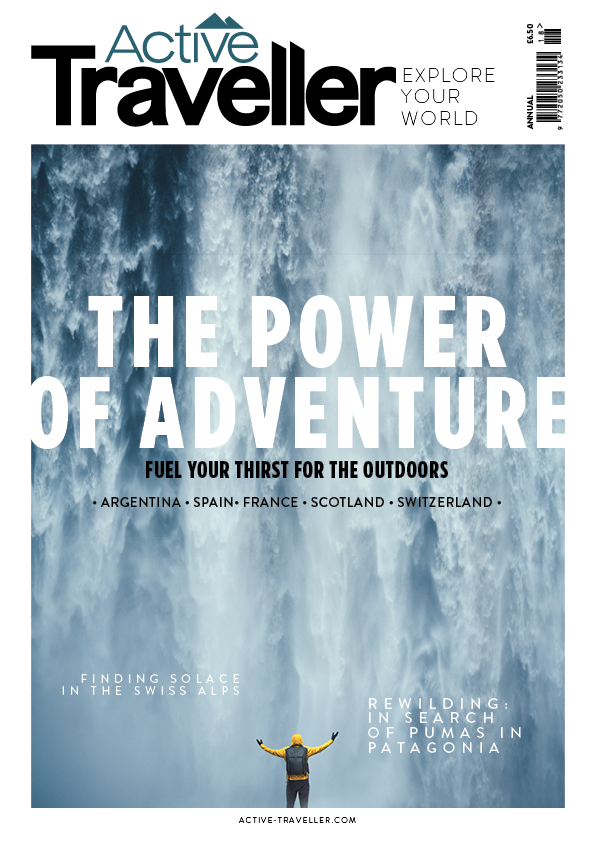
A few weeks ago, I bought myself a Garmin. I’d always thought “wearables” were a bit of a gimmick—an unnecessary upsell for activities like hiking, mountain biking, or running, that already sell themselves. But it hasn’t taken long for me to join the ranks of the true believers, and I now find myself evangelizing about things like Pulse OX Data to anyone bored enough to listen. For all the incredible info the watch spits out, however, there’s one essential benefit of outdoor exercise it can’t quantify. The true power of adventure, I’ve always thought, lies in its ability to boost both your short-term mood, and your long-term mental health.
This theory was backed up by a recent study from Finland, which found that people who visited green spaces three to four times a week were 33 percent less likely to be taking anti-depressants, and 36 percent less likely to be on blood pressure medication. It’s an idea borne out by the stories featured in this issue too: from Anna Blackwell’s trip to East Lothian (p. 38), where she revels in “the sense of calm contentment I only experience when surrounded by open spaces,” to James Forrest’s visit to Verbier (p. 56), where he talks of the “therapeutic power” of Switzerland’s scenery.
Elsewhere in the issue, we look at nature’s ability to heal itself, as well as the human spirit, with the story of Rewilding Argentina (p. 28). By reintroducing apex predators, this remarkable project is helping a damaged ecosystem recover, while simultaneously transforming the local economy. Its success can be seen the in numbers of new jobs created, but also in less measurable ways—like the renewed pride that locals say they now feel for their land.
Which makes sense, because if becoming a Garmin bore has taught me anything, it’s that cold, hard data is great—but it can’t possibly paint a complete picture of why getting outside matters so much, to so many of us.
See you out there.
- Tristan Kennedy, Editor
---------------------------------------------
Active Traveller 2022/23
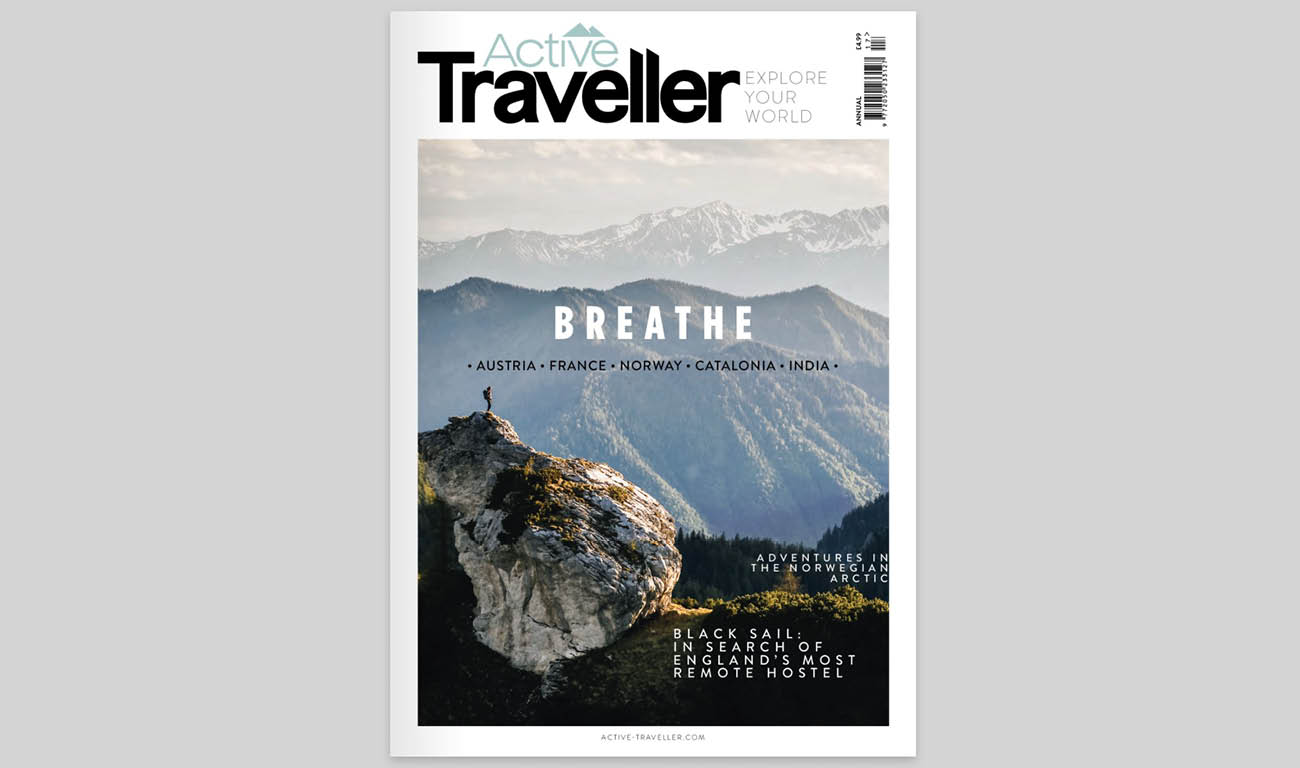
Xfrjjhhwertyuioghjkk Apologies, that’s my new kitten’s contribution to this year’s magazine. I’m writing this with one hand as I battle—largely in vain—to keep him from clambering across my keyboard with the other. Like many small cats, he’s adventurous to a fault. But when he’s not offering his input as a typist, watching him learn—which bits of furniture will hold his weight, what kind of insects are OK to hunt, and which of the neighbours’ cats don’t want to play—has been instructive.
I was reminded of his approach (which definitely involves more ‘error’ than ‘trial’), when reading back through the interview with adventurer Ed Stafford in this year’s issue. Stafford, who’s used up more of his nine lives than most, believes that humans learn many of their most useful, transferable life skills when they allow themselves to take a few risks. Accessibility activist Craig Grimes, also interviewed in this issue would doubtless agree. Grimes, a wheelchair user, campaigns against what he sees as the unnecessary sanitisation of outdoor spaces. Instead, he advocates providing disabled people with the information and the tools they need to make their own choices—even if that means they’ll sometimes make mistakes.
Of course, everyone’s conception of what constitutes an adventure is different. But whether it’s relaxing in luxury wilderness lodge in the north of Norway playing golf on the world’s scariest ski slope (p.36), or embarking a gruelling, multi-day bike marathon over 5,000m passes in the Indian Himalayas, there’s one thing we can all agree on: the rewards of travelling to new places, embracing unfamiliar experiences, and pushing ourselves out of our comfort zone always outweigh the risks. Unless of course, you’re a small cat, and you’ve just got yourself stuck up a tree for the first time.
See you out there.
- Tristan Kennedy, Editor
-------------------------------------------------------
Active Traveller 2021/22
Just £4.99 including FREE postage to UK addresses
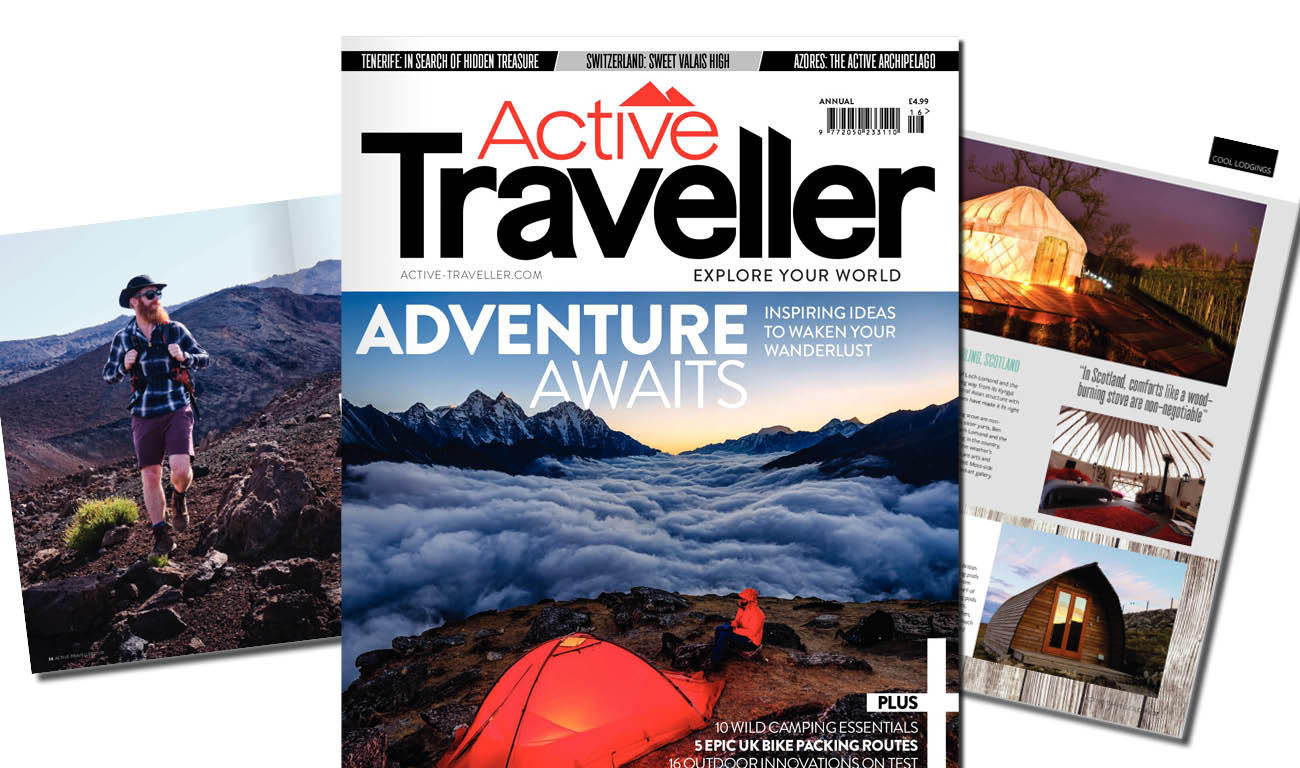
It’s been quite a year. While it’s safe to say that the pandemic which changed everything isn’t over, at the time of writing, we do seem to be stumbling back to some semblance of normality. The question everyone’s asking, of course, is what does this ‘new’ normal look like?
After a year when international travel almost shut down completely, there’s a lot of talk about pent up demand. But I’m hopeful that, rather than roaring back with the same bad habits as before, when we do start to travel more widely, we all put a little more thought into it.
One of the best things about adventure holidays is the way they immerse you in the natural world. But it’s a natural world – as the latest International Panel on Climate Change report published days before we went to press makes clear – that’s increasingly under threat.
Which is why the Ramsay family decided to ‘rewild’ the Bamff estate in Scotland, reintroducing beavers, rather than farming it in the conventional manner. Bamff now welcomes visitors year round – and as Stuart Kenny found out (p.31), the beavers have proved quite the tourist attraction.
Elsewhere in this issue, we take an alternative trip through Cornwall (p.72) – an adventure that involves SUPing and wild camping, but also pulling plastic bottles, bags and gloves out of the water – and we explore the wild mountains of Asturias (p.64). It’s the oldest province in Spain, and yet somehow, still remains relatively untouched.
Increasingly, wild spaces like this, the mountains of Valais (p.46) and the still-empty interior of Tenerife (p.34) feel vanishingly rare. Which makes it doubly important that those of us who enjoy exploring them step up to protect them. Thinking about how, when and where we choose to travel – and what activities we choose to do when we get there – can have a hugely positive impact.
After going 18 months without, here’s to making this year’s adventures really count.
See you out there.
Tristan Kennedy, Editor
Active Traveller 2020/21, just £4.99 including FREE postage to UK addresses!
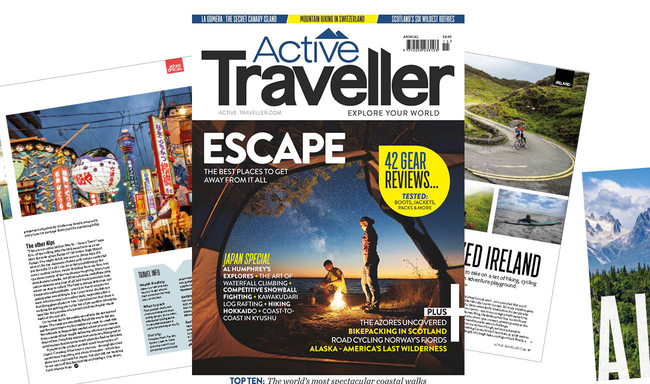
Hi there. How are you doing in these strange times?
Like so much of the new language that entered the lexicon this year (“social distancing,” or “shielding” for example) that phrase has become so familiar that I’ve almost stopped noticing it. But it’s worth remembering that these are strange times, and although we might not be able to travel as much as we’d like at the moment, normal service will, at some point, be resumed.
With that in mind, we’ve put together an issue that’s packed full of inspiring adventure travel to help you plan your next trip. We’ve dedicated a whole section of the magazine to Japan, a country that’s always near the top of our list of dream destinations. Three of our favourite explorers, Alistair Humphreys, Ash Bhardwaj and Sian Lewis, dig beneath the surface to bring you three very different stories, showcasing the diversity of this endlessly fascinating island nation.
Islands feature prominently elsewhere in this issue too: Dave Cornthwaite explores the Azores, and Dan Wildey heads to the Canary Island of La Gomera - both destinations that adapted impressively quickly to the challenges of welcoming visitors.
We’ve also brought you a few ideas for adventures that are closer to home - because if there’s one positive to take from this pandemic, it’s the fact the great British outdoors has never been more popular.
From bikepacking around Scotland, to Highland bothy recommendations; from Welsh walks to adventures in neighbouring Ireland, this issue contains everything you need to have incredible experiences on the archipelago we call home too. While we can’t necessarily predict what the next few months will bring, we do know that, whatever happens, it won’t dampen our enthusiasm for getting outside.
See you out there. Tristan Kennedy, Editor
Delivery
*We currently only offer postage of magazines to UK addresses, this includes the Highlands and Islands, Scilly Isles, and the Isle of Man. Please note, we class the Channel Islands as overseas.
**Free postage is applicable to addresses within the UK, including the Highlands and Islands, Scilly Isles, and the Isle of Man. Please note, we class the Channel Islands as overseas.
***Terms & conditions apply