- Details
- Written by: Tristan Kennedy
Imagine travelling to one of Italy’s most popular tourist sites, and having it almost completely to yourself. Unless you’re a billionaire on a par with Jeff Bezos, and able to hire Venice in its entirety for your wedding, it sounds like an impossible scenario, right? And yet this is more or less what happened to my wife and I recently when we took our young son on a trip to the secluded valley of Sarntal, in the northern Italian province of Südtirol.
Sarntal is within spitting distance of the Dolomites, the endlessly-photogenic mountain range that attracts millions of tourists each year and, like Venice (at least when the Bezos’ aren’t in town), now struggles with the scourge of over-tourism.
"The wooden barn we set off from looks like it hasn’t changed much over the centuries"
Follow any of the walking trails up from the valley floor, and you’ll soon find yourself staring at spectacular views over several of the major Dolomite mountain groups. But Sarntal itself remains sparsely populated, and despite the fact that it’s just a 20 minute drive from Bolzano, the gateway city that many tourists fly into, it attracts a fraction of the visitors compared to neighbouring valleys.
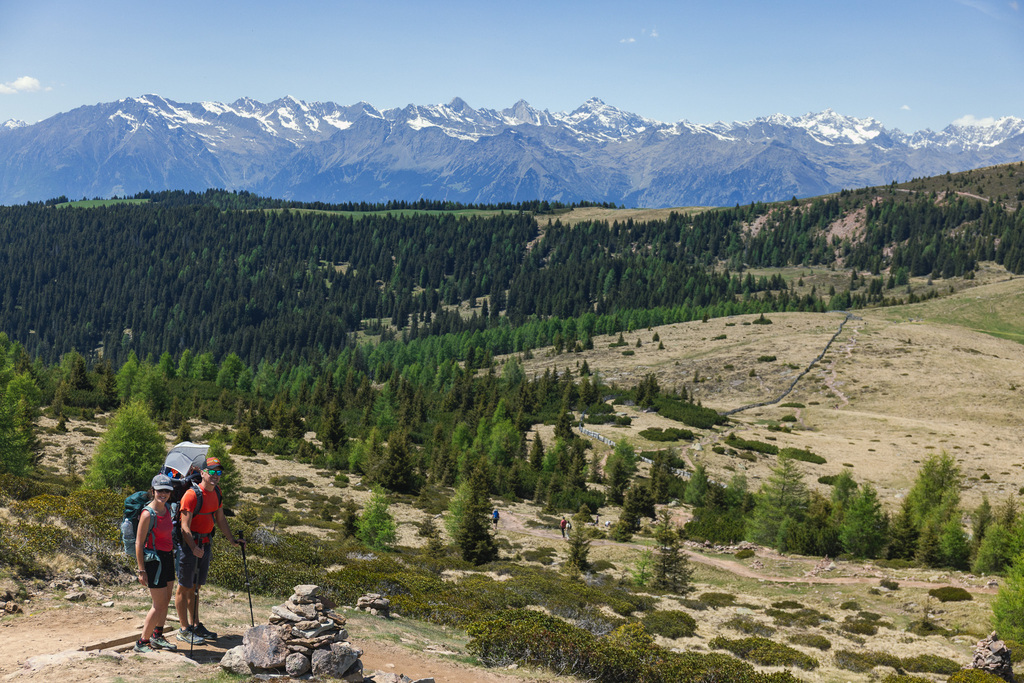
“It sometimes feels like it’s a secret,” chuckles Norman Libardoni, the Director of the local Tourist Office, when we meet on a sunny Saturday morning at the end of May. “You even get people in Bolzano who don’t really know about Sarntal, or how good the hiking is here.” As if to prove his point, he suggests we start with a stroll along a section of one of the valley’s most iconic trails.
“This path follows the old mule track which used to connect Sarntal to Bolzano,” explains Norman, “people have walked this way for hundreds of years.” The wooden barn we set off from, where my son is excited to discover a pair of horses grazing contentedly, looks like it hasn’t changed much over the centuries. But just around our first corner we’re greeted by a dramatic, recent addition to this ancient route.
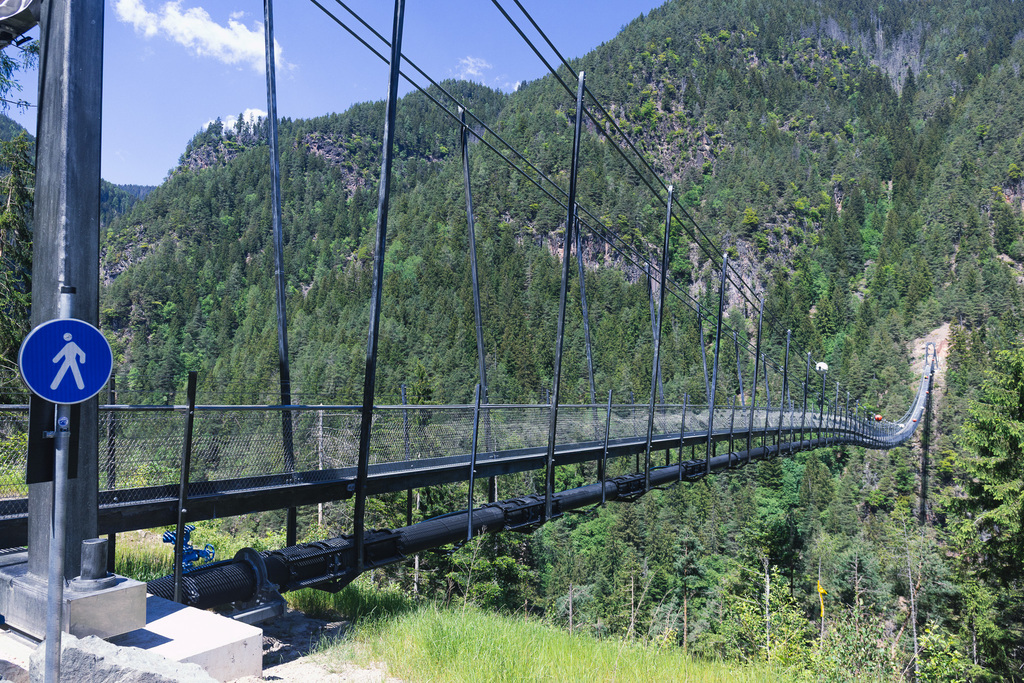
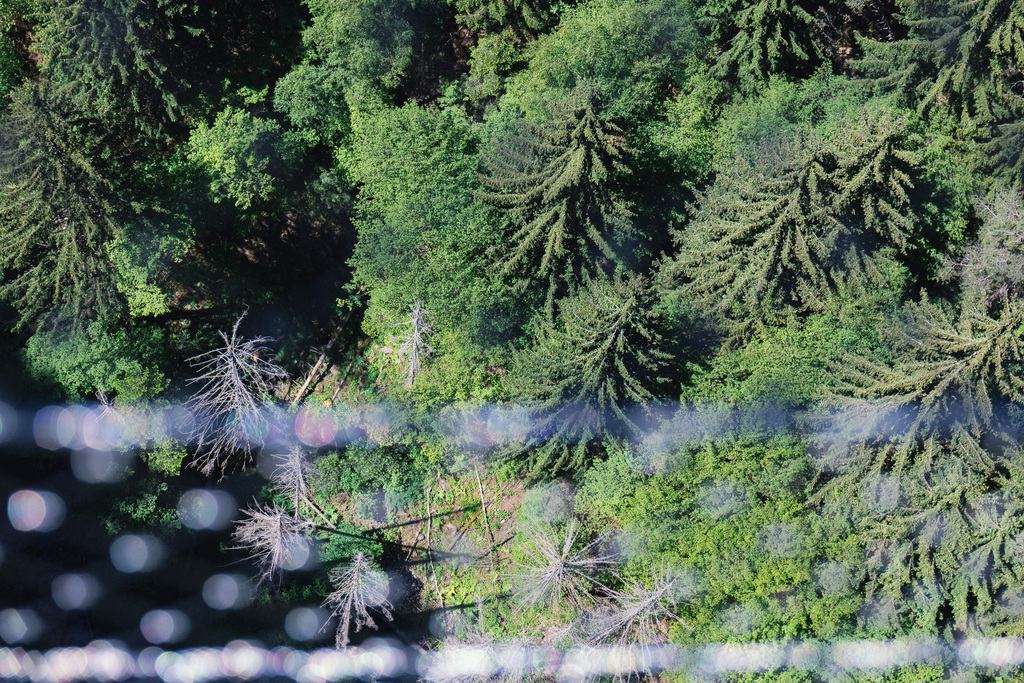
Built in 2025, the Marterloch suspension is the longest in Südtirol. As much a work of art as it is a pedestrian crossing, it’s like London’s Millenium Bridge on steroids—an elegantly curved arrangement of cables and supports, stretching 272m across a 130m deep chasm.
As well as making this walk more accessible to wheelchair users, or pram pushers like us, it’s now become a tourist attraction in its own right.
Far from the madding crowd
Despite this, we see fewer than a dozen other walkers and cyclists in the entirety of our 4km hike. Of course we’re visiting Sarntal before the start of the summer season proper. But it’s still remarkable how peaceful it feels.
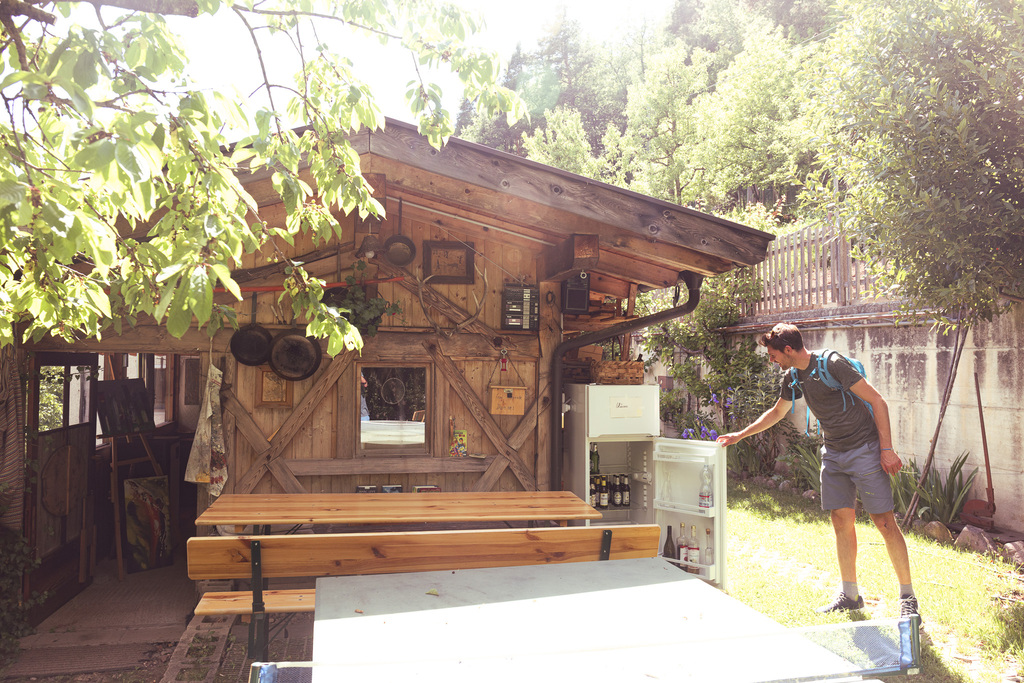
At one stage, we pass a Hansel and Gretel-style wooden hut, with bench seats arranged beneath a shady tree in the garden. The gate is open, and inside, a handwritten sign directs hikers to help themselves from an honesty bar fridge that’s fully stocked with cold water and beer. It’s hard to imagine such an arrangement surviving long in any of Südtirol’s mainstream tourist traps.
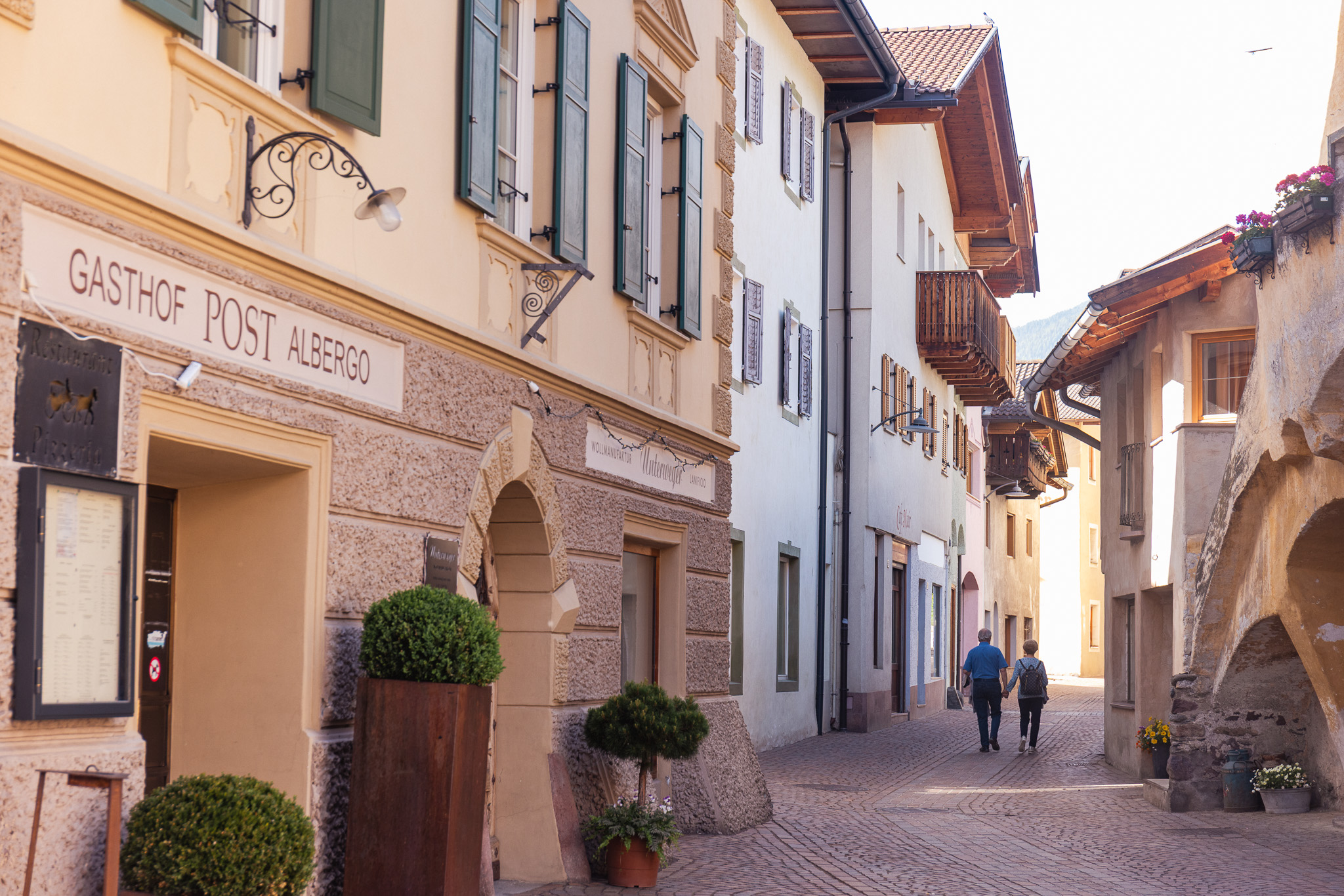
At the same time, the village of Afing, where we stop for lunch, epitomises many of the things that attract visitors to this northern Italian province. A collection of wood-and-whitewash chalets clustered around a medieval church, it still runs on agriculture, rather than tourism. “That’s one reason Sarntal maybe isn’t so known about,” says Norman. “There are agriturismi [farm-stays] here, but most people still work with cows or traditional crafts.”
“There are agriturismi here, but most people still work with cows or traditional crafts"
If the valley feels unaffected by visitors, however, the infrastructure is all there. As we sip on a cold, local lager in the shade outside the Gasthof Moar, Norman pulls out a map, pointing out the horsehoe-shaped ridge of mountains which enclose Sarntal to the north, and the challenging, high-altitude trail that runs along them. “It’s a six or seven day route, and you stay in refuges,” he explains: an alternative to the world-famous Alta Via in the Dolomites, but one where you don’t have to book the huts a year in advance.
Given the issues with overtourism elsewhere in the region, does he ever worry about more visitors coming here, I ask?
“Honestly, no. The population of Sarntal is maybe 7,000 people, living in about 300 square kilometres. At the moment we have around 150,000 visitors each year, and we could increase that to 200,000 easily, without anyone really feeling the difference.”
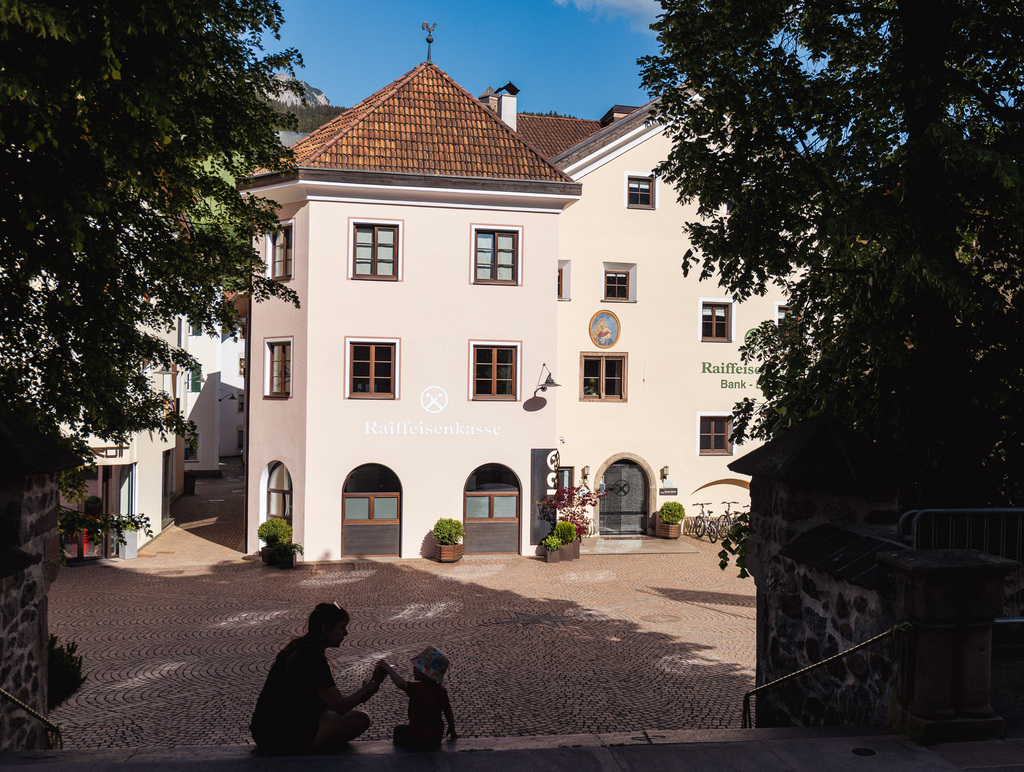
The owner of Bad Schörgau, the hotel where we’re staying that evening, wholeheartedly agrees. Warm, garroulous, and incredibly welcoming, Gregor Wenter is trilingual, fluently advocating for Sarntal’s charms in English, German or Italian. “It’s crazy, you can go walking in the forest here at ferragosto [the Italian public holiday that marks the peak of the summer season], and you wouldn’t see another person,” he says.
“You must remember, there are only 13 hotels in this valley, and even they are not full the whole time—across them all, I would say there is 35 percent occupancy over the whole year.”
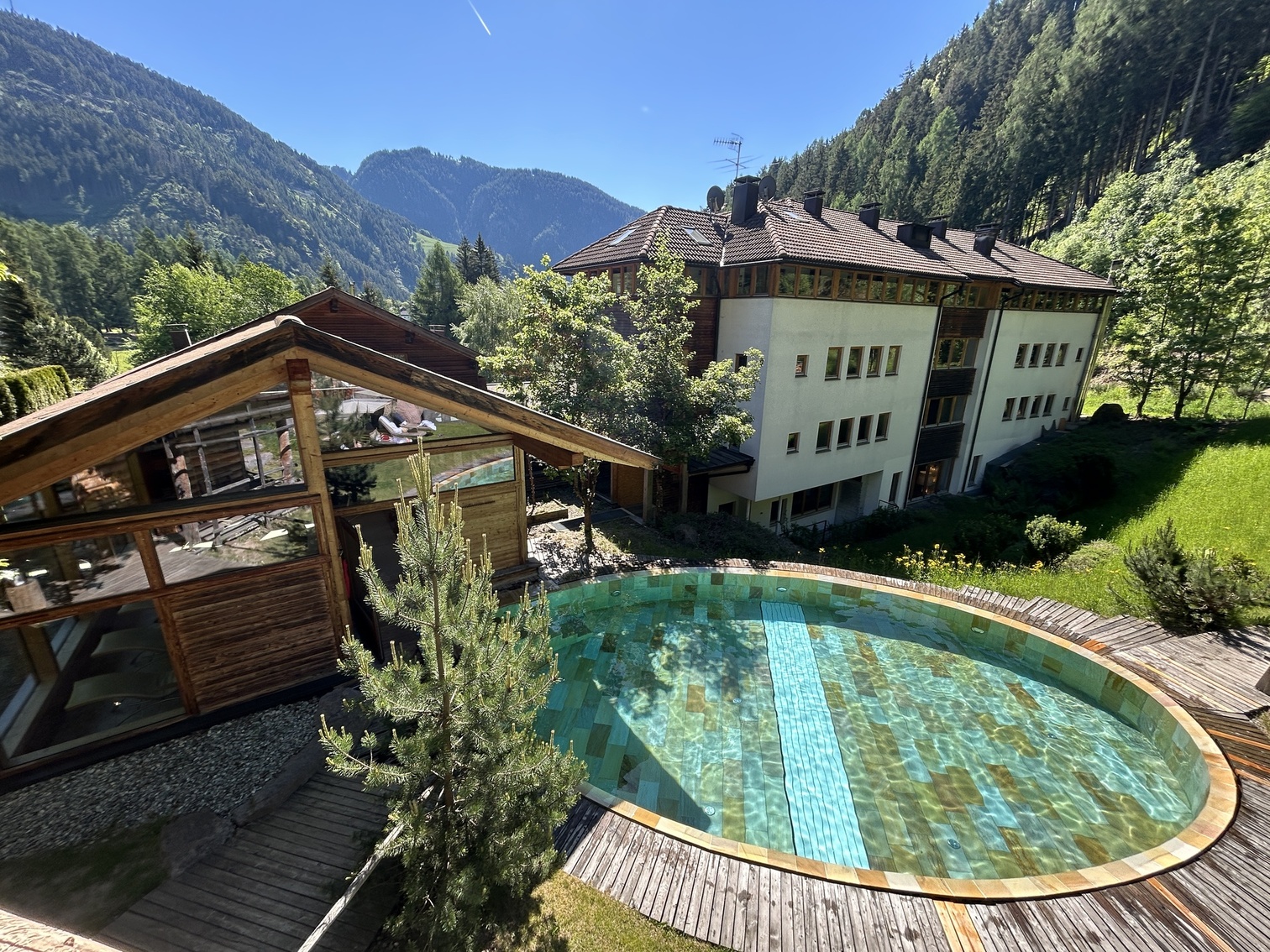
A relaxing refuge
Bad Schörgau itself, built in traditional style, and furnished with a tasteful mixture of modern art and aged wooden furniture, seems comfortably full when we visit—and the restaurant fills out further come dinner time.
It clearly has a reputation around these parts, and when the first dish of our four-course dinner arrives, it’s easy to see why. The menu might be loosely based on Südtirolese staples like knödel (dumplings) and polenta, but everything has been elevated with a twist.
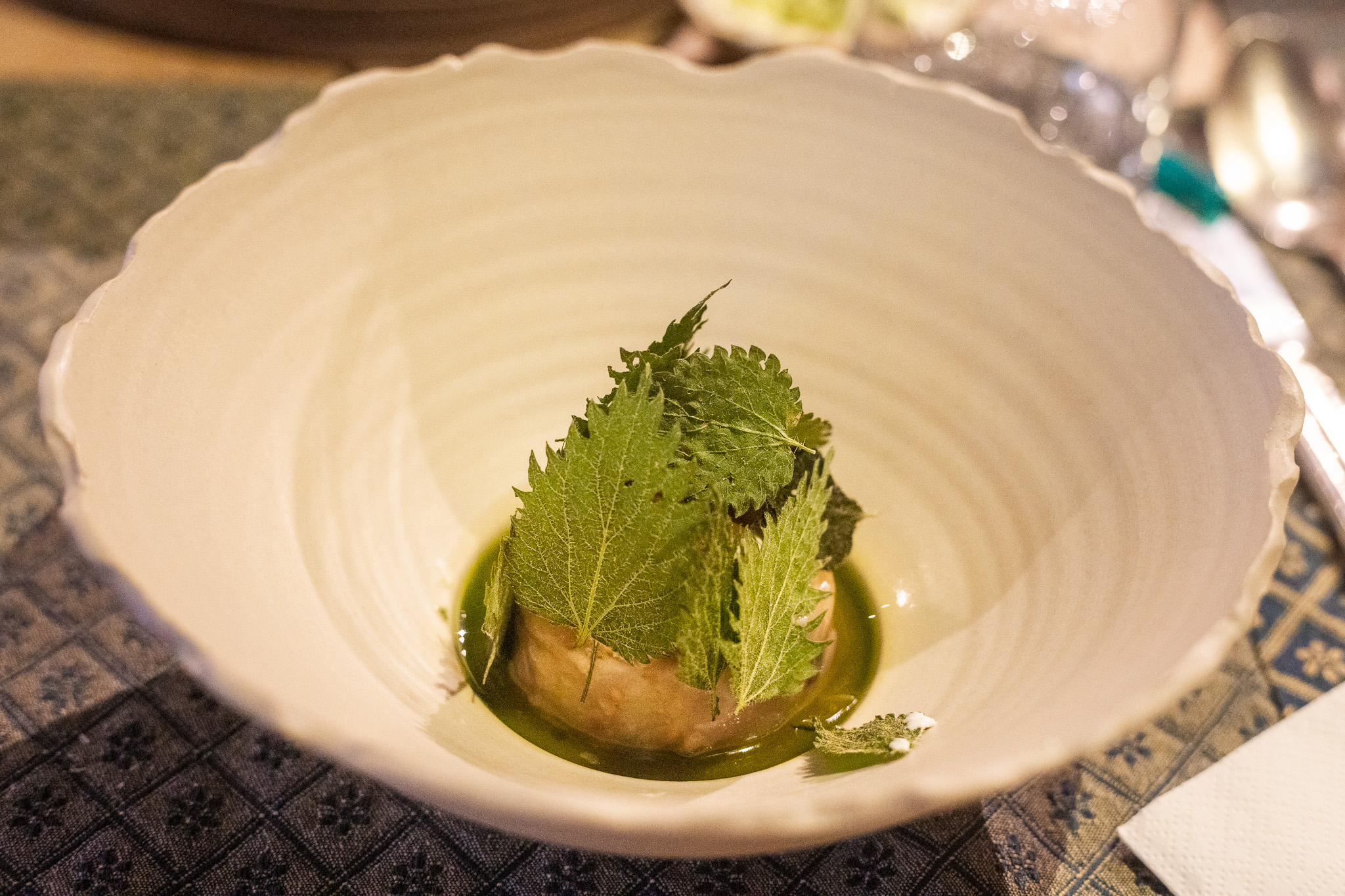
My starter of char is served with delicious home-made cucumber kimchi (“we do a lot of our own fermentation,” Gregor explains) and topped with nettle leaves—dried and crunchy, so the sting is removed. My wife’s asparagus, served with asparagus ice cream, is equally delicious, and the ravioli we have for our primi are perfect.
Gregor has also fully embraced the organic and natural wine movement: Bad Schörgau’s extensive wine-list features exclusively organic wines, and Gregor pours a perfectly-paired selection, each with its own story, to accompany our dishes.
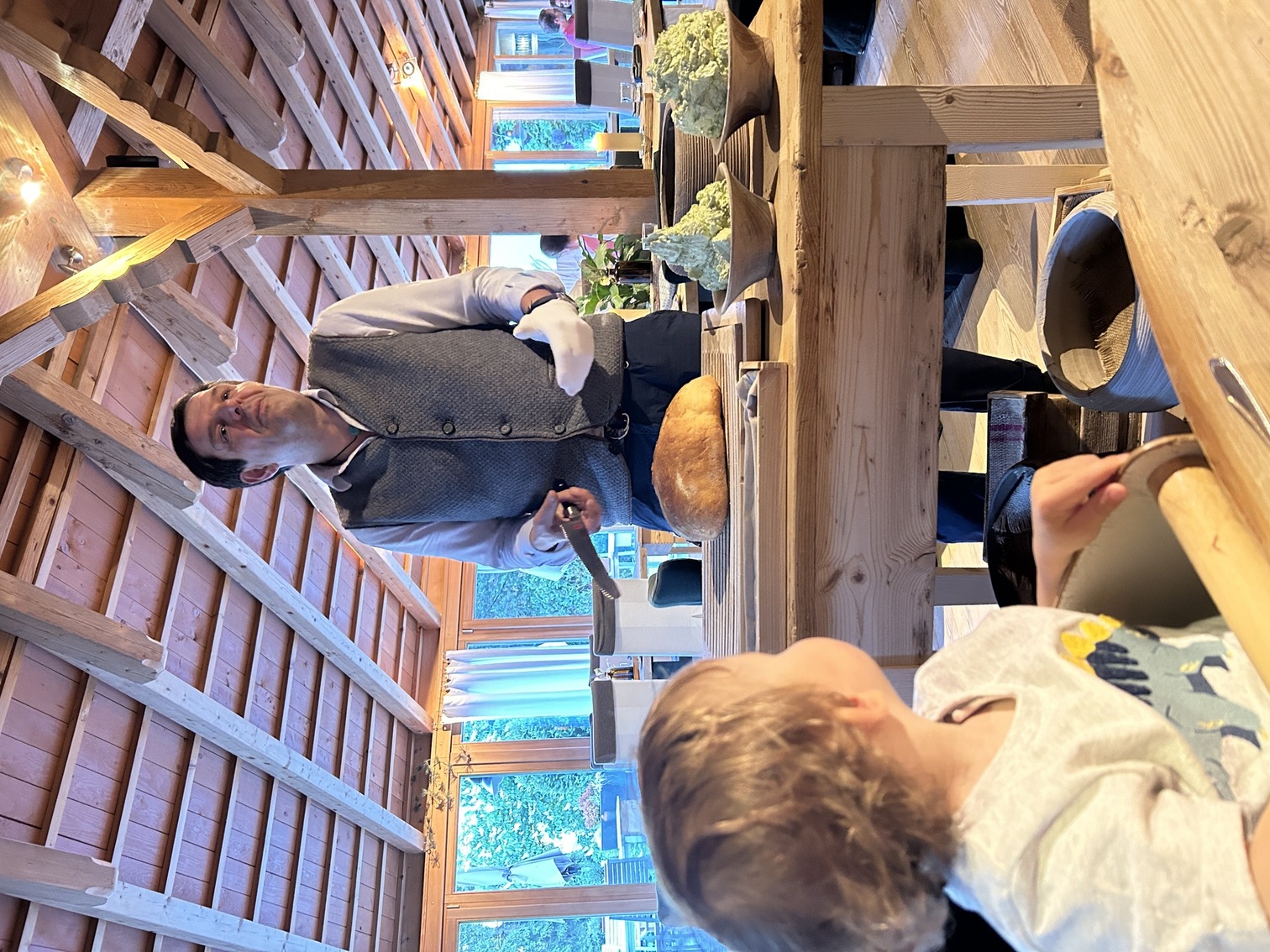
All of this is delivered with a charming lack of pretension, and while the restaurant is indisputably high-end, it’s also incredibly kid-friendly. The first thing the waitress asks us is whether the kitchen can whip up a plate of simple pasta for our son, which he absolutely wolfs down.
They’re then very happy to delay our mains so that we can put him to sleep upstairs, and return (with baby monitor in hand), to relax over the last two courses. The piece de résistance is the cheese trolley, which I opt for in lieu of dessert. Like me, Gregor is a self-confessed cheese addict, and delights in talking about the origins and processes behind each of the delicious morsels he slices onto my plate.
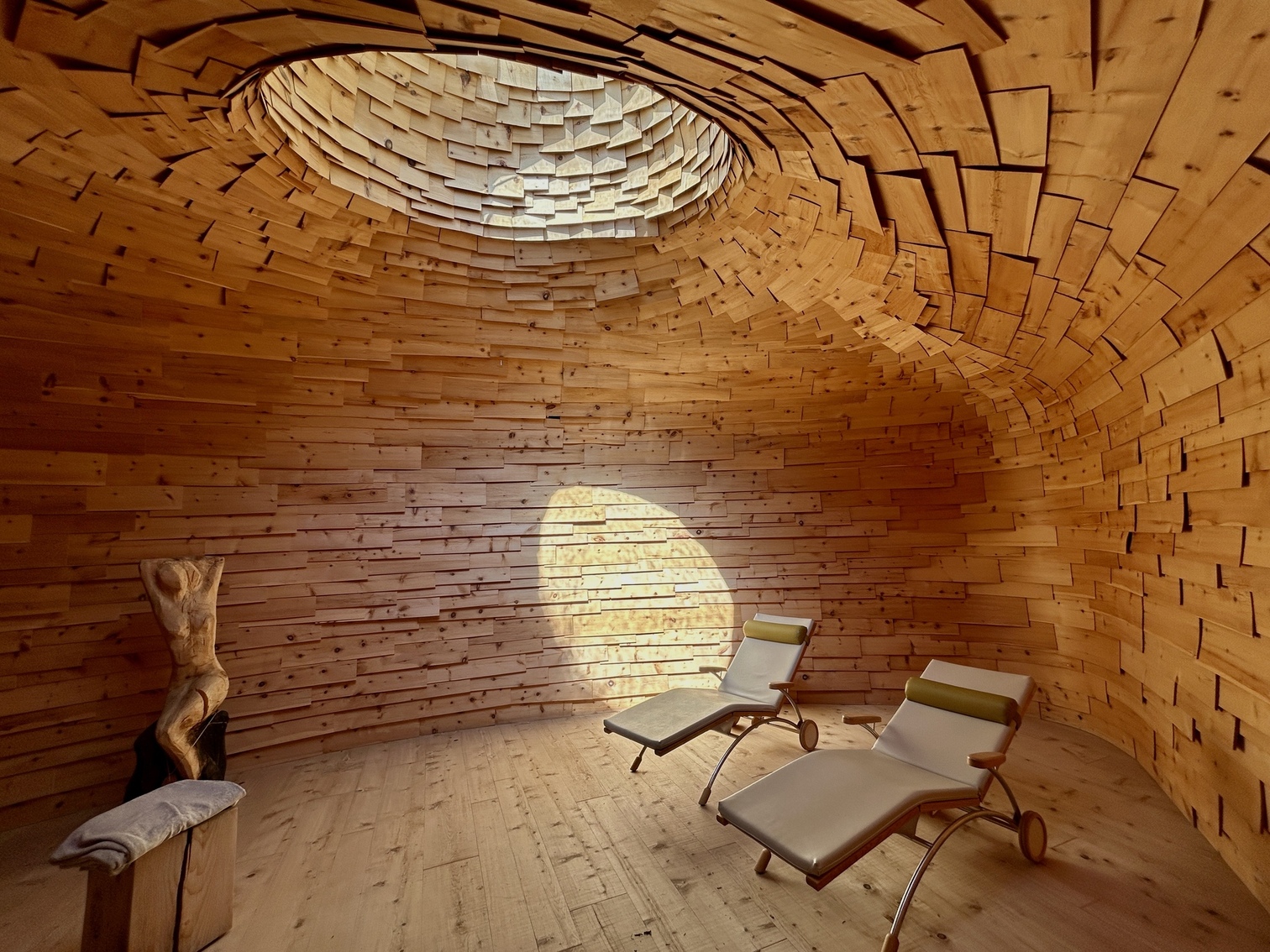
The following morning we linger at the hotel, exploring their swimming pool complex, compete with multiple outdoor hot-tubs and saunas, before setting off on another of Sarntal’s signature hikes.
The big picture
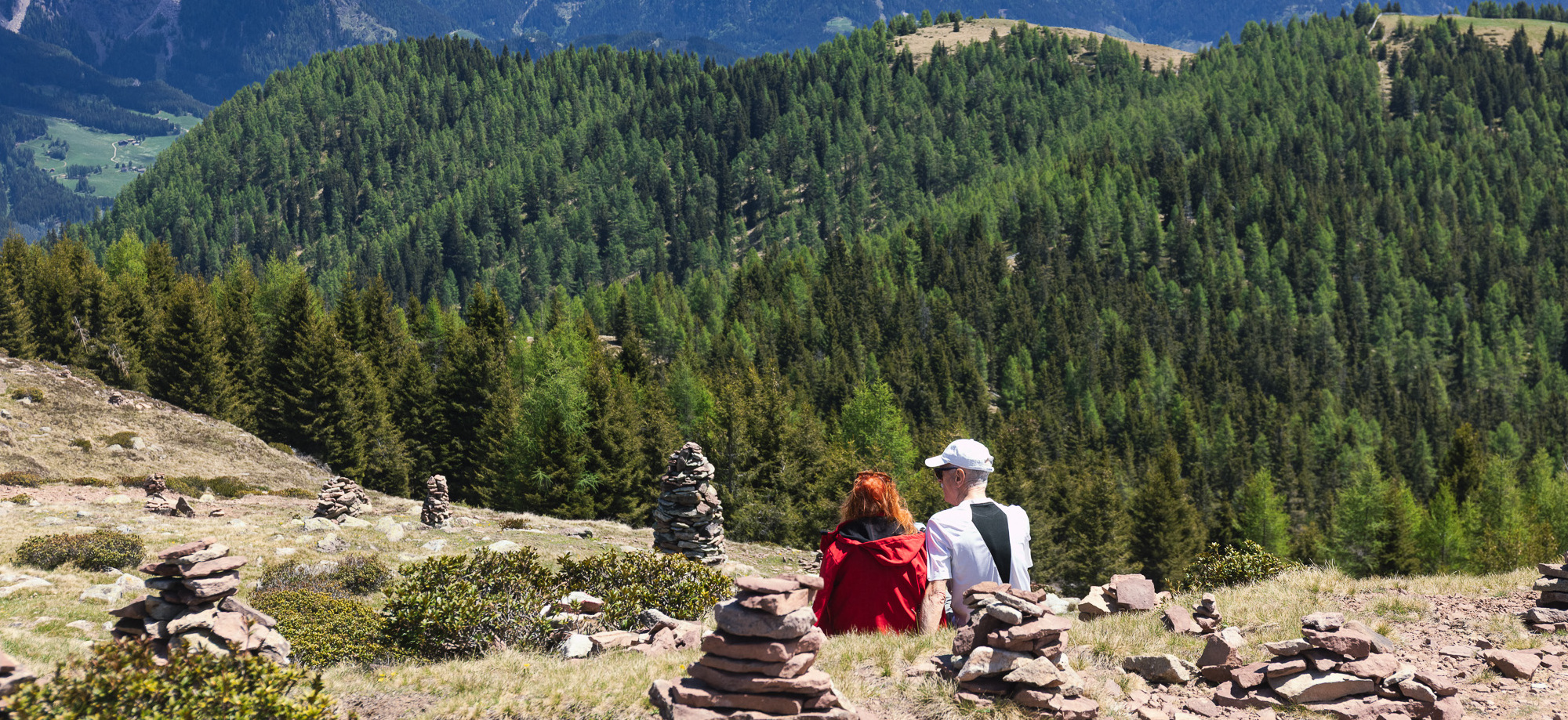
On Norman’s recommendation, we’re following a trail that winds its way up to the Stoarnerne Mandln—or “little stone men” in the local Süd-Triolese dialect. These are a collection of several hundred stone cairns piled up over the years on a 2,000m-high viewing point.
Here, finally, we meet a few more tourists soldiering up the hill—although never enough for it to feel actually crowded, or to impede the smooth progress of the few mountain bikers who are descending as we climb.
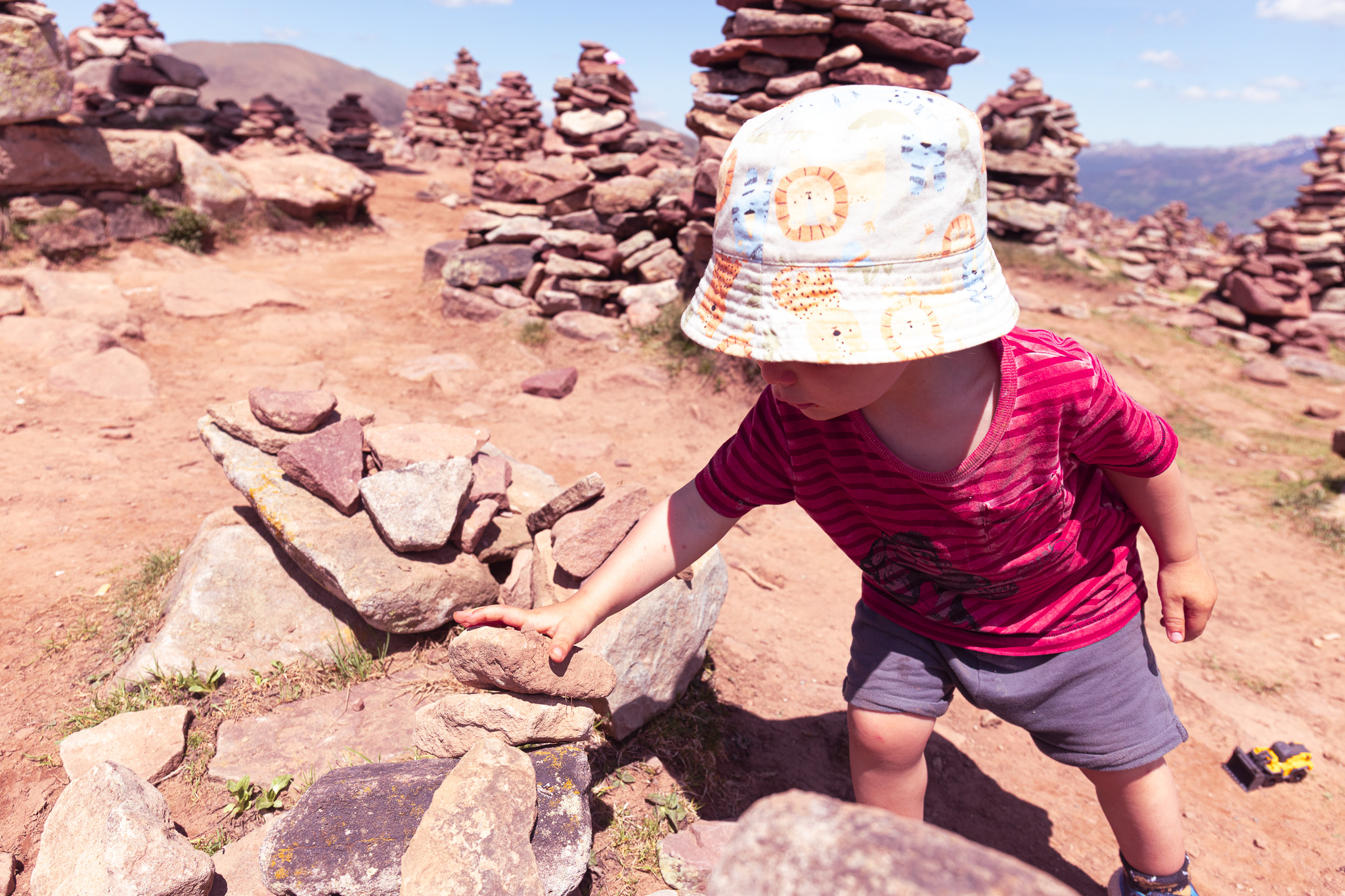
Reaching the top, it’s easy to see why people would choose this hike on a sunny Sunday. Not only do you get stunning views over the Sarntal valley, you can see for miles beyond. Mountains stretch off into the distance in every direction, the gaps in each successive range revealing further peaks behind.
To the west, you can see all the way to the Ortles-Cevedale group, which backs onto Bormio. And to the south-east, there are stunningly clear views of the Dolomites. I can see all of the Gruppo Sassolungo, the peaks which have made the Alpe di Siusi plateau one of the most visited places in the region—as well as one of the most crowded.
"Sarntal feels like the perfect antidote to the region's crowded attractions"
From this zoomed out perspective, I can see more besides: there’s the jagged dome of the Marmolada, the Dolomites’ highest peak, the Rosengarten group to the right, and the sharp summits of the Pale di San Martino beyond.
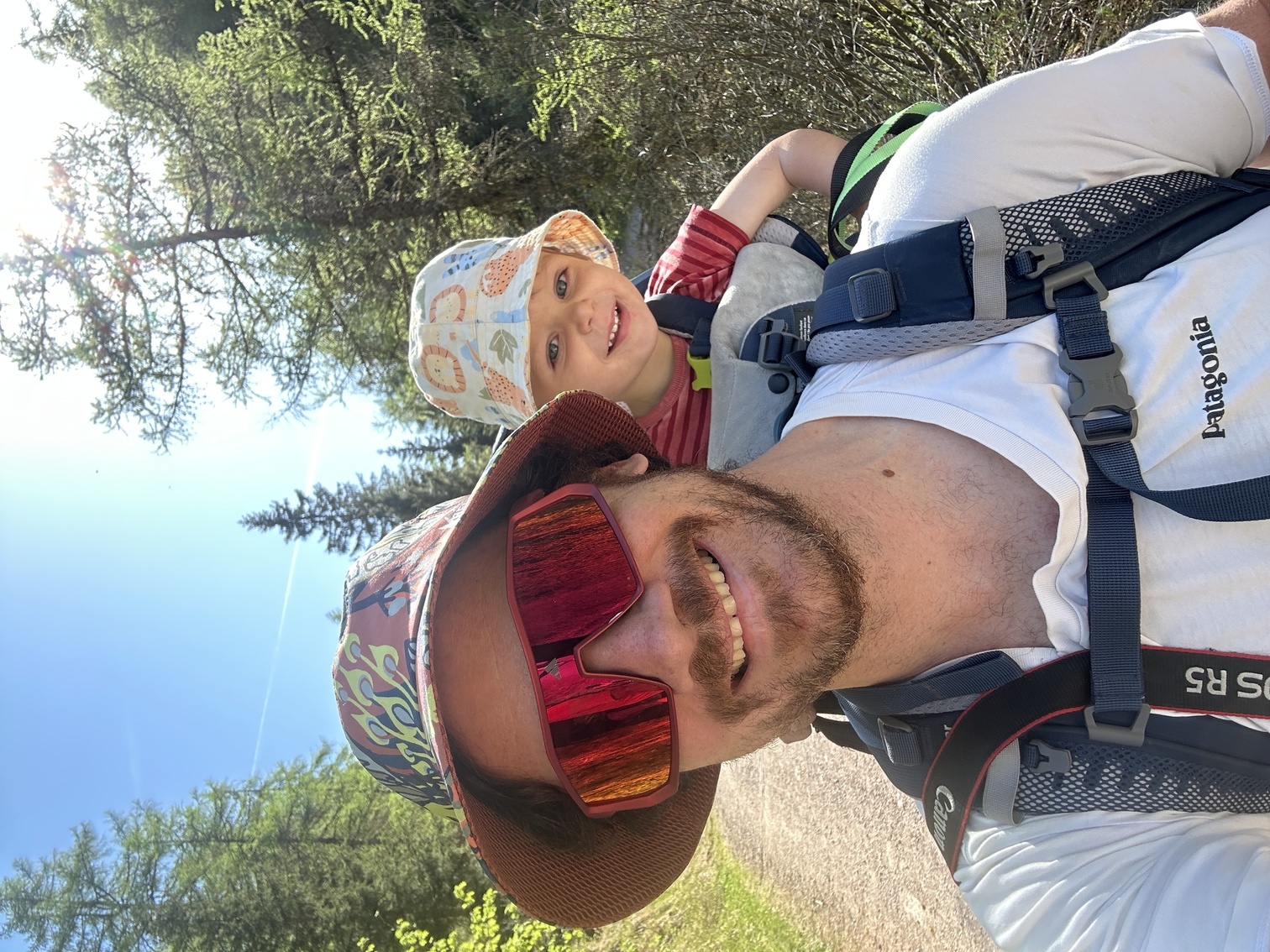
Over the years, I’ve spent plenty of time in the Dolomites. I’ve been to places, like the Tre Cime di Laveredo, where you have to book your parking months in advance, and others, like Alpe di Siusi, where you’re queueing for a table for lunch, and struggling to crop tourists out of every photo. Sarntal feels like the perfect antidote.
You might not be right amongst the most famous peaks, but you can enjoy the food, the culture, the mountain huts, and the landscapes in your own time, and at your own pace. And that feeling? Well, as Jeff Bezos knows, that feeling is worth a lot.
Tristan's trip was paid for by Sarntal Tourism. Visit their informative website for tips on visiting the valley, including details of further hikes, hotels, restaurants and other attractions.