- Details
- Written by: James Forrest
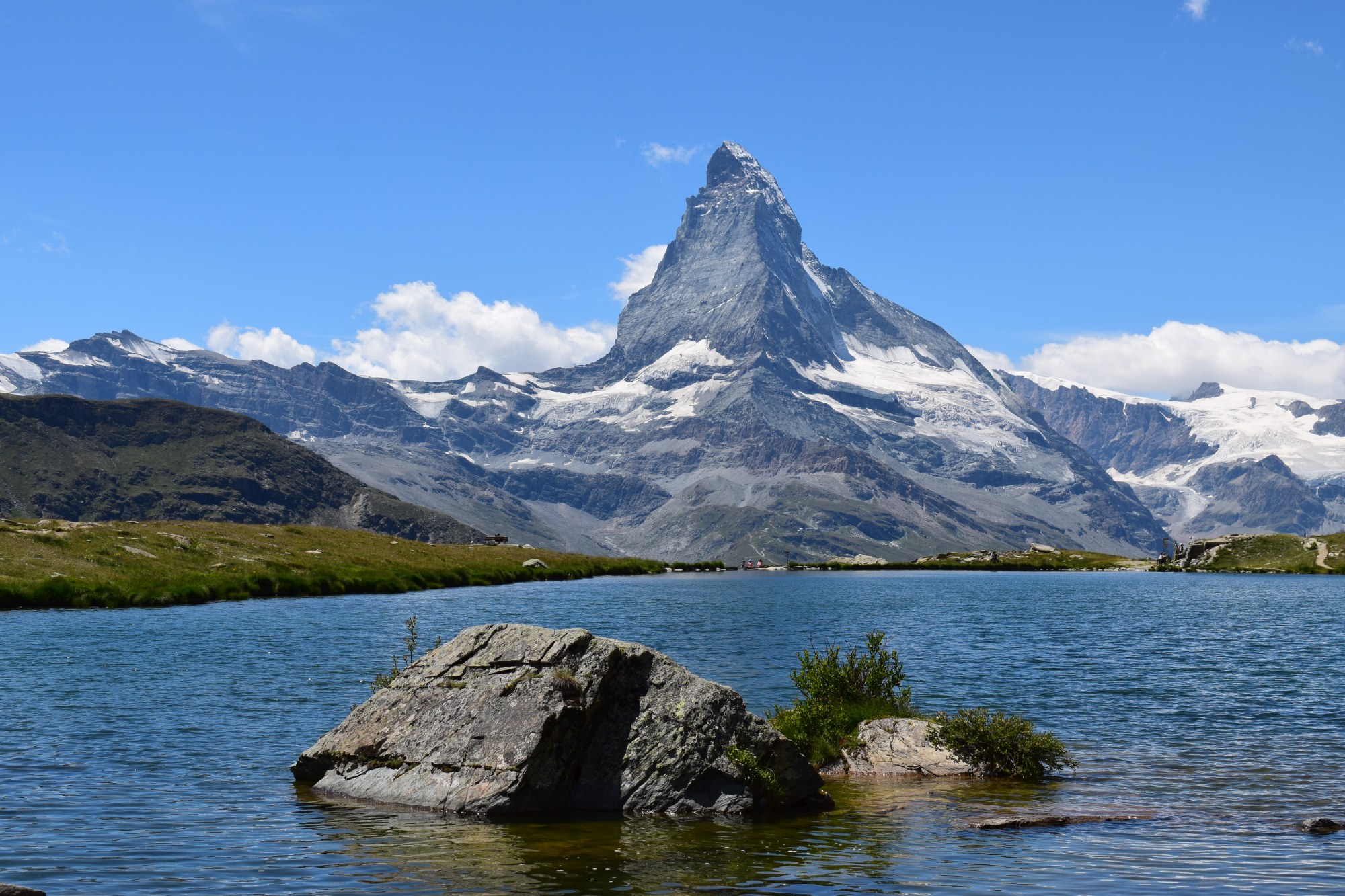
This feels surreal. “Am I truly here?” I think, as I catch my first glimpse of the mountain between two towering evergreens. Its form—a perfect blend of curves and sharp lines—is just as I’d imagined. But its aura is breathtaking. This is a mountain that commands attention. A peak that exudes a hypnotic presence. I can’t tear my eyes away. Emotions well up inside me—seeing this is the end point of a personal pilgrimage, an adventure goal realised, a long-cherished alpine ambition brought to life.
I’m not the first to fall under the spell of the mighty Matterhorn. Rising 4,478m above the historic mountain town of Zermatt, the mountain was the last peak above 4,000m to be climbed in the Alps—and came to represent the ultimate challenge for the generation of Victorian gentlemen who pioneered high-altitude climbing in the mid-1800s. The man who finally conquered it, British climber Edward Whymper, had been obsessed with it for years, trying unsuccessfully to reach the summit from the Italian side multiple times before he and his Switzerland in 1865.
Their achievement was marred by tragedy, however. Famously, of the seven men who reached the summit, only three made it down alive.
“Of the seven men who first climbed the Matterhorn, only three made it down.”
A world of stunning beauty
Today, the Matterhorn is probably the world’s most recognisable peak—if only because it featured on every bar of Toblerone chocolate for well over a century. (In 2023, the chocolate brand decided to move production outside of Switzerland, and was legally obliged to remove the mountain from its bars, but that’s a different story).It’s said about a lot of landmarks, but photos really don’t do the Matterhorn justice. It’s a mountain that simply must be seen by the naked eye. But to truly appreciate the stark brutality of its North Face, the sharp spine of the Hörnli Ridge, and the delicate hook of the summit, I would argue, it needs to be seen in the raw light of dawn, after days of strenuous trekking.
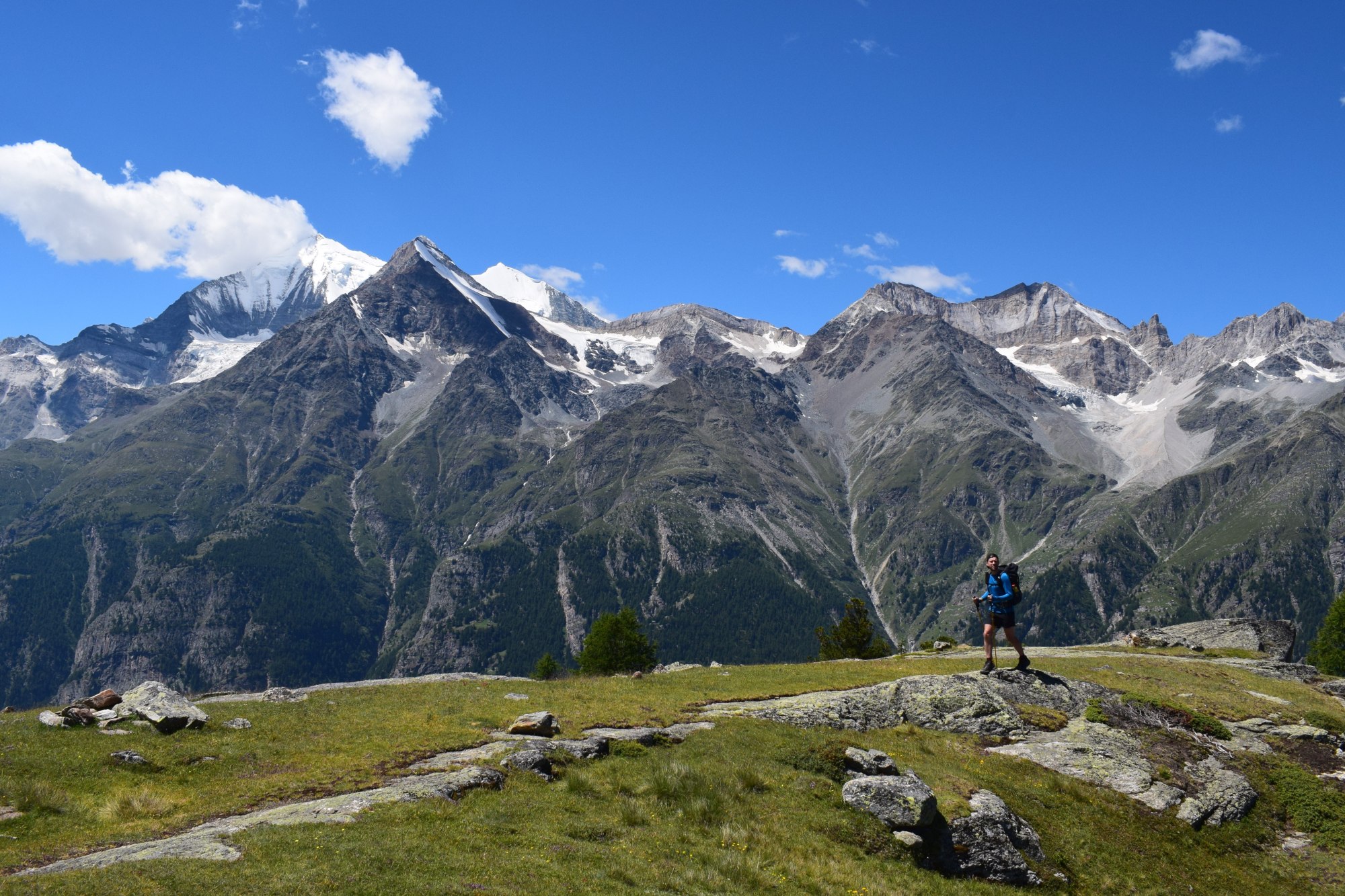
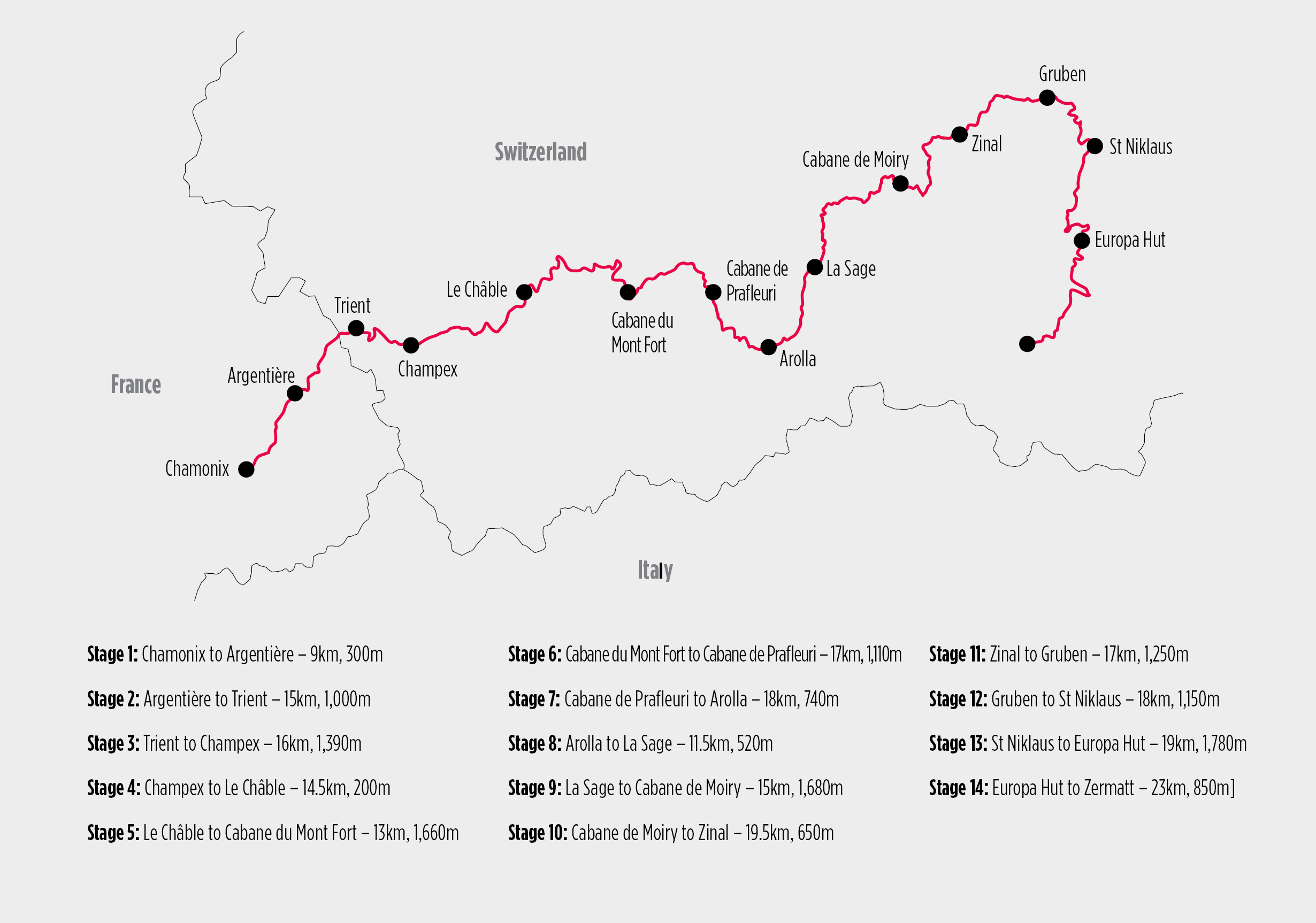
This is the ninth and final day of a 225km odyssey along what is known as the Walker’s Haute Route—a strenuous trek from Chamonix to Zermatt, that runs through the heart of the Swiss Alps. The route is a hiker-friendly variation of the legendary mountaineering traverse first pioneered by members of the UK’s Alpine Club back in 1861, which connects Mont Blanc—the highest alpine peak of all—to the Matterhorn—the sexiest. According to the late Kev Reynolds, author of my Cicerone guidebook, the Walker’s Haute Route delivers “days filled with wonder” and a “visual feast of the greatest collection of 4,000m peaks in all the Alps”. With “each pass [you] gain a window onto a world of stunning beauty”. Now nearing the end of it, I realise he wasn’t exaggerating—that’s exactly what I’ve experienced.
From France to Switzerland, I’ve battled steep ascents, wandered through wildflower-strewn meadows and followed alpine trails past turquoise glacial lakes. I’ve watched ibex at dawn, shared stories over hearty meals in remote mountain huts and traversed landscapes where glaciers whisper their ancient—and melancholic—stories. And now, standing beneath the Matterhorn’s imposing silhouette, I understand exactly what Whymper meant when he wrote: “there have been joys too great to be described in words”.
Rewind nine days and I’m standing outside Chamonix’s distinctive, belle-epoque railway station. I’m feeling full of energy and eager to embark on my pilgrimage. The town buzzes with an eclectic mix of climbing bums draped in ropes, weary Tour du Mont Blanc finishers limping back into civilisation, and moneyed “adventurers” in pristine Gore-Tex jackets and expensive-looking shades.
Soon, however, all of that touristic mayhem is behind me, as I walk out of town along shaded woodland trails to Argentière, before climbing steeply up to the Col de Balme (2,204m), the threshold between France and Switzerland. With a sadistic focus on steep and arduous terrain, the Walker’s Haute Route cuts across the grain of the Pennine Alps, rather than running parallel to it, so every day brings another tough climb. Col de Balme is merely the beginning—the first of 11 high passes that I must cross, with a staggering total of 14,000 vertical metres of ascent. That first night, as I shelter in Refuge Le Peuty, a violent storm unleashes itself outside. Hailstones the size of ping-pong balls hammer the ground, lightning illuminates the sky and thunder echoes through the valley. It’s a stark reminder that, as Whymper once warned, “courage and strength are nought without prudence”.
“As Whymper once warned, ‘courage and strength are nought without prudence’”
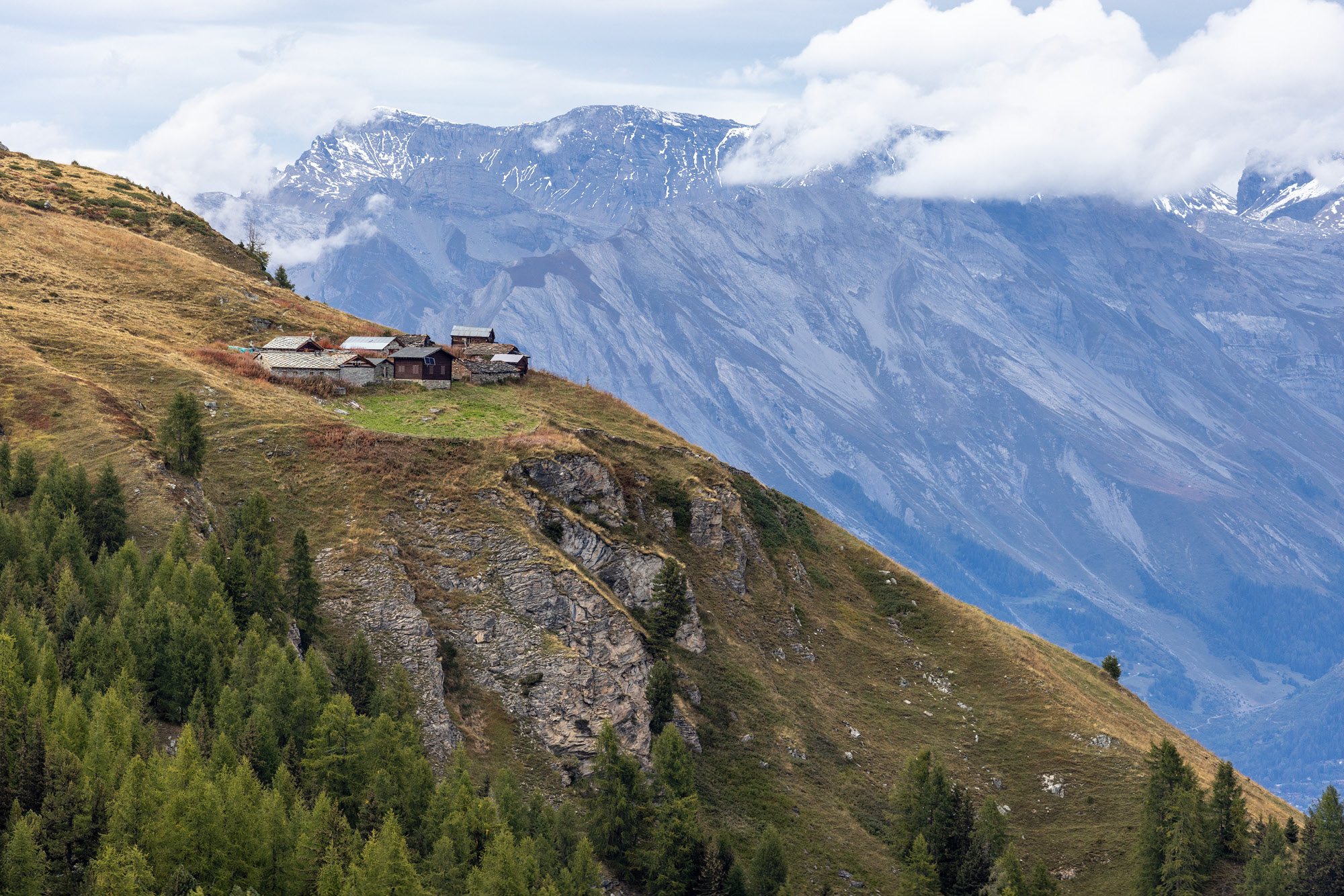
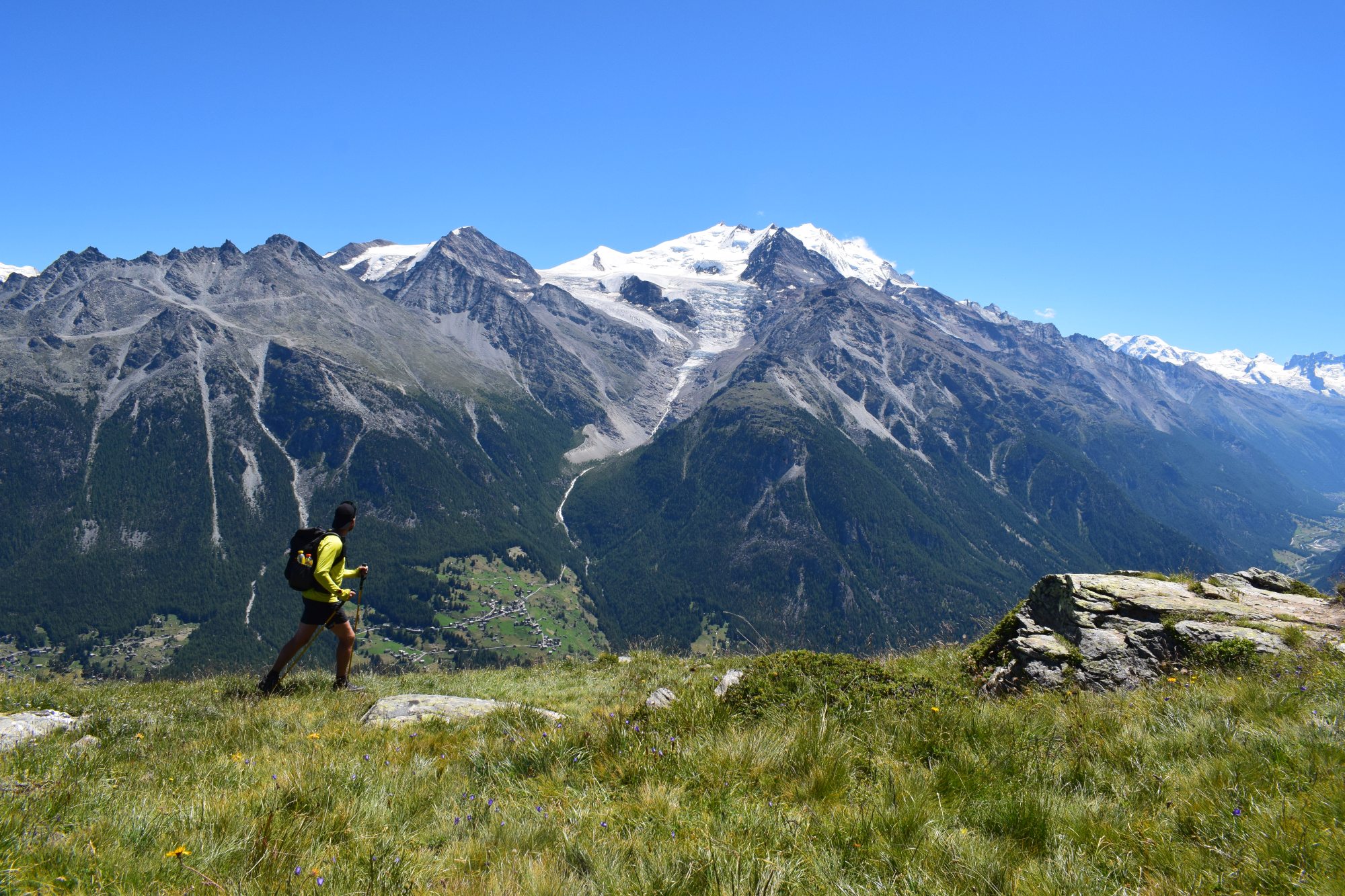
By morning, the skies have cleared, and under vivid sunshine, I press on towards Cabane du Mont Fort, passing through Champex and Le Châble before taking a gondola up to Verbier—a cheeky shortcut, which feels a little like “cheating”, but my weary legs don’t care. The highlight of the day is the arduous climb to Fenêtre d’Arpette, a gateway to a starkly beautiful world of jagged rock and tumbling ice. In this wild domain, marmots bask on sun-warmed boulders, alpine flowers dance in the breeze and the frozen cliffs of Glacier du Trient gleam under golden light.
The siren of the Alps
That evening, over steaming bowls of barley soup and cheesy macaroni, I find myself in conversation with Ged, a Haute Route walker all the way from Portland, Oregon. The following morning, the going gets tough. A vertiginous path clings to the mountainside, meandering two vertical kilometres above Val de Bagnes like a tightrope through the peaks. My sweat-drenched ascent over Col de Louvie (2,921m) and Col de Prafleuri (2,987m) is a battle against both gravity and the scorching 30-degree heat. But the transition is beautifully striking—to the west lie lush green valleys, to the north the landscape fractures into a barren, lunar-like wasteland of scree, ice and rock known as the Grand Désert.
Over the next 96 hours, from Prafleuri to St Niklaus, I experience a whole series of dramatic highs. I scramble across clifftop ladders at Pas de Chèvres (2,855m), stroll along the shimmering waters of Lac des Dix, and stand transfixed by the imposing Pigne d’Arolla (3,796m). In Zinal, I sip on a cold (and richly deserved) beer surrounded by ringing cowbells.
On a whim, I summit the Schwarzhorn (3,202m), and earn the satisfaction of surpassing the 3,000m mark—something the official Walkers’ Haute Route trail never quite reaches.
All of this—the exhaustion, the exhilaration, the exploration—is but a prelude to the moment I have been waiting for however. On the final day of my trek, I wake at 6am at Europa Hut, perched high above the Mattertal valley. With the crisp air sharpening my senses, I fuel up on coffee and porridge before setting out. The 494m-long Charles Kuonen suspension bridge sways gently beneath my feet, a marvel of Swiss engineering suspended over the abyss. I push southward through dense forest, my anticipation mounting with each step. I turn a corner and there it is—the siren of the Alps.
There is still half a day of walking in front of me, but spiritually my journey to the Matterhorn is now complete. This is the emotional apex of my pilgrimage—a journey of “joys too great to be described in words”.
Know How
James’ trip was supported by Switzerland Tourism and the Valais region. Their websites offer travel tips and booking advice.
Where to Stay
While you can stay in hotels in Chamonix, Le Chable, Trient and the various other villages in the valleys, most of the accommodation on the Walkers’ Haute Route is in mountain refuges, or hütte as they’re known in the German-speaking part of Valais. Most are owned by the Swiss Alpine Club (CAS) and offer dorm-style bunk beds for very reasonable prices—usually around 27 francs (£25) for CAS members or 39 francs (£36) for non members.
Membership costs 80 CHF (£74) so if you’re doing the whole Haute Route, you may well save money by joining. Half-board meals cost extra, but are always hearty, three course affairs, and it beats carrying your own food. Be warned, for popular parts of the Haute Route, huts can get booked up as much as a year in advance, so plan early.
Guides & Route
While James completed it in nine days, most people take between 10 and 14 days to complete the Walkers’ Haute Route. Self-navigation is possible, but unless you’re an experienced hillwalker like James, you’ll probably want to walk it with a guide. Guides can also help you secure spots in the huts too.
You can book Haute Route tours with trekking guides from almost any of the mountain towns along the route, as well as a ton of agencies. But the guide offices in Chamonix Verbier and Zermatt are the obvious place to start.