- Details
- Written by: Callum Jelley
All photos: dmtwo media.
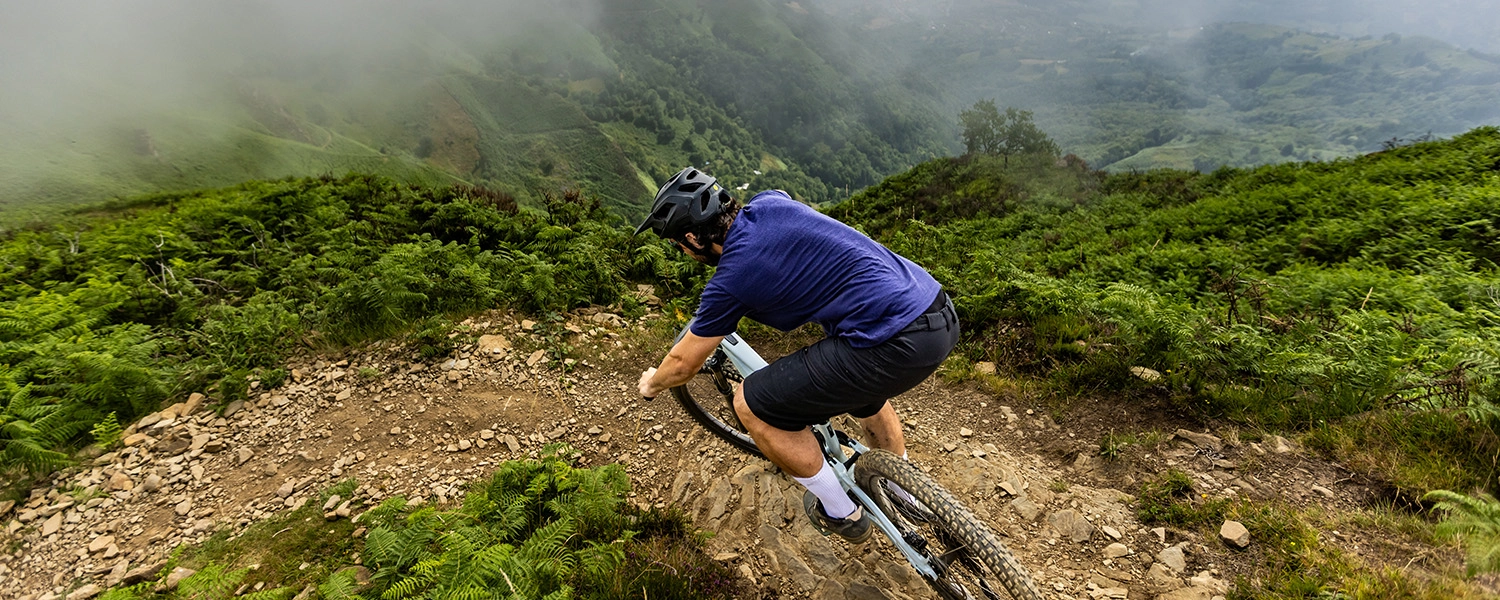
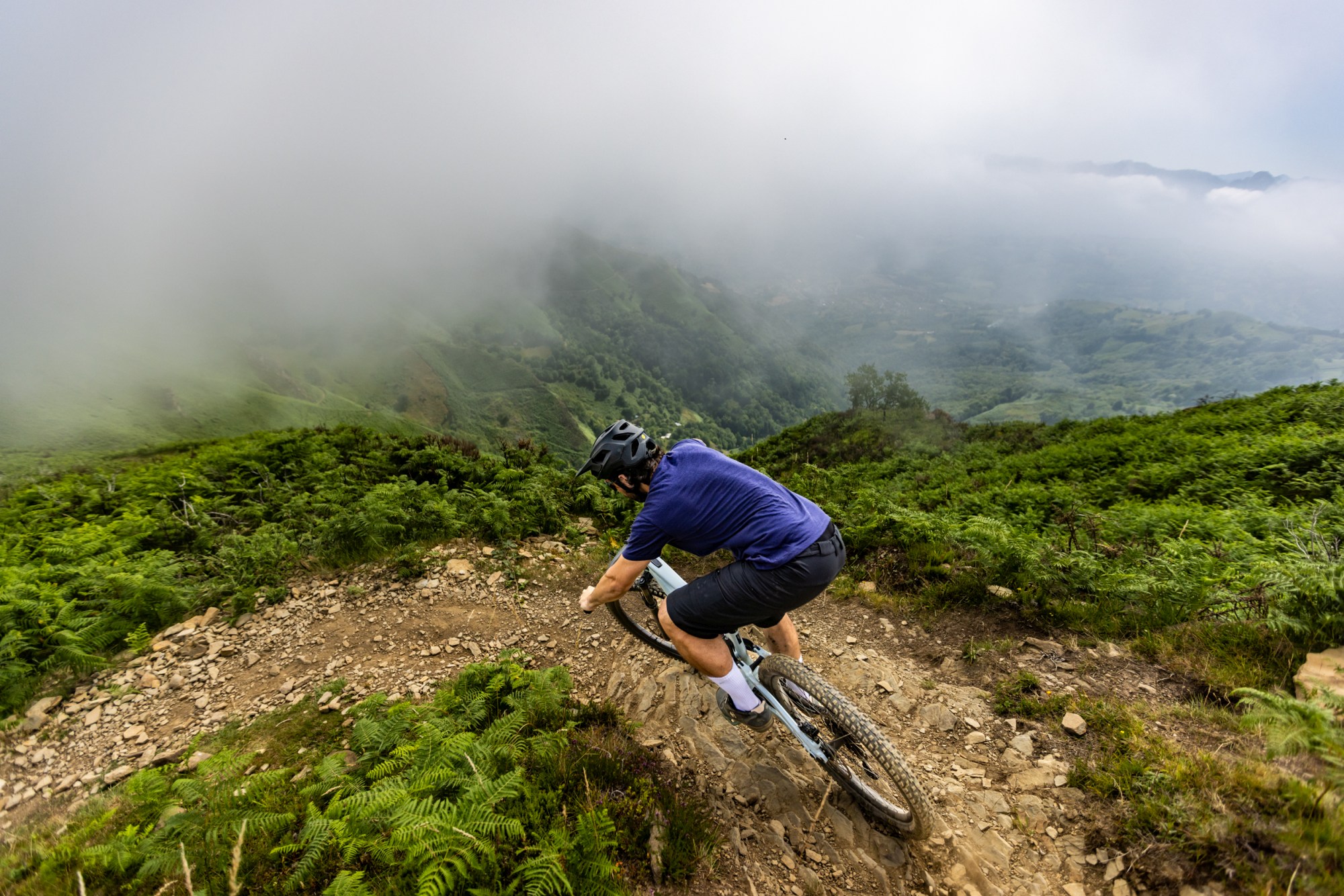
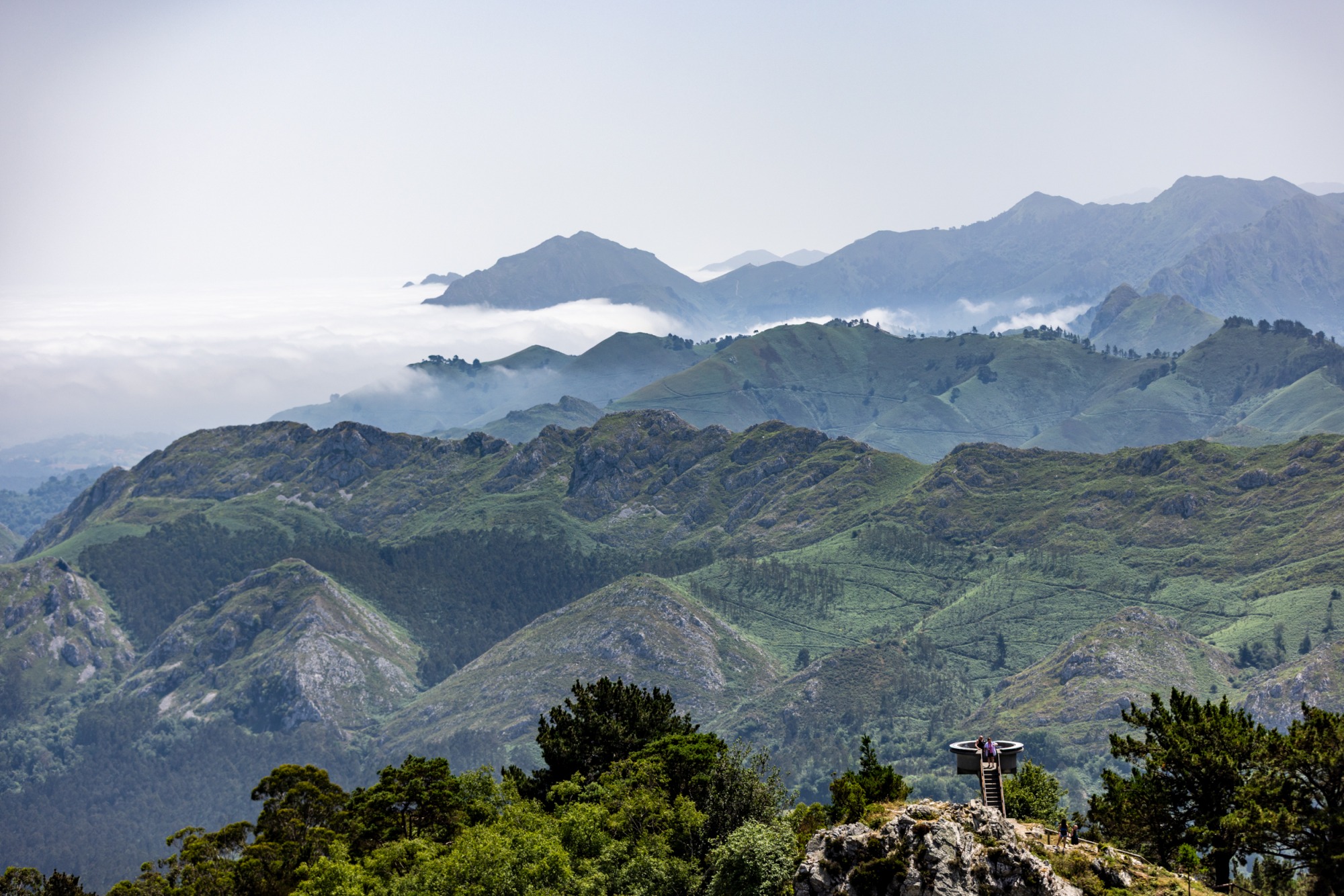
As the air hits the ridge and rises into swirling clouds, a vulture, for a moment, soars through a break in the cloud just above us. Then, in a flash, it’s gone and it’s back towards the trail, dropping off the peak straight down the ridge toward the sun drenched valley below. We are above Pola de Laviana in central Asturias, an hour and a half from where we began our Asturian odyssey in the coastal town of Llanes.
Sandwiched between Cantabria and Galicia on the northern coast of Spain sits Asturias. Often forgotten next to the more famous Basque Country or Cantabria, it’s famously loved by Madrileños (people from Madrid) and has some of the most stunning and varied scenery in Spain.
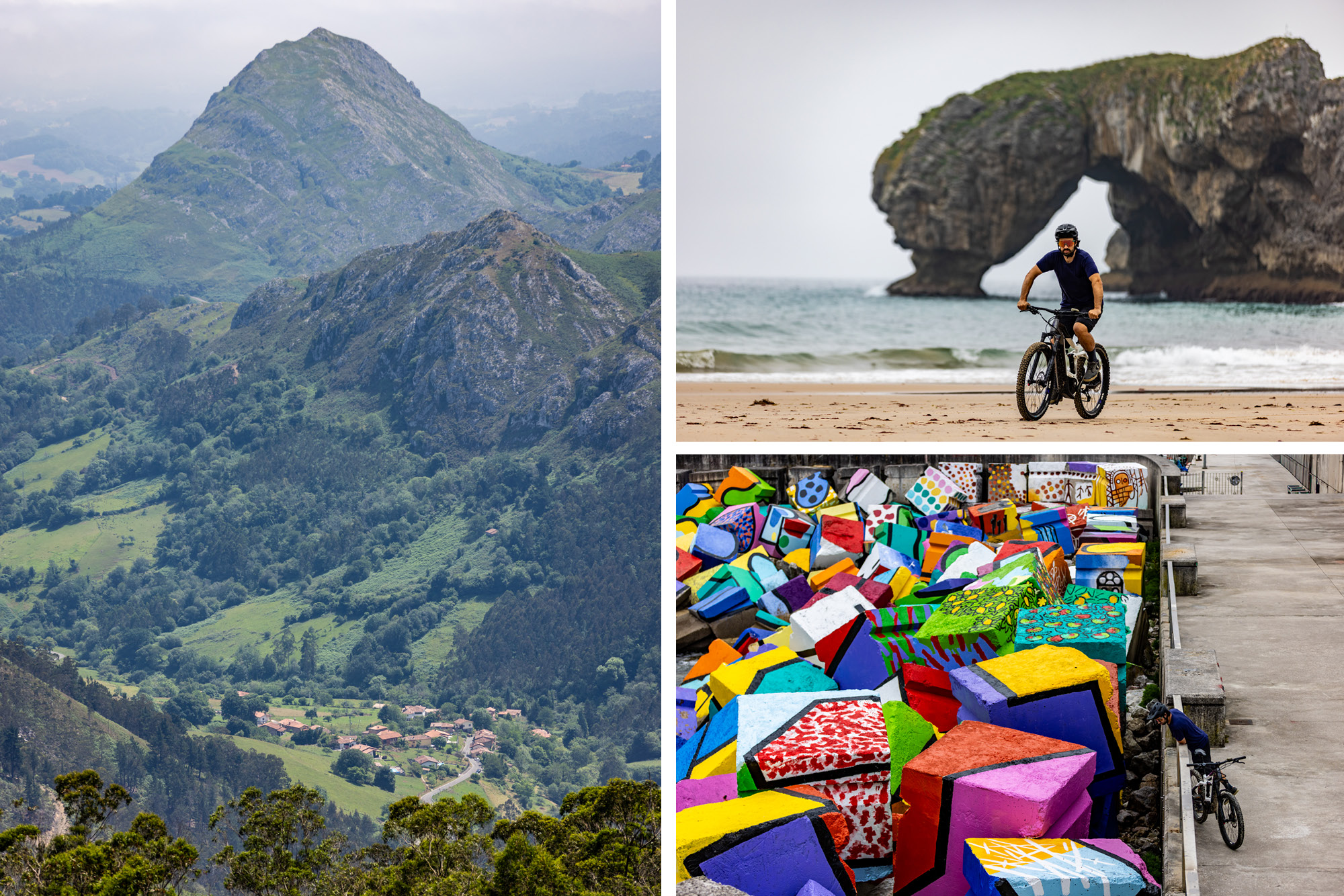
Ibarrola in Llanes
We start in the town of Llanes, in the center of the Costa Verde (Green Coast), sitting directly below the 2500m peaks of the Picos de Europa. Today, the Picos are shrouded in sea mist, a classic trait of the orographic weather that Asturias experiences due to the wind pushing the sea air into the mountains, causing clouds to form on one side, and sunshine on the other. Llanes, apart from being famously one of the most filmed locations in Spain, is also known for its stunning limestone cliffed coastline and the world’s smallest beach, Playa de Gulpiyuri.
Sea cliffs and siderías
Before hitting the Cider House, another staple of Asturias and much of northern Spain, we decide to ride along the coast to see the cliffs and the aforementioned ‘world’s smallest beach’ for ourselves. Starting at the Playa de San Antolin with a couple of e-bikes provided by a local bike shop, we pick our way through the limestone rock, worn into teeth by years of wind, salt and Atlantic storms.
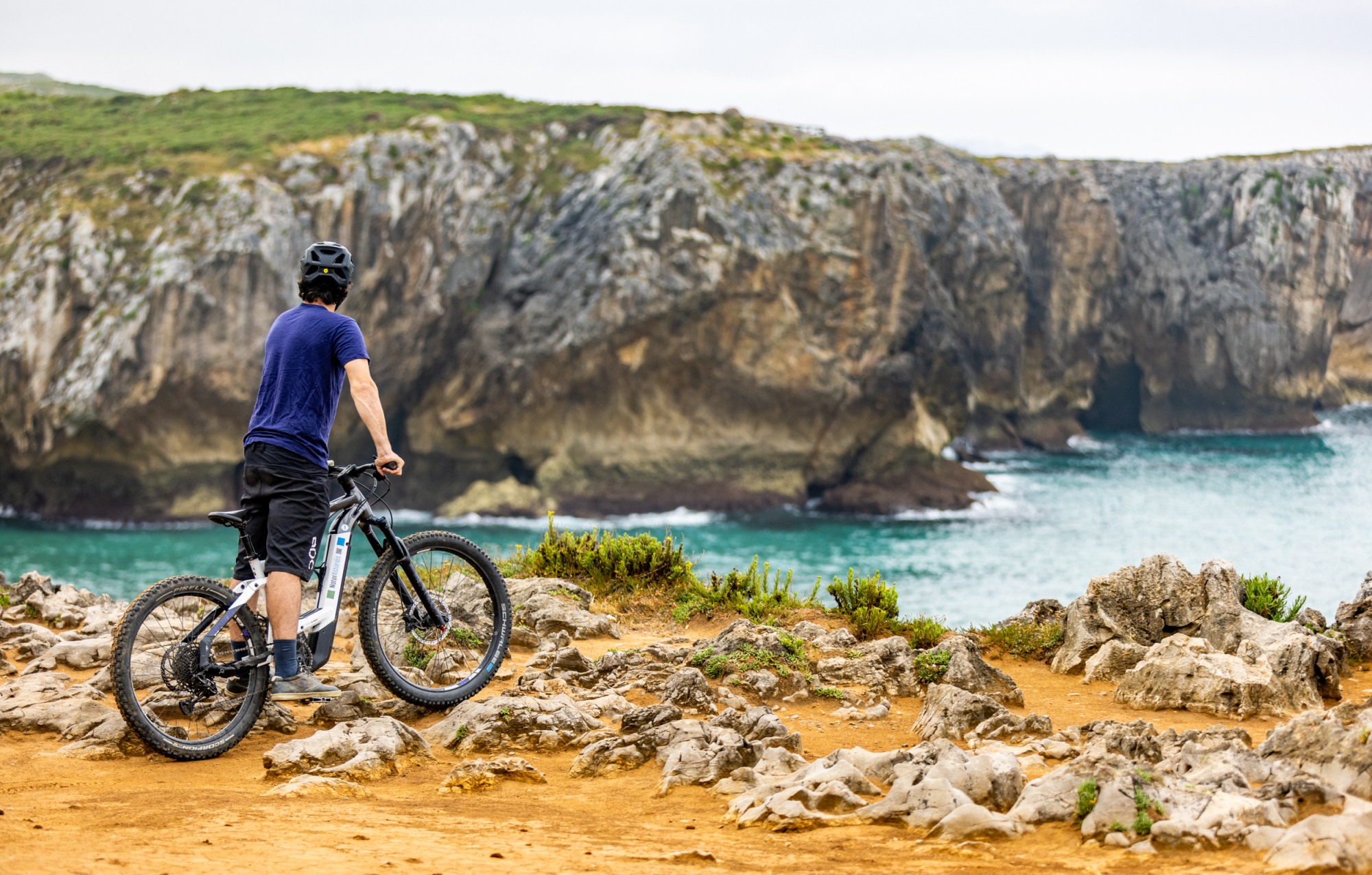
Waves crash into the base of the cliffs below, echoing through the tires of our bikes and covering us in salt mist. As the trail continues, it winds away from the sea past limestone sinkholes that give you glimpses into the water 50m below. Past pastures of grazing cows and winding lanes, we ride until we arrive at the famed beach: Playa de Gulpiyuri.
Separated from the sea by a small hill, the beach is really just another sink hole where the water has found its way through, but then when high tide rolls around, a tiny, sandy beach appears, surrounded by bracken, with no ocean in sight.
But the landscape is only one part of what makes these secluded corners of Asturias so distinctive. Beyond the beaches and sinkholes, the same close relationship with the land has shaped the region’s social life, particularly its long-standing cider-making tradition.
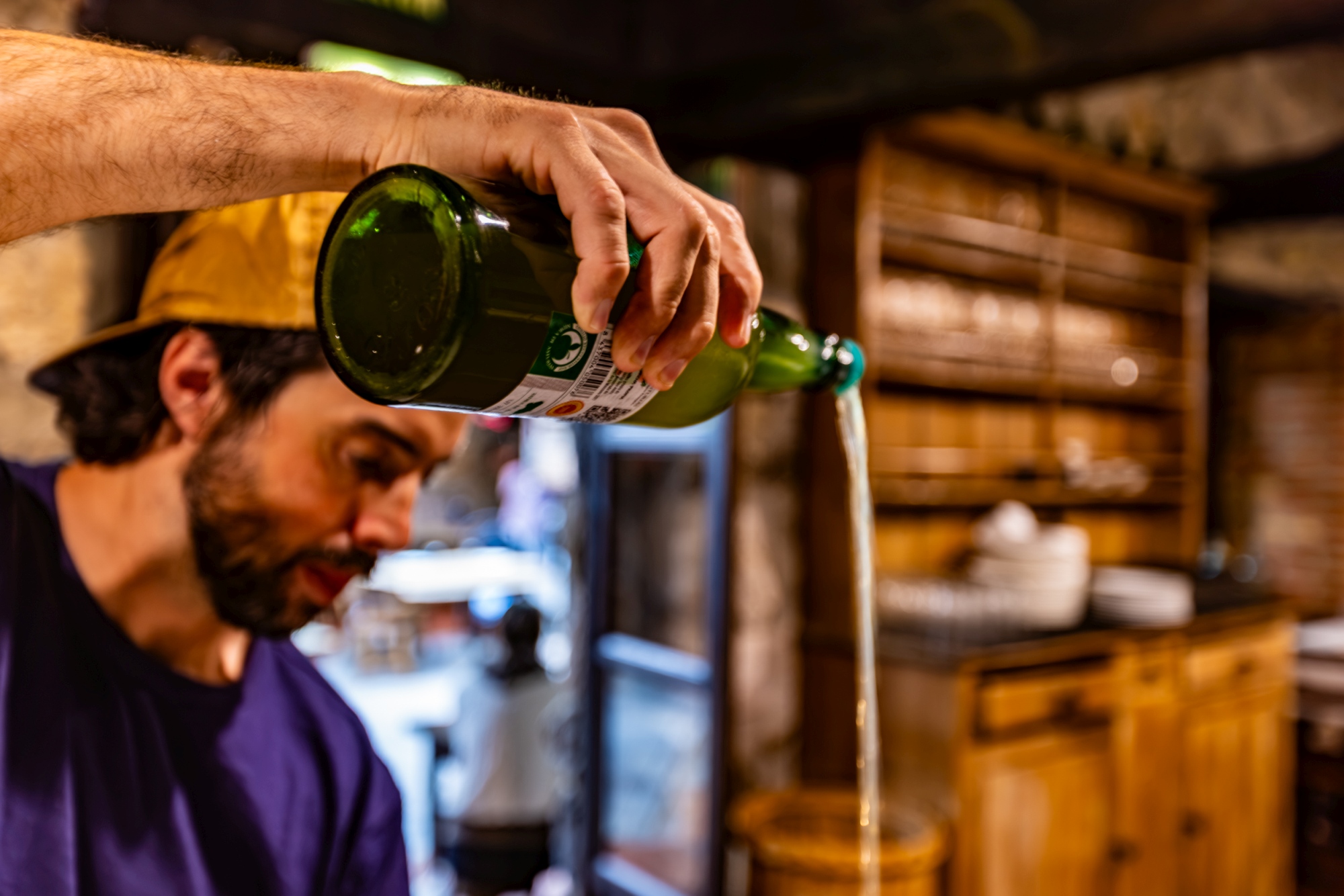
The cider houses, siderías in Spanish, have formed a large part of rural and later urban culture in Asturias since the early 19th century. Originally based around the llagares (cider press) and the farm houses where they were housed, they soon transformed from a place of social drinking, famed for the defining escanciar (pouring cider from height to aerate it) ritual, to places offering food as well.
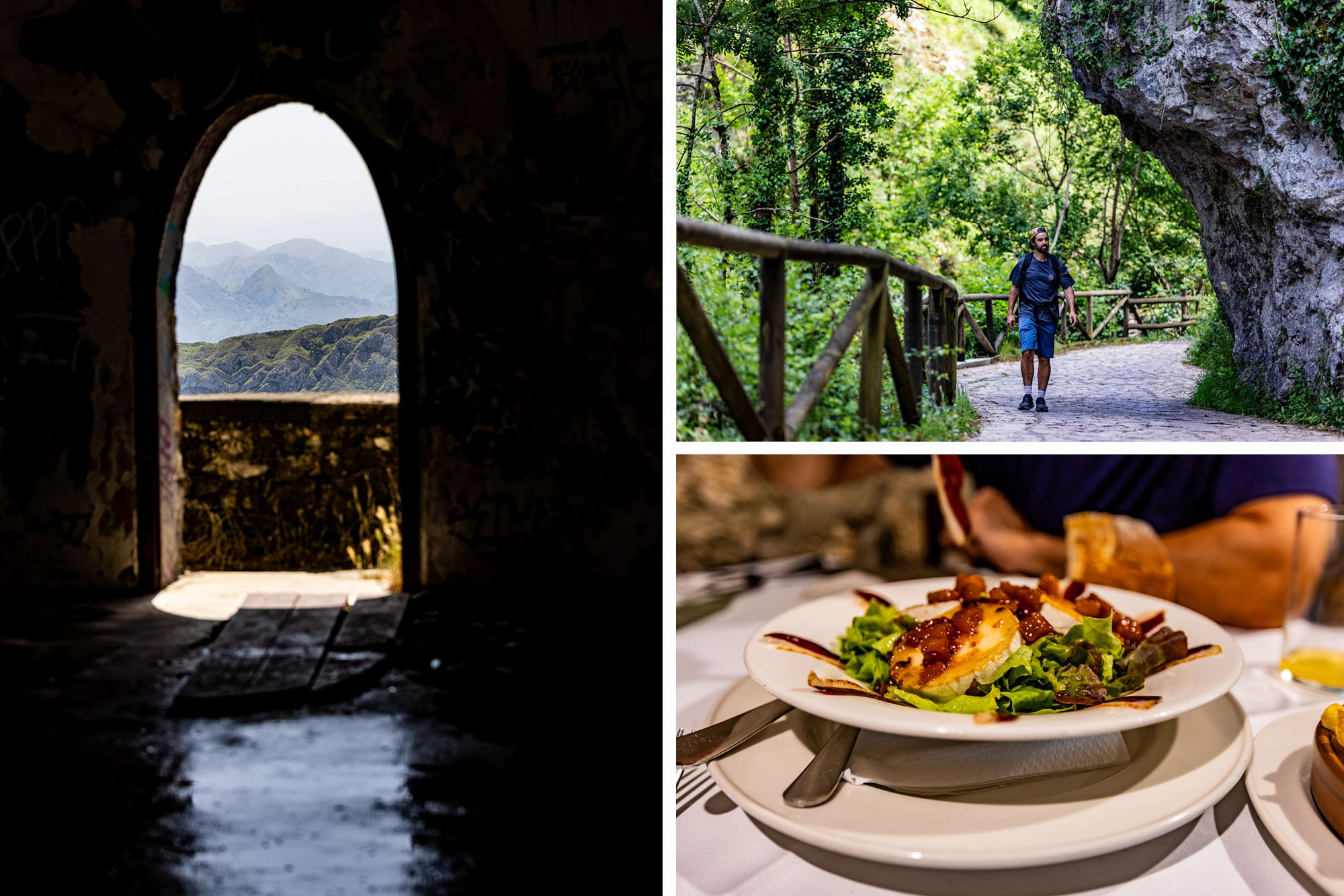
Visiting Casa Poli in Puertas de Vidiago, one of the most beloved siderías in the area, is something we can’t miss. Here you can enjoy cider and locally-sourced Asturian food under the shade of the broad leaves of ancient vines in a farmhouse that dates back to 1833. We indulge in a delicious lunch of chuleton (ribeye steak) cooked over charcoal, croquetas, jamòn de pato (cured ham made from duck meat) - something I’ve never seen before in Spain - and of course, a healthy amount of cider. After this feast we are ready to pedal slowly back to Llanes. Whoever invented the e-bike probably designed it to help you get home after an Asturian lunch.
Over the hills
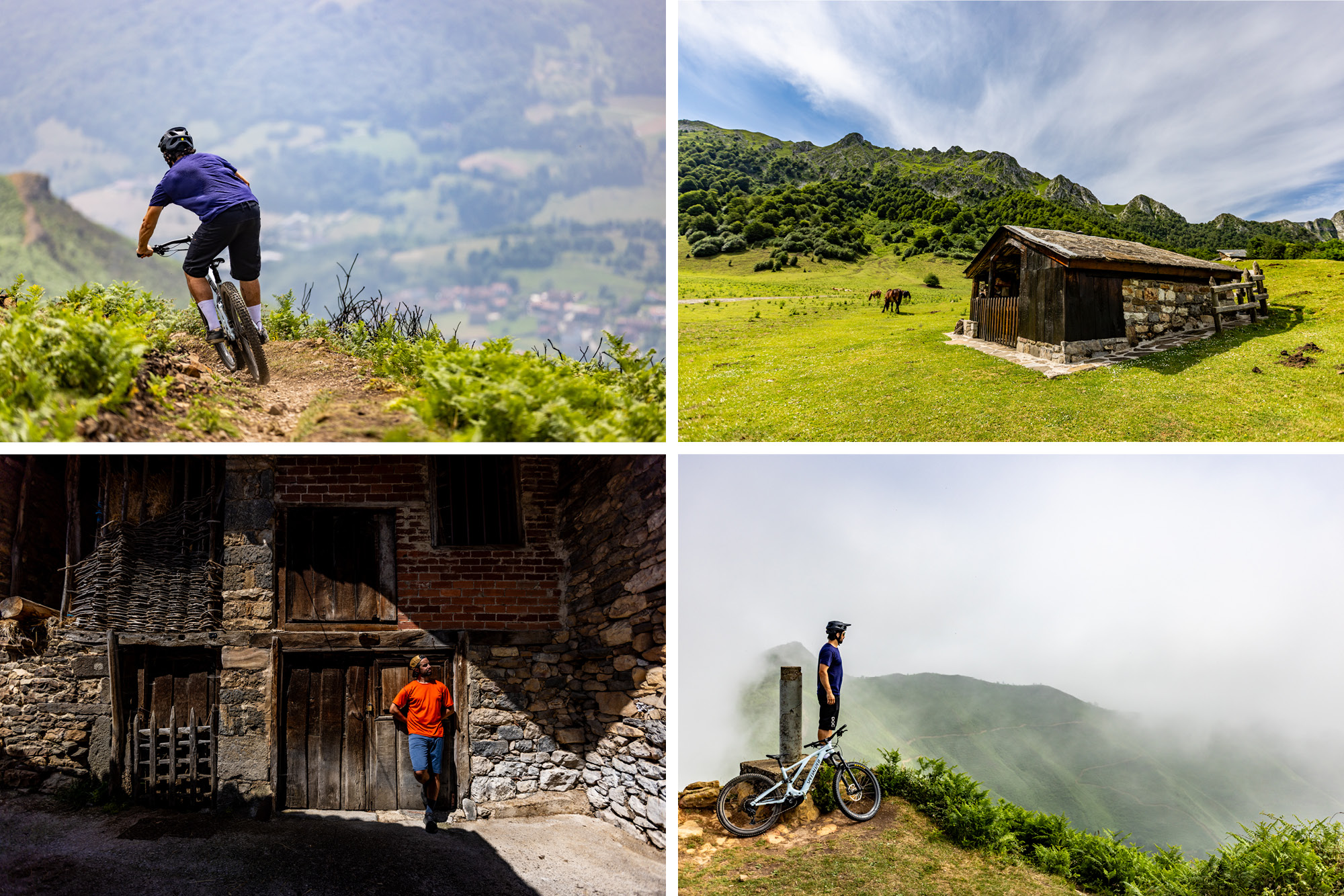
As we come over the Alto de Fito and start to roll down into the Nalón Valley, you can see how the weather has changed from the moist coastal air into sunshine and endless hills of beech and cork woods. Our destination is Pola de Laviana, a small town on the northern side of the main Cordillera Cantábrica, the belt of hills and mountains that blocks Cantabria and Asturias from the more northern meseta of Castilla y León.
We arrive at Mi Bicio, a play on words of the Spanish mi vicio, my vice, to meet Ylenia. An engineer by trade, she set up the bike rental shop off the back of the Senderos de Carbon (Coal Trails) project launched by the local council. One of the first of its kind in Spain, the Senderos de Carbon project aims to take coal mining routes and turn them into mountain biking trails. The jewel in the crown of this trail's project is Spain's first officially IMBA-approved flow trail. A roughly 3.5km descent circuit packed with berms, jumps, rollers, and of course, flow.
And that’s where you find us, sat on our rented Specialized Turbo Levo e-bikes, watching the birth of clouds above the ridge, vultures circling and a ribbon of trail taking off fall line down the mountain before climbing again to where the flow trail and the Senderos de Carbon begin. In fact, they began a little further back, in a pasture full of cows with their summer orchestra of bells chiming, happily chewing the cud as we peddled by.
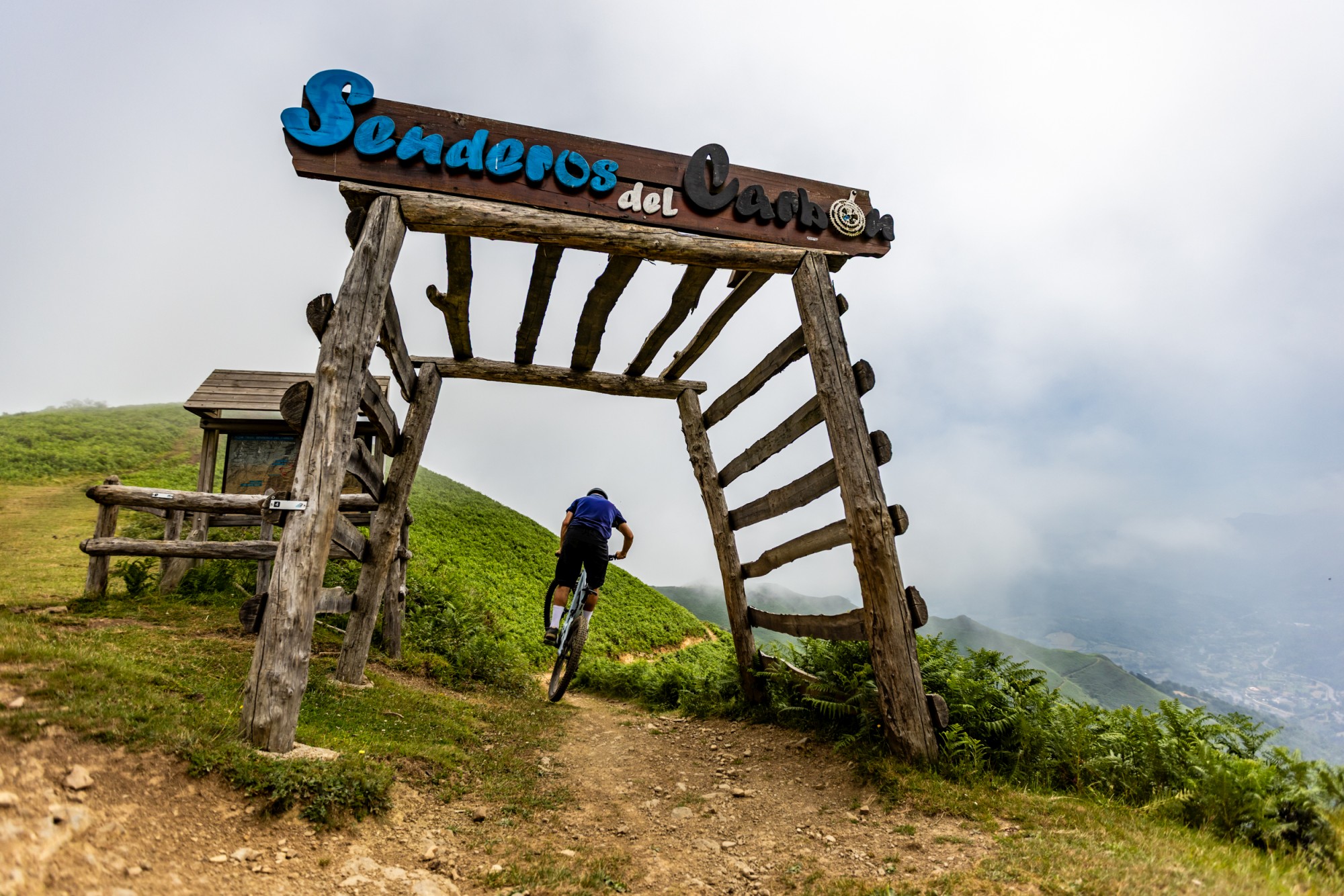
Berm after berm after berm we blast through as we rip eagerly along the mountain side. The true sign of a good flow trail is one where you don’t need to pedal much; the berms, roller and jumps provide the speed needed in the right places and slow you down in others. Thankfully, this was most certainly the case here.
Jump flows into berm and berm into roller and on and on it goes until we’re out of breath simply from the fun of it all. Another great thing about a well built flow trail is that it’s suitable for almost anyone. It’s not steep and there’s nothing that can’t be rolled over slowly, so if you’re just starting out on a mountain bike you can practice all the key techniques necessary to improve your MTB skills.
In the same breath, someone who has been riding their whole life can find ways to jump between rollers and into turns, endlessly creating new lines down the exact same trail. They really are marvelous things flow trails.
Post-flow pondering
Back in town after exploring a few more of the Coal trails and a couple more laps of the flow trail, we ask Ylenia how the trail system has affected the local area.
“Last weekend we had an enduro MTB race here and people came from all over Spain to ride our trails. A few years ago, there were only a few dedicated local riders and builders but now, every weekend you see vans and cars with bikes in town. I hope it continues to grow as an MTB hub in Asturias for many years to come”.
Sat sipping a caña (a small glass of Spanish beer) at a bar in the afternoon sun, looking up at the towering mountains we just rode, you can’t help but feel amazed at how something as simple as turning some old coal mining roads into mountain bike trails can transform a small town into a tourist destination year round. Put simply: bikes are great, and Asturias is a place you should go to ride them. The food is incredible, varied and full of history; the people are friendly and welcoming; and culture, well, it’s around every corner, waiting for you to discover it.
Know how
Our trip
Callum and Dave's trip was supported by Turismo Asturias. Their website offers tips on what to see, where to go and how to book.
Getting there
Veuling fly direct to Asturias from London Gatwick, but another easy option is to fly into Santander Airport in neighbouring Cantabria. Ryanair flies direct from London Stanstead, Manchester, Birmingham and Edinburgh.
Where to stay
Callum and Dave stayed at the four-star Silken La Hacienda de Don Juan in Llanes, and the beautifully situated La Casona d'Entralgo in Laviana. For their final night in the Redes Natural Park, they stayed at Hotel Rural Reciegos, with its stunning mountain parnorama.
Where to eat
If you're looking for delicious traditional Asturian cuisine, head to Casa Poli in the tiny town of Puertas de Vidiago. This is a very popular restaurant and they don't take reservations, but it's well worth trying your luck!
Bike hire
There are loads of places offering bike hire dotted around Asturias, so you should have no problem finding a set of wheels. Callum and Dave used Mi Bicio in Laviana to rent e-bikes for the Carbon Flow Trail.