- Details
- Written by: Dave MacFarlane
The rain had found its way into everything.
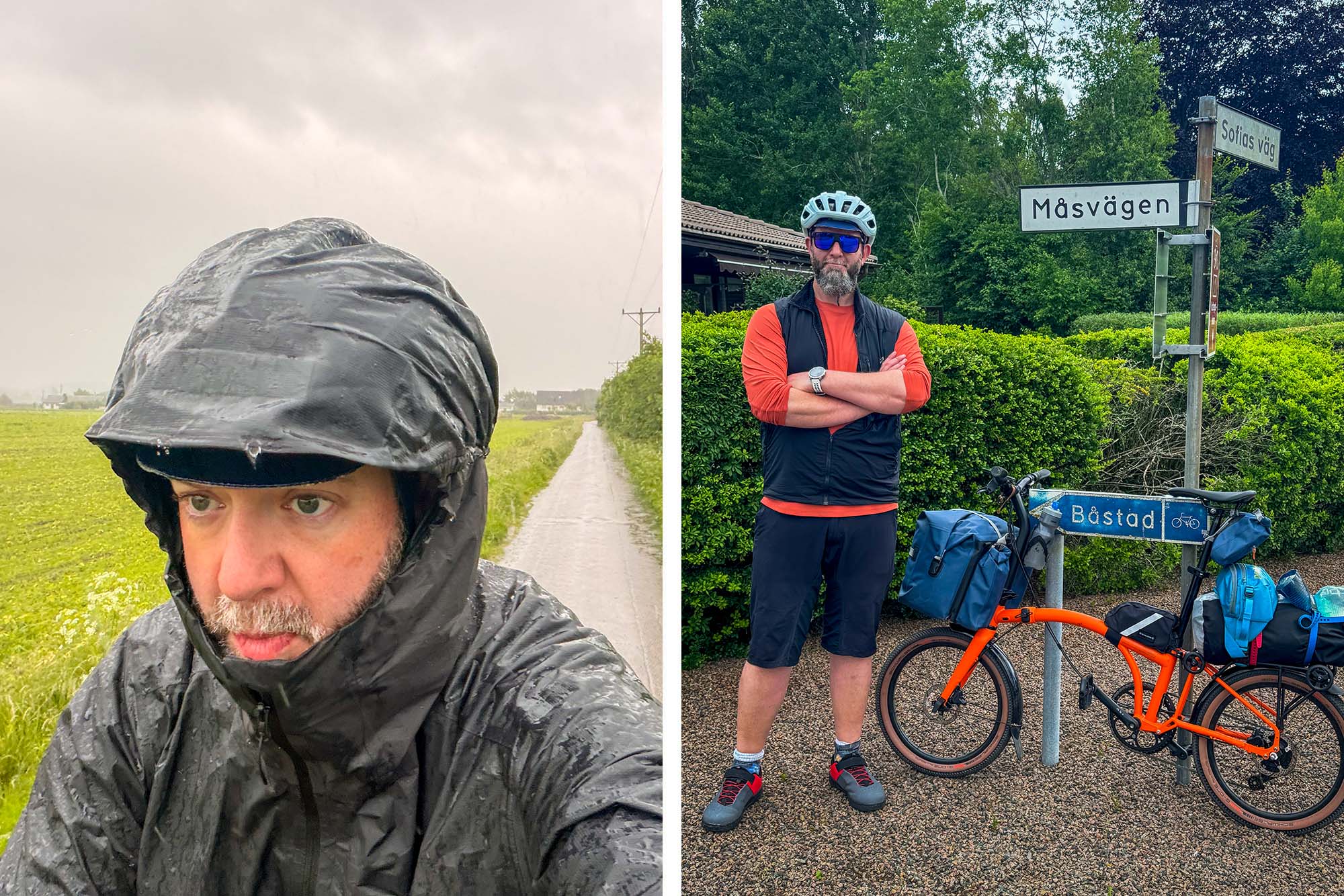
It had been falling for hours, driven sideways off Sweden's west coast by a wind that seemed intent on making our progress north as difficult as possible. Water ran from my helmet, down my waterproofs and eventually into shoes that had given up any pretence of keeping my feet dry a long time ago.
Somewhere ahead was Onsala. Somewhere beyond that, Gothenburg. Behind us were three days of Swedish coastline and around 300 kilometres. But none of that mattered much now.

What mattered was the number still glowing on my Garmin. We had the best part of 100km to ride that day and, more importantly, we didn't have the luxury of not riding them.
“Distance feels different when you don't fly over it. You feel the joins.”
Our schedule was tight. Trains were booked. Work and life waited back home. We had to keep moving. So, we pedalled.
At some point, when the wet had worked its way into the last corner of us, we detoured off the route and went in search of a bakery.

Backa Bageri in Väröbacka wasn't supposed to be a significant part of our journey along the Kattegattleden. We'd come to Sweden for empty beaches, fishing villages, long coastal tracks and the freedom of travelling with everything attached to two small bicycles. But inside there was warmth, fika and coffee.
Outside I removed my shoes, peeled off my socks and wrung the water from them while standing in the rain. I pulled them back on and, for a few minutes at least, my feet felt marginally less wet. Then the shoes filled with water again.
Four days earlier, things had been considerably more civilised.
Reaching the Kattegattleden
We'd left Oxenholme station on a Thursday evening with two fully loaded Brompton G-Lines and an Interrail pass pointing us towards Sweden. There was even prosecco.
First Class rail travel provided a slightly extravagant beginning to an adventure that would spend much of the following week smelling of wet cycling kit and dehydrated food. We toasted the journey south towards London, spent a very short night in a hostel near St Pancras and were up again early for the Eurostar.

At 268km/h, Europe moves past quickly. By around 10am we were in Brussels. This was where the logic of bringing folding bikes suddenly became apparent.
We stepped from the railway, unfolded the Bromptons and rode. Fully loaded, they were still nimble enough to thread through the streets around Grand Place. There were no bike boxes to unpack, no transfer to arrange and nowhere we needed to leave our luggage. What we'd carried onto the train simply became bicycles again.
Brussels became part of the journey rather than somewhere we were waiting to leave.
It happened again in Cologne, where we jumped off for coffee, and later in Hamburg, where a longer connection gave us enough time to ride through the city's old industrial waterfront. The evening sun flashed across the glass of the Elbphilharmonie as we explored on two heavily laden folding bikes.
We hadn't reached Sweden. We hadn't ridden a metre of the Kattegattleden. Yet somehow the trip was already happening.

The romance faded slightly on the sleeper train north. A long, uncomfortable night in a seat ended with a early awakening in Malmö at 6.30am. We emerged bleary-eyed, folded bikes and bags in tow, having travelled from northern England to Sweden in 32 hours.
Then just 390km of Sweden stretched north towards Gothenburg.
A small bike and a long coastline
Sunshine greeted us in Helsingborg, along with the peculiar combination of nerves and anticipation that comes when a line you've stared at on maps for weeks suddenly becomes somewhere beneath your tyres.
We'd ridden the Bromptons through London, Brussels, Cologne, Hamburg and Malmö by then, but only in short bursts between trains. Helsingborg was different. The bags were loaded, the railway journey was behind us and almost 400km of Swedish coastline lay ahead.
And there was immediate joy to it. We left the city and settled into the rhythm of the Kattegattleden as it slipped in and out of the coastline, through immaculate coastal communities and, unexpectedly, past vineyards. The sea would disappear for a while before finding us again.

Perhaps I'd arrived with the wrong picture of Sweden in my head. The Sweden I knew and loved had been shaped by remote mountain landscapes around places like Riksgränsen and the High Coast; this felt altogether softer. Beautiful houses, vineyards, warm sunshine and the sea repeatedly appearing beside us as we worked through the first 82km.
"The waterproofs had remained mostly redundant so far but Sweden was about to collect on that debt."
Within a few hours I wasn't particularly conscious that I was riding a folding bike. It was simply the bicycle beneath me, carrying me and everything I needed north.
That evening we found our first wild camp in a woodland beside the sea.

It was a warm summer weekend and the coast was busy with Swedes and visitors making the most of the weather. Eventually the sun began its long descent towards the water. We sat looking west as the sky changed. Home lay somewhere out there.
It was an odd thought. A little over a day earlier we'd been standing on a railway platform in Cumbria. Since then, Europe had streamed past at 268km/h, we'd wandered through Brussels, drunk coffee in Cologne, watched evening light bounce from Hamburg's skyline and woken exhausted in Malmö.

Now we were sitting outside our tents on the Swedish coast with 82km in our legs.
Distance feels different when you don't fly over it. You feel the joins.
Sweden at bicycle speed
Morning arrived grey enough to have us reaching for warmer layers. The route soon turned to gravel, where the small wheels of the bikes soaked up the rougher surfaces as we moved away from roads and onto tracks.
Later came the beaches. Miles of them.
Long sweeps of pale sand appeared almost empty beside the trail. It wasn't the Sweden I'd imagined before arriving, and occasionally we'd stop simply because somewhere demanded looking at for longer than the few seconds afforded by riding past.
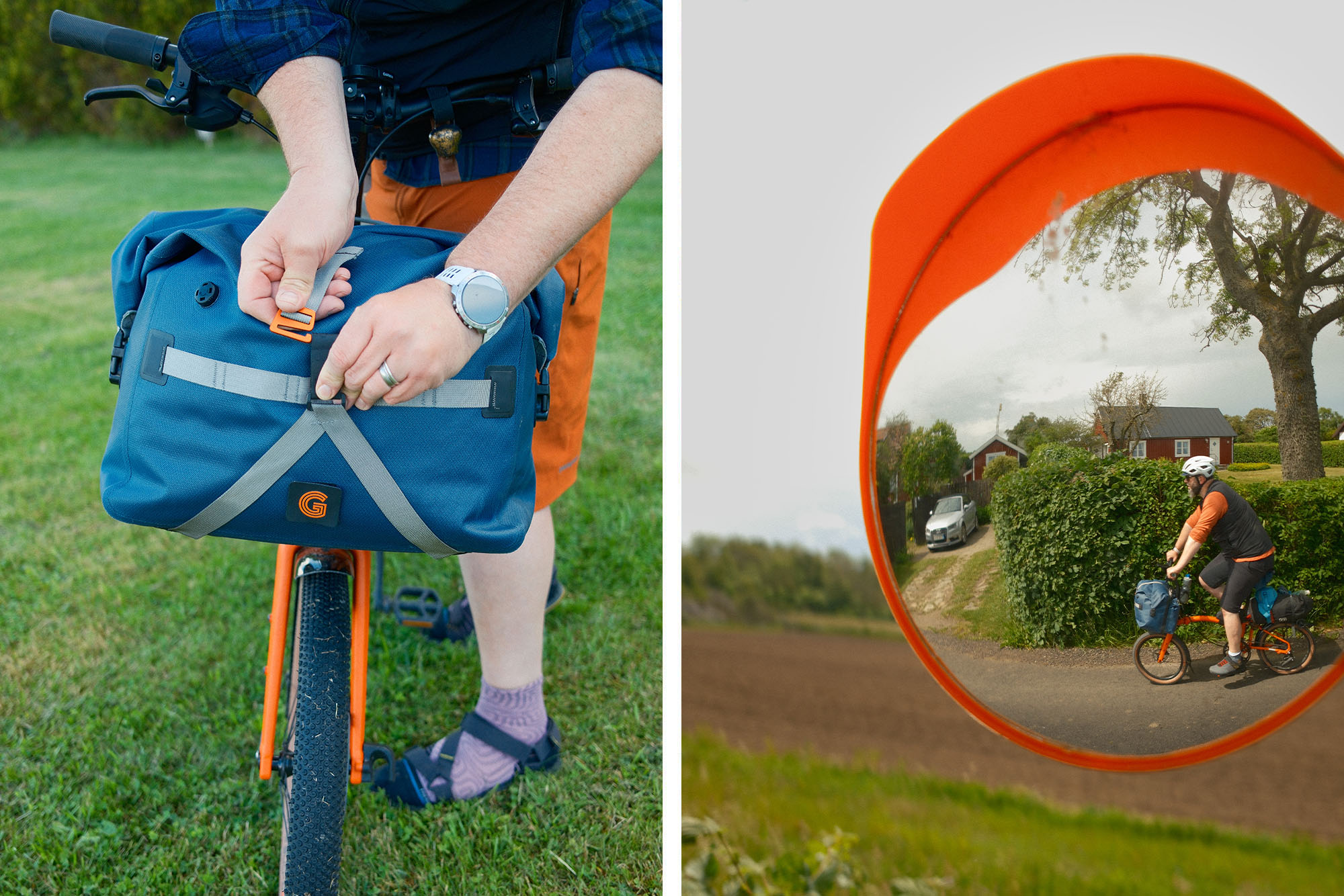
We were also just a few days ahead of the season. Occasionally we'd arrive somewhere with coffee on our minds only to find the doors still closed, waiting for summer to properly begin. It was a small frustration, but it came with compensation: beaches that in a few weeks would be unmistakably summer destinations were still almost entirely empty.
There were hints of what was coming. Glasscafé Tre Toppar in Träslövsläge is known for summer queues that can stretch out of the door as people arrive for ice cream. For now, though, much of the coast still felt as though it was waiting for the season to start.
Båstad provided an inevitable photograph and several kilometres' worth of increasingly childish jokes. Long-distance cycling does strange things to the threshold for humour.
"This is the part of bicycle travel where photographs don't communicate particularly well."
But perhaps that's part of its appeal. Life becomes temporarily uncomplicated. Eat when you're hungry. Stop when somewhere looks interesting. Laugh at stupid road signs. Keep the sea somewhere nearby and Gothenburg somewhere ahead.
On the approach to camp later that evening, we encountered scenes that looked festival-like. Groups gathered outside, celebrations spilled around us and for a while we had no idea what we'd stumbled into. We later discovered they were end-of-school-term graduation celebrations. We rode through them as temporary outsiders, witnessing little fragments of Swedish summer life before disappearing north again.
Day three brought another 86km, the route curling around bays and then moving inland through residential areas and holiday communities. The spectacular moments were mixed with tiny ones, and Morups Lilla Turistbyrå was one of them.
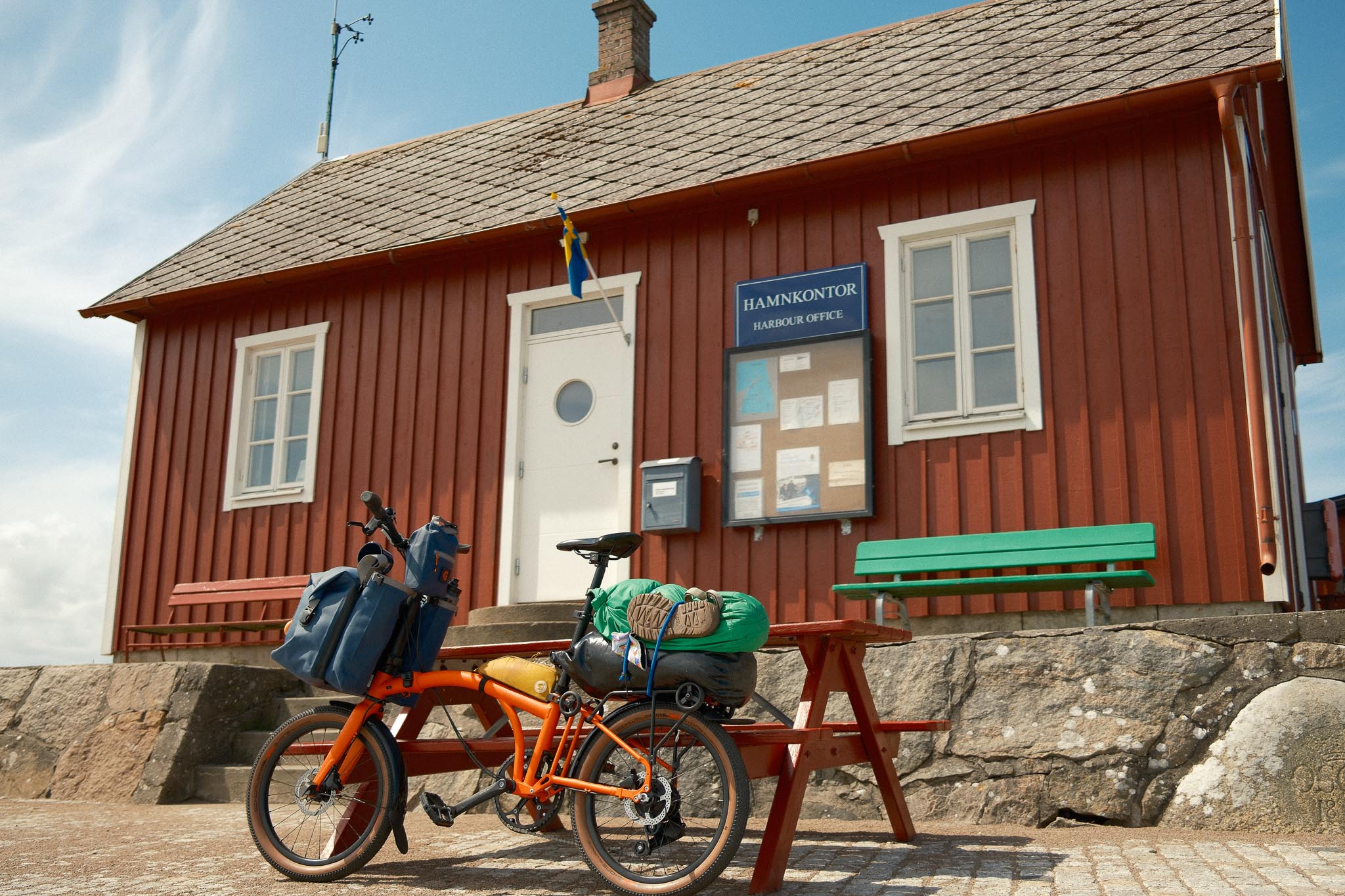
A small colourful wooden cabin beside the route seemed to exist simply to welcome passing travellers: part tourist information point, part book exchange, part guestbook. We stopped, signed our names and moved on.
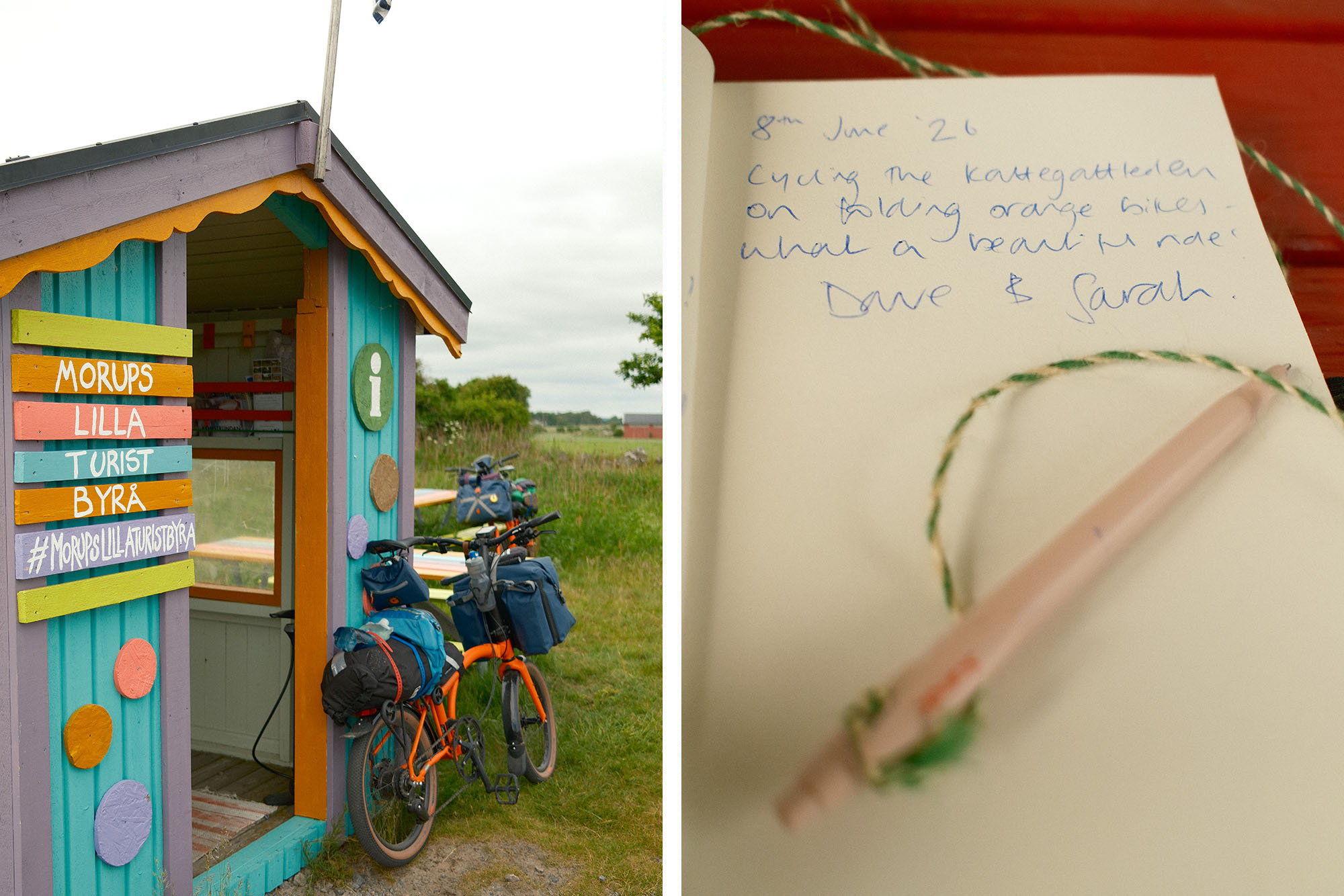
From a train, I would never have known it existed. On a bicycle, it became somewhere we'd been. That distinction felt increasingly important as we peddled on.
We stocked up on food in Varberg before pushing onwards to Apelvikshöjd, where we pitched our tents at a small campsite among apple trees. It was almost absurdly pleasant.
Three days in, Sweden had given us sunshine, quiet gravel, beaches, good — albeit not enough — coffee, coastal communities, apple orchards and evenings warm enough that we'd barely needed the insulating layers we'd packed.
The waterproofs had remained mostly redundant so far but Sweden was about to collect on that debt.
When 100km becomes a very long way
By the following morning, rain had erased the previous three days.
The coastline disappeared behind a grey curtain. Wind drove water across the route and the kilometres suddenly seemed to take considerably longer to accumulate.

This is the part of bicycle travel where photographs don't communicate particularly well. The photographs tend to show the drama: rain streaking through the air, water running from helmets, riders looking heroically weather-beaten. What they don't show is hour four.
Or the moment you realise there are still 60km to go. Or the knowledge that stopping isn't really an option.
We'd designed this trip around a fairly brutal timetable. The same rail network that had given us the freedom to travel across Europe without dismantling the bikes had also created fixed points we needed to hit. So we rode. And rode.
"If the place you need to reach is 50km away, at some point you have to pedal 50km."
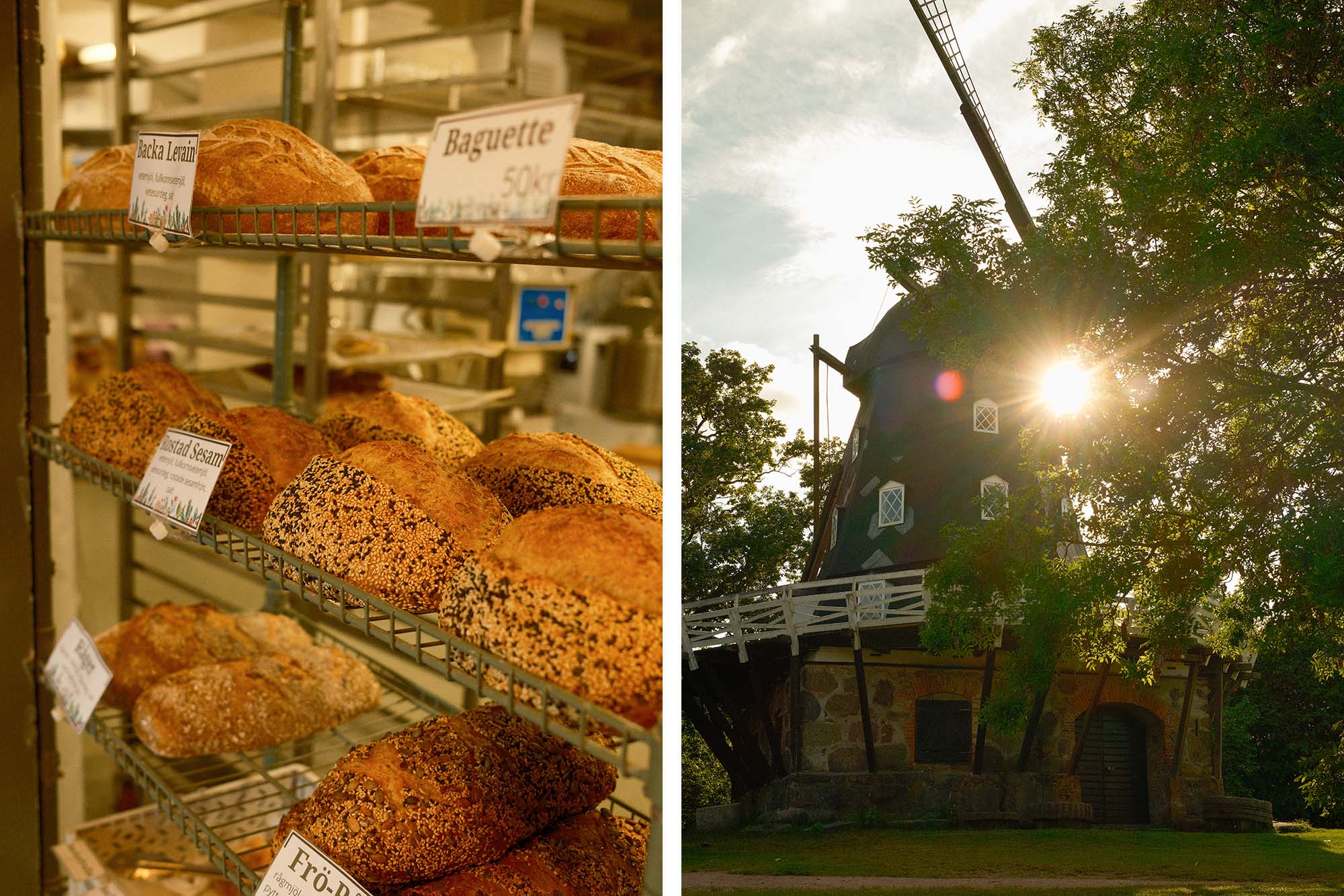
Eventually, soaked through and in need of both psychological and physical respite, we detoured to Backa Bageri. Coffee became warmth. Fika became morale.
For a while we sat inside and pretended we didn't have to go back out. But bicycle journeys have a wonderfully simple answer to indecision: if the place you need to reach is 50km away, at some point you have to pedal 50km.
Back outside. Wet socks. Wet shoes. Waterproofs back on. Keep moving north.
The rain finally began to relent as we reached Onsala and our last campsite of the route. We pitched, pulled on whatever dry clothing remained and cooked Firepot meals. The campsite owner appeared with a beer for each of us. After the day we'd just had, I could have hugged him. Instead, we drank them.
The problem with arriving
Morning brought warmth and, more importantly, no rain. Only 50km remained between us and Gothenburg, but a strong wind and tired legs made sure they didn't disappear easily.
The coast gradually gave way to suburbs. Houses thickened, junctions multiplied and the quiet rhythm of the previous four days began to unravel as we picked our way into the city.
I'd imagined reaching Gothenburg would feel euphoric. Instead, it felt strangely flat.
Perhaps it was exhaustion. We'd arrived at the start of the Kattegattleden already short of sleep, then covered close to 400km in a little over four days. But there was also a feeling that the finish had come around too quickly.

We'd spent 32 hours travelling across Europe precisely because we wanted the journey to be part of the experience. Yet once on the Kattegattleden, we'd ridden to a schedule. There had been beaches without swims, cafés we didn't have time for and plenty of places where curiosity lost out to the distance still showing on the Garmin.
Somewhere along the way, the edges of the trip had become less distinct. Bikes folded onto trains and unfolded into cities; railway connections became rides and the distinction between travelling somewhere and cycling through it mattered less and less.
Perhaps Gothenburg didn't need to feel like a finish line after all.
Four days had been enough to ride the Kattegattleden, but what remained was a sense of how much there had been to stop for, and how easily another road or railway line might lead somewhere new.
Home, journey and destination had become points on the same line — sometimes travelled at speed, sometimes considerably more slowly.
And when the rain came sideways and our shoes filled with water, next time I thought, I'd take longer.
A special thanks to Brompton and Interrail for supporting this trip.