- Details
- Written by: Dan Milner
If the owner wants a cow, I’ll probably suggest an eagle,” smiles Sudip Pyakurel, before adding “I know what is best; what colour combination will work best.” I’m standing with Sudip in his art ‘studio’: one corner of an oil-sodden car salvage yard. It is here, in a graveyard of vehicles that have either been wrecked on Nepal’s chaotic roads—or just given up the ghost after years of bumping their way through potholes the size of swimming pools—that his colourful art takes form. In front of us, curated from a bold palette, is one of Sudip’s most recent pieces: a finely brushed depiction of Siddhi Lakshmi, a tantric warrior goddess, resplendent with snake coiled around her neck and trident in hand. His canvas? The tailgate of a Nepalese truck.
“The images often feature sahitya, or ‘truck literature’”
Sudip’s art is destined to soon join the countless other creatively hand-decorated trucks and busses on country’s rough highways. You’ll find similar “tattooed trucks” on the roads in Pakistan and India, where the practise probably originated. But it’s in Nepal, where imaginative images of people, gods, and animals have added a dash of colour to the highways for decades, that the phenomenon is most obvious. Often, these kalaidescopic-coloured pictures are accompanied by poetic or humorous sahitya, or “truck literature”: witty or thought-provoking aphorisms that bring reflective smiles to the faces of those stuck reading them, in one of the traffic jams that plague the country’s sinuous mountain roads.
There’s more to this artform than just amusing other drivers, however. Truck decoration is an expression of individuality—no two trucks or busses are the same, and the personalisation of an owner’s prized asset often reflects broader societal trends. The artwork frequently speaks to ideas of identity and belonging, and because many drivers sleep in the trucks when on the road, to ideas of home. Like tattoos the elaborate scripts echo the truck owner’s own experiences, aspirations or inspirations.
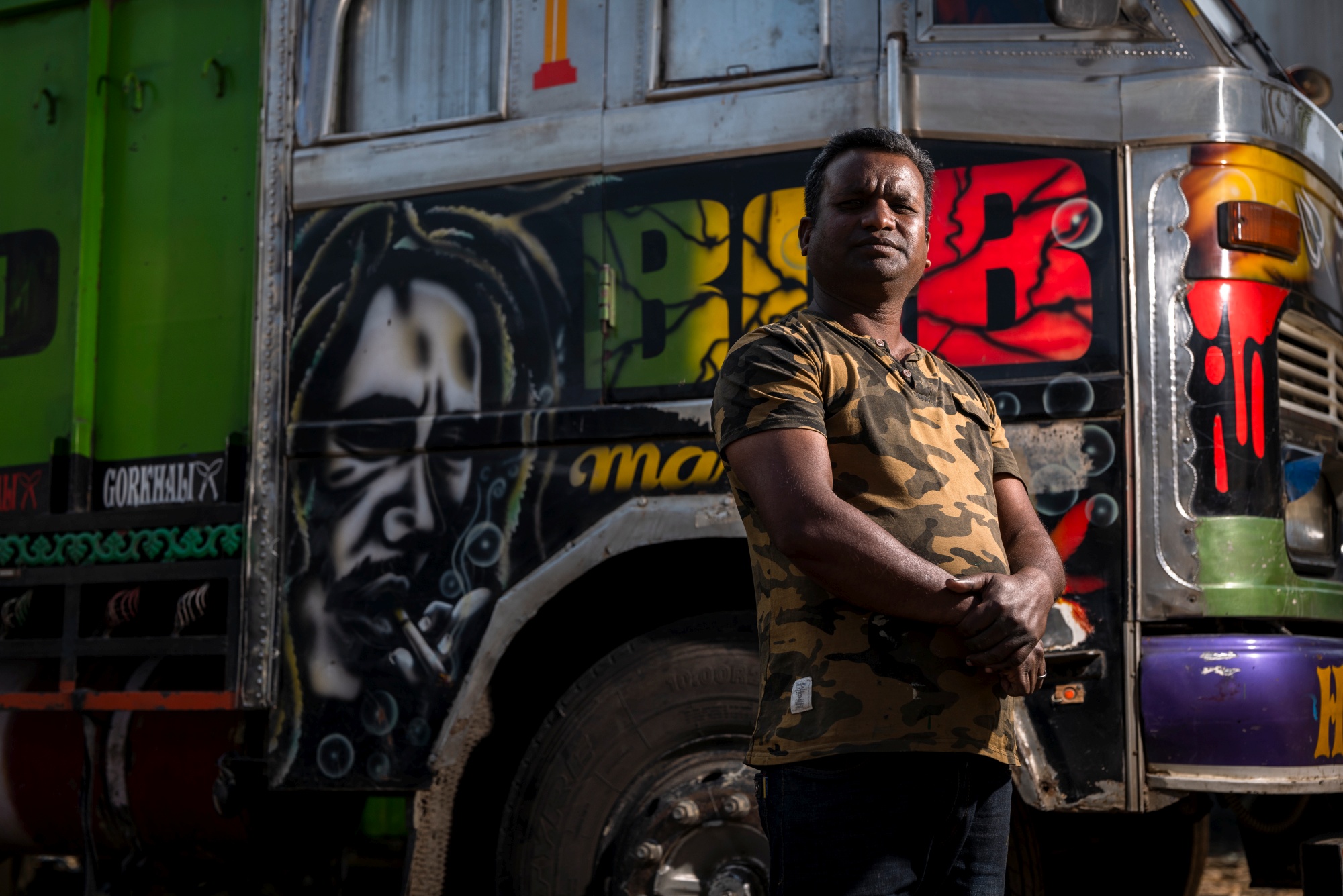
Depictions of deities like Shiva or Ganesh are common commissions, as are political figures like Che Guevara, and musical legends like Bob Marley. [Or, err... Avril Lavigne - ed.] Romantic or religious verses dance their way around tailgates and across fenders, sparring for space with blunt warnings about road safety, or flammable cargo. Sometimes, the paintings merely bid passing travellers good luck and a safe journey. But whatever is depicted, it comes from a place of pride: we are a long way from the “if you can’t see my mirrors, I can’t see you,” decals that populate the UK’s articulated fleets.
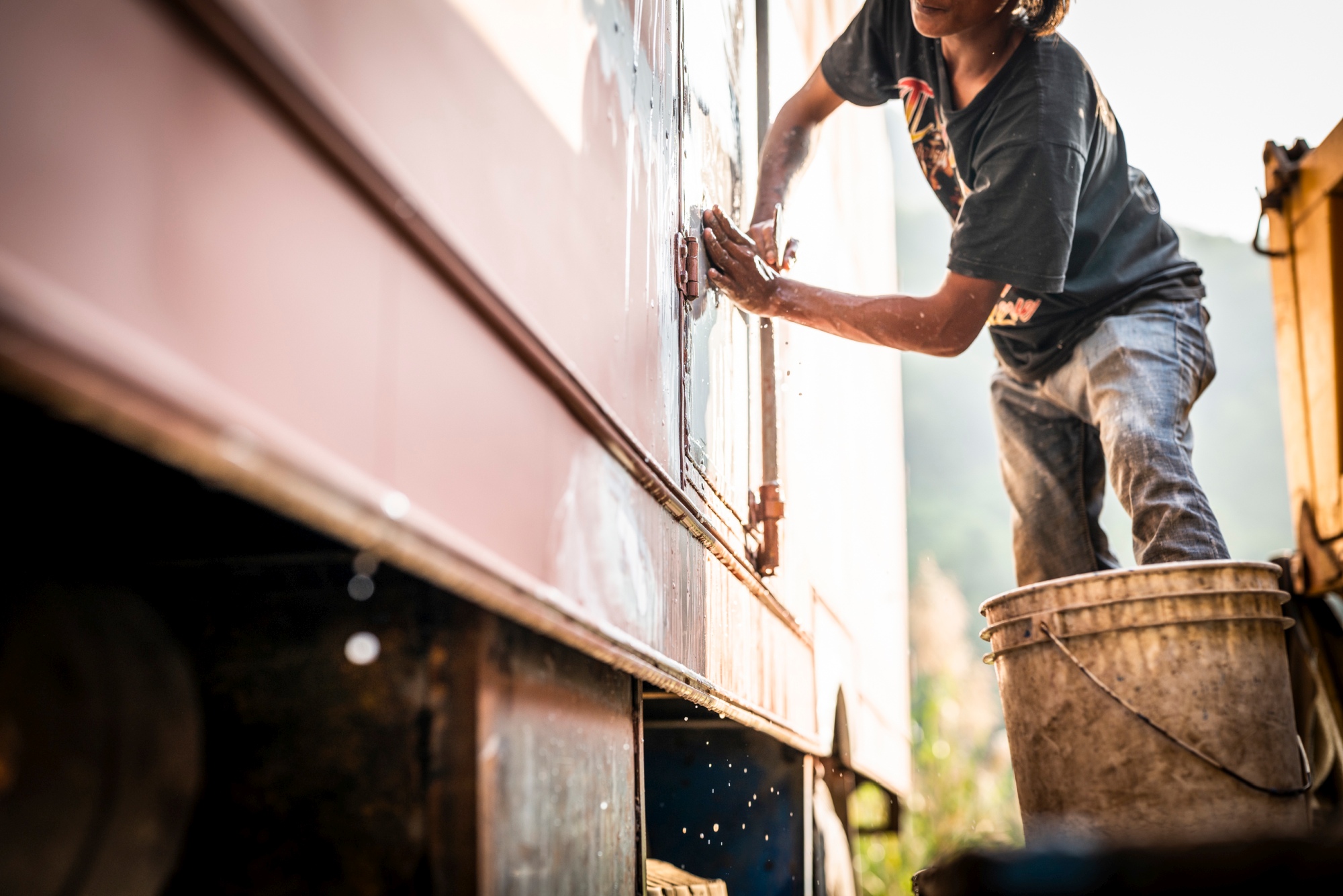
While they have to interpret the wishes of the truck’s owner (often the driver, sometimes the fleet boss), the painter is usually afforded artistic license on how best to transfer linear ideas to a truck’s 3D body panels—and it is here that the individuality of the artist shines. Days of preparation and paintbrush or airbrush work slowly transform a dull, rusty, smoke-belching beast of burden into a magical (albeit still smoke-belching) icon of Nepal’s visual landscape—appreciated by locals and photographed by visiting travellers alike.
This iconic sight may soon be relegated to the history books, however. When I visit, Sudip has become one of the last remaining truck painters of Kathmandu. He is holding out against the odds, but along with his fellow artisans, he’s pitched in an existential battle with economics, legislation, and technology. Seeking to reduce road traffic accidents statistics, in 2021 the Nepalese government passed a law to limit the trucks’ distractions to road users. This was interpreted to include the calligraphic renderings of long scripts that were the truck painters’ stock in trade.
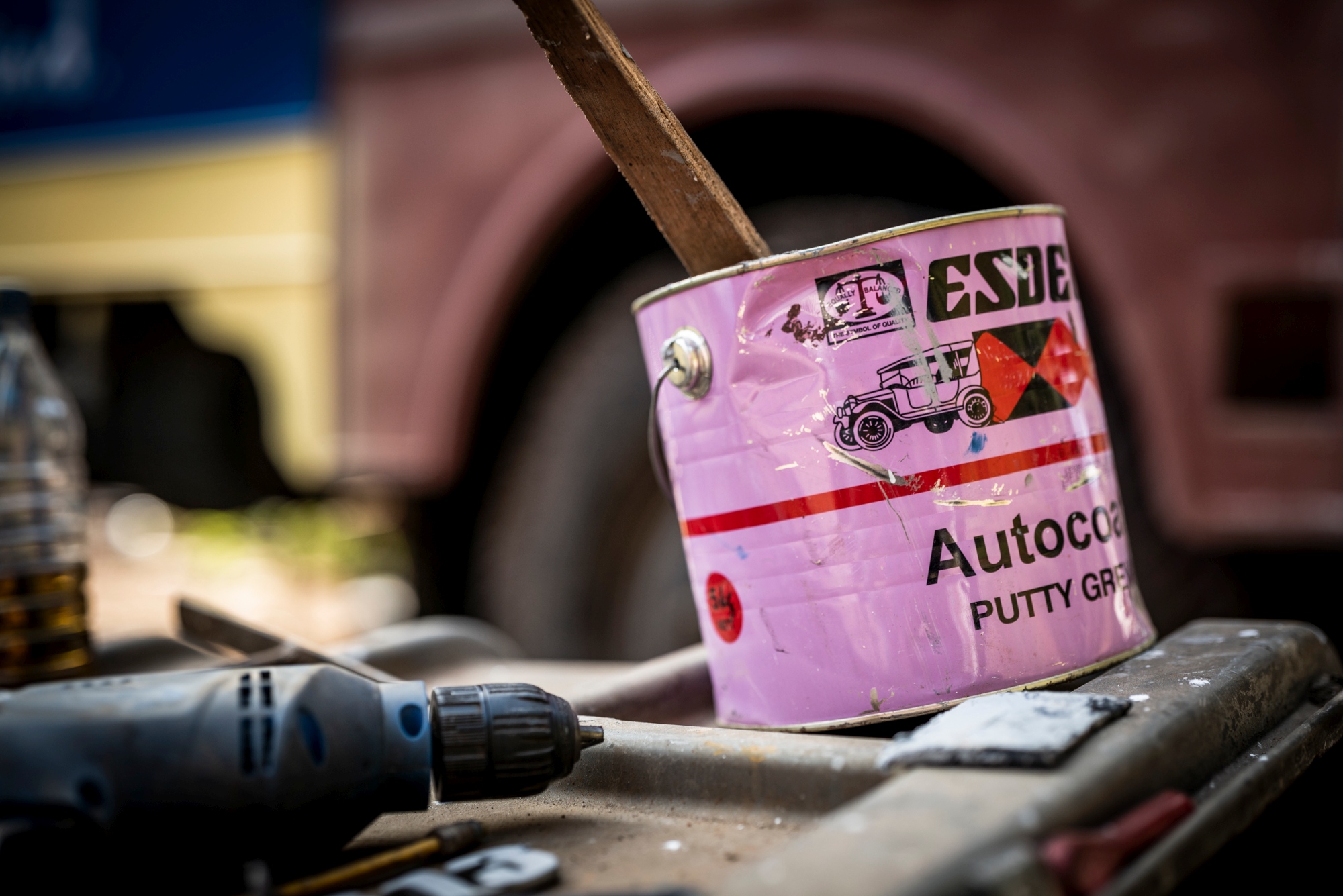
Meanwhile the Covid lockdowns’ impact on Nepal’s road haulage business had a knock-on effect on the funds available to commission truck painters. The once-buoyant demand for bespoke, hand-sprayed artwork never really recovered from this dip, Sudip tells me. The crisis for the painters that has been further deepened by growing access to technology —and specifically printed, self-adhesive decals. Hand-painting a whole truck can take two or three weeks, but the print-on-demand decals that are now readily available can achieve a similar look in just a day. The word “similar” should be stressed here—the effect is not the same—but for many truck owners, the economics no longer add up.
On the face of it, the days of the truck painters could be numbered. But looking around Sudip’s oil-slicked studio I find myself marvelling at the way his colourful art injects vibrancy into a grimy scene, like bright flowers punching through a rusty sea of decay. While they might be cheaper, mass-produced decals cannot reproduce the same effect—they’re less vibrant, less ‘real’, and, by definition, less reflective of individual tastes (whether those of the artist or the owner).Simply put, they’re less human.
Which is why I can’t help thinking that if (or when) these truck painters’ craft finally disappears, it will be a sad day—representing the end of a colourful chapter on Nepal’s roads.
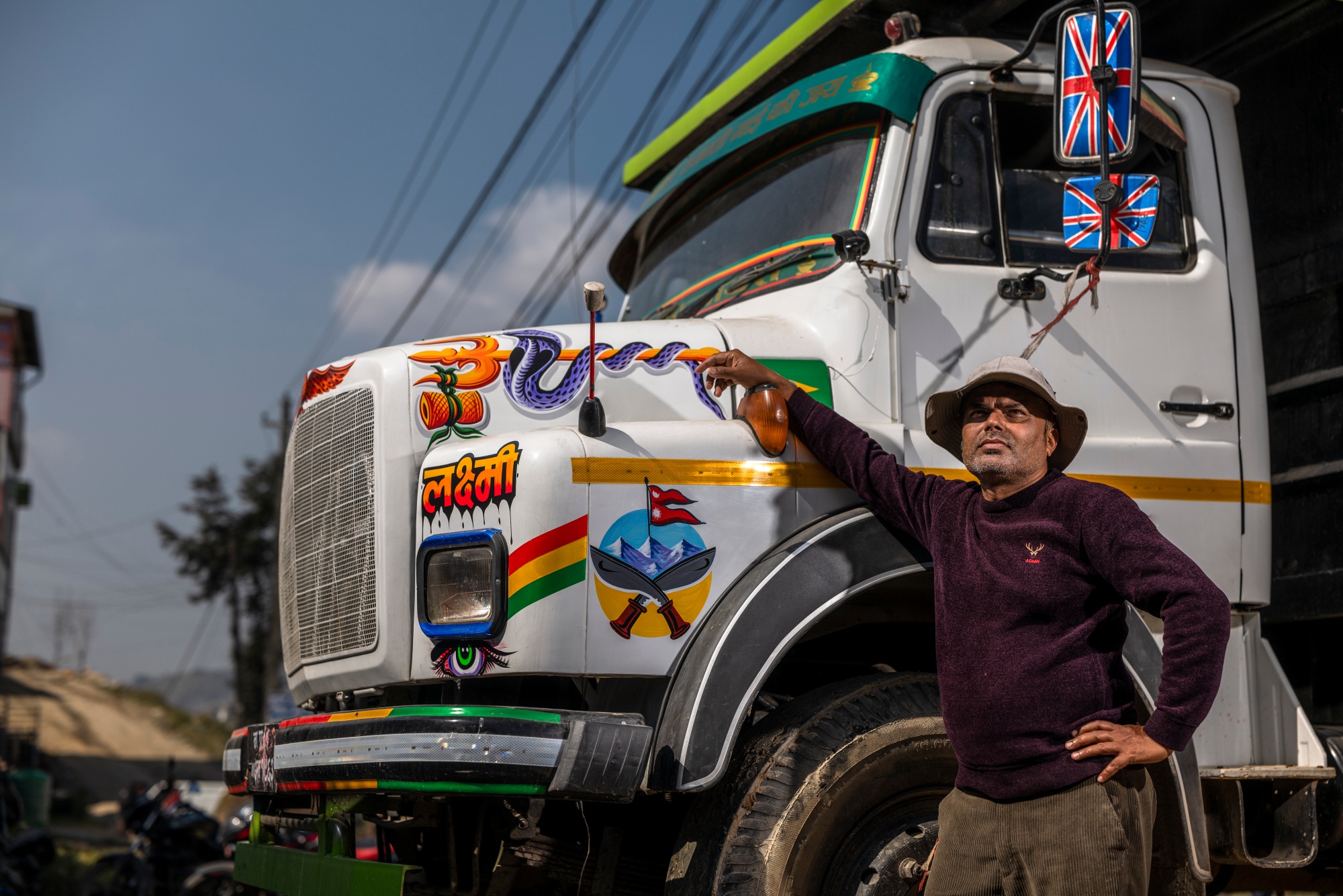
Krishna Thrapmagar, 46, originally from Janakphur in the south of Nepal, has been painting for 28 years. He originally learnt his truck painting in Delhi, India, where he started out in 1997. After taking his craft to Malaysia in 2004 he returned to Nepal in 2010 to set up his own workshop. Like those of other painters, it’s postioned on one of the main arteries in and out of Kathmandu.
Much of Krishna’s work comes as a contractor at a truck depot, but he also paints freelance outside his corrugated tin streetside workshop in Kathmandu’s suburbs. Krishna remains “hopeful” that his trade will sustain him for the long term, but says, as if offering a reality check, “I saw a 50 percent drop in work during and after covid.
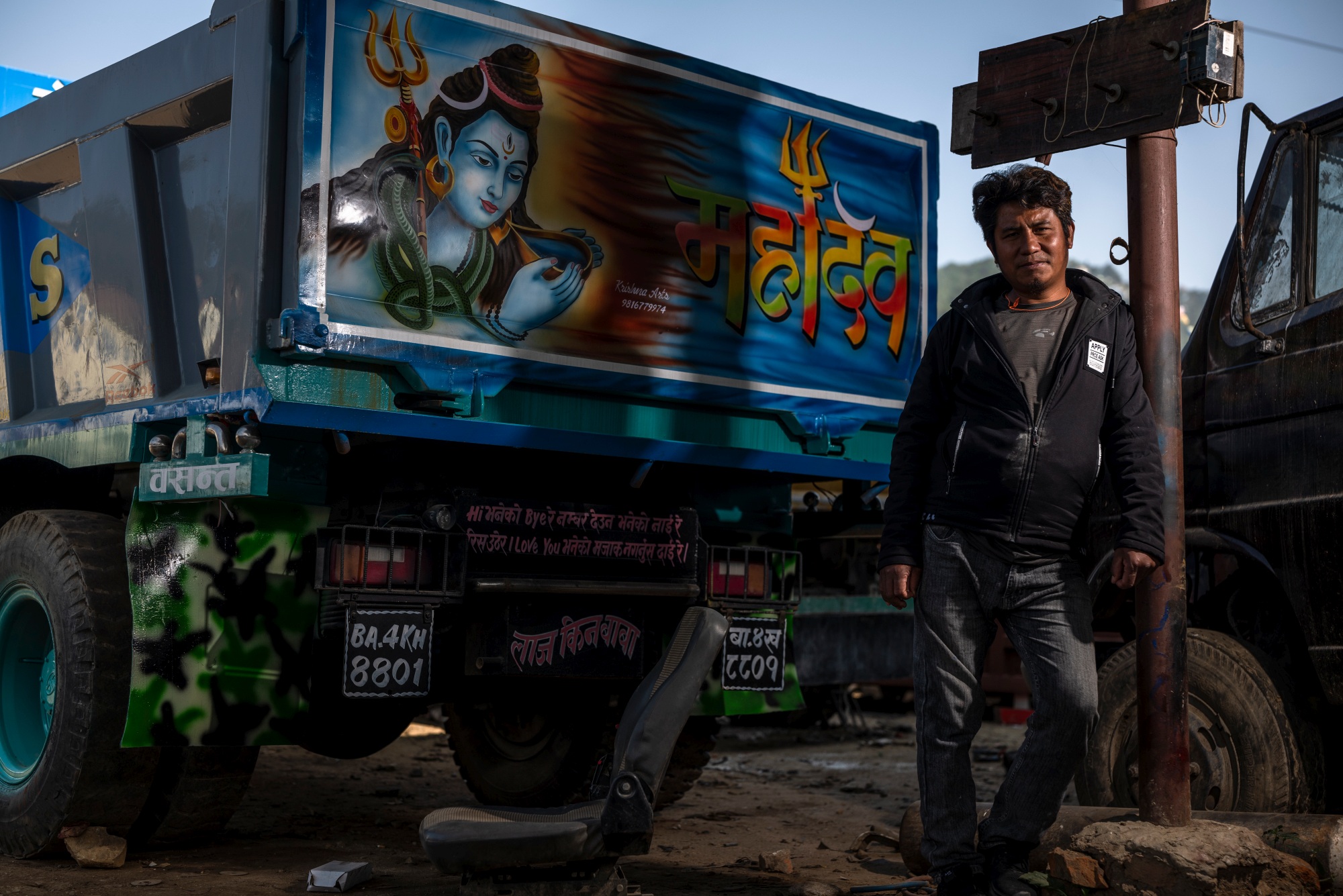
Sudip Pyakurel, 47, a Kathmandu local, has spent the last 20 years painting trucks, although he holds a diploma as an electrician. “It’s hard for a newcomer to start out in truck painting, so they do wall murals and fine art instead. It takes about five years for a newcomer to become sustainable,” he says about the commitment needed to develop in this unique craft. “The next generation are not going to inherit the [truck painting] culture. The young today don’t want to wait, they want money immediately,” he says wistfully.
Sudip charges 3,000 Rupees (£15) to paint the front of a truck, and a larger airbrushed portrait might cost upwards of 6,000 Rupees (£30). A line of basic script is around 5,000 Rupees (£25). “Stickers cost about the same but take only minutes,” he says, “but truck art can be done where a sticker cannot go, such as on 3D panels.”
“The truck’s tailgate reads: ‘I love you. Don’t joke with me.’”
Beneath Sudip’s depiction of the warrior goddess on this truck the tailgate reads: “I said ‘Hi’, She said ‘No’. I got annoyed and said ‘I love you’. She said, ‘don’t joke with me!’
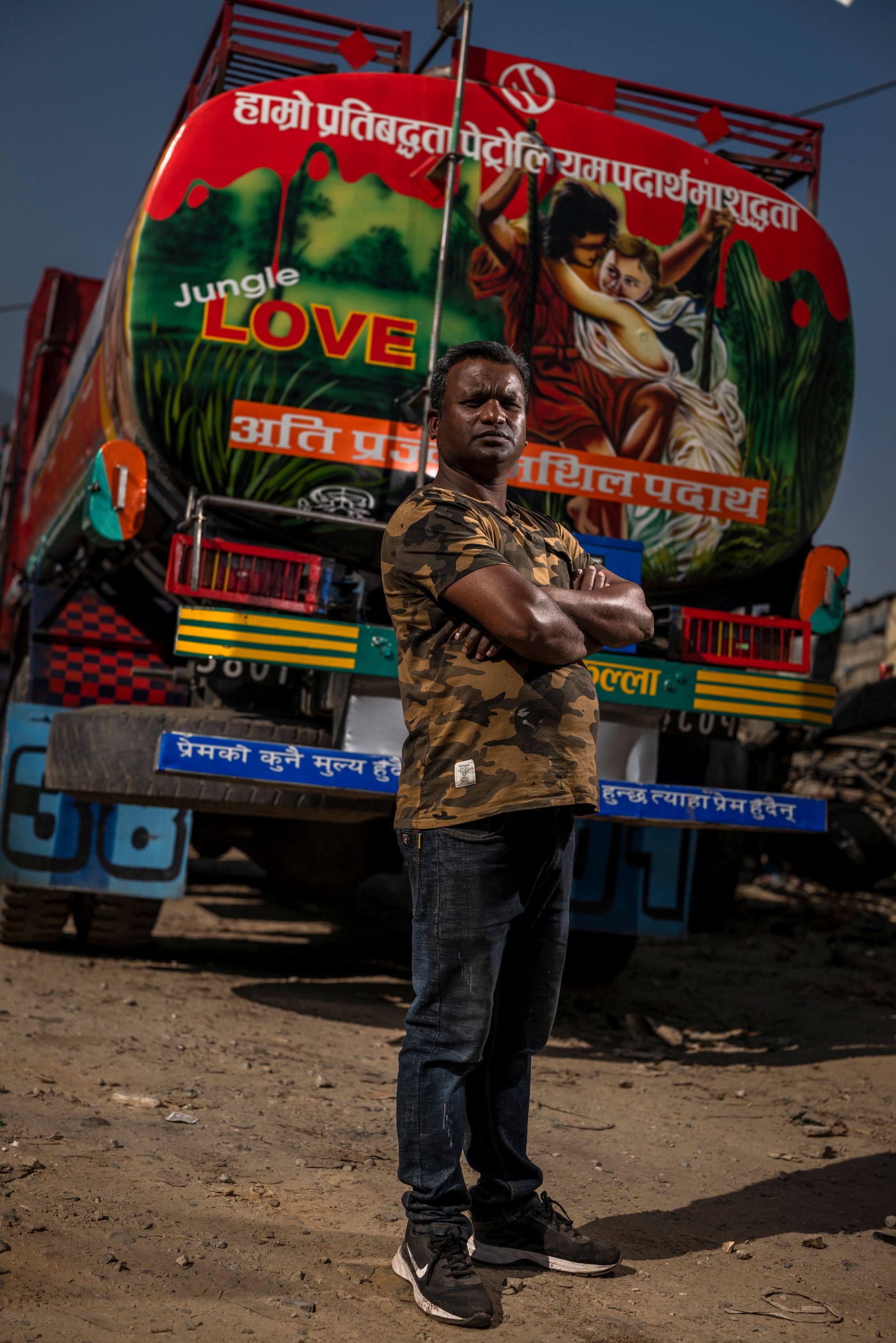
Nanki Ram Vilas Mahra, 40, has been painting for 15 years. A truck might take seven to 20 days to paint, depending on size and intricacy of artwork he says, “but I paint for just three to four hours per day due to the sun and heat.” As with other painters, he often has an assistant, and much of his craft takes place at his own workshop space in the Thankot district, Kathmandu. He typically paints two or three trucks per month.
The 2021 government ban on “driver distractions” saw Nanki lose around a quarter of his work, even though he argues that “the ban really is aimed at removing distractions the inside the cab”—referring to the almost ubiquitous hanging tassles, decorations and decals inside cabs that sometimes almost completely obscure a windscreen.
The script on the back of the oil tanker painted around a cavorting couple and the phrase “Jungle Love” reads: (top) “Our Promise: purity in petroleum products” and (bottom) “Highly inflammable goods.”
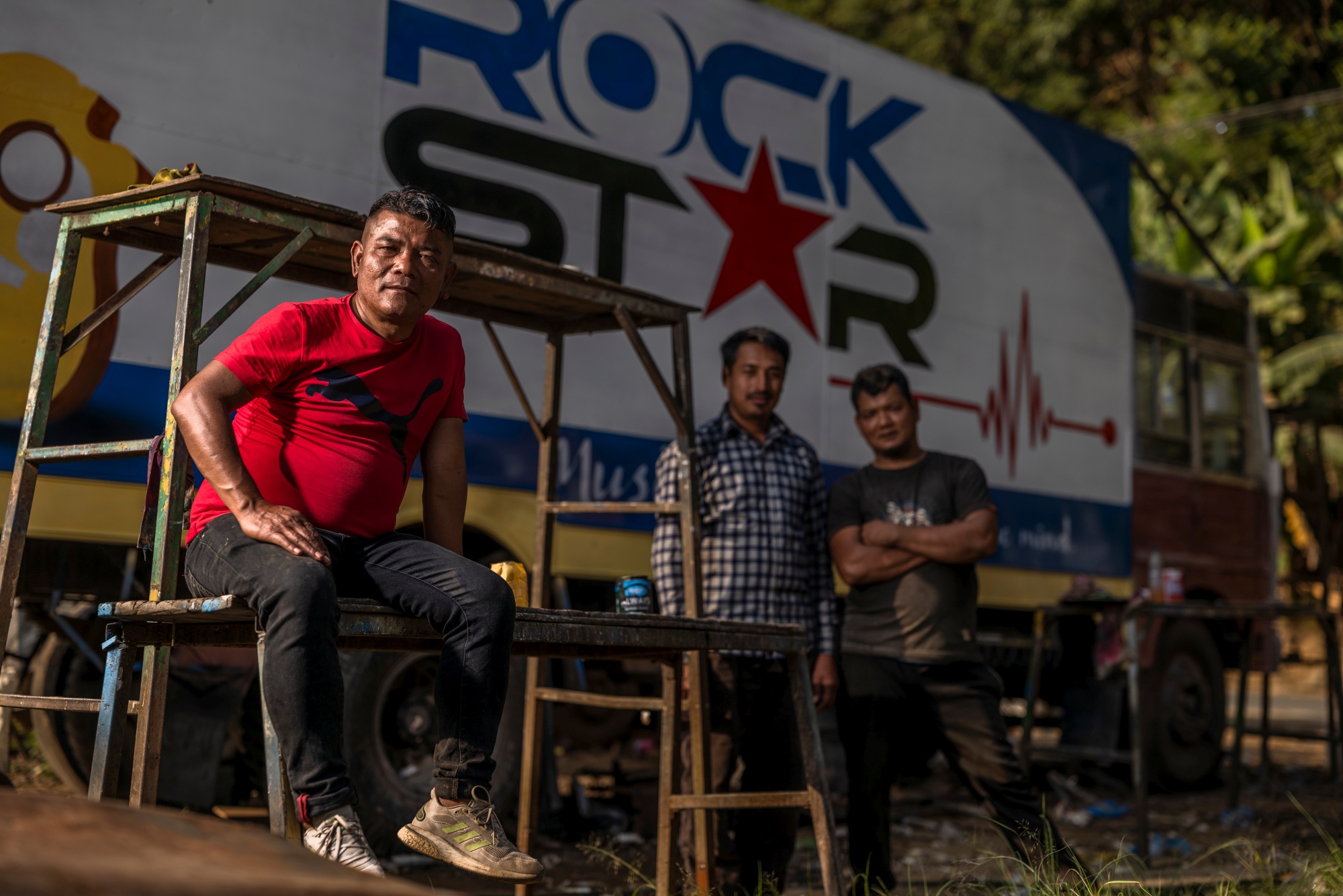
Poorna Bal, 44, come from Hetauda city, south of Kathamdu, and has painted trucks for 20 years. Like many others he often travels to where the truck is parked, sometimes working on location for days, and often employing 15 or 20 others in the preparation stages.
“It was wrecked on the road to China, and was being rebuilt”
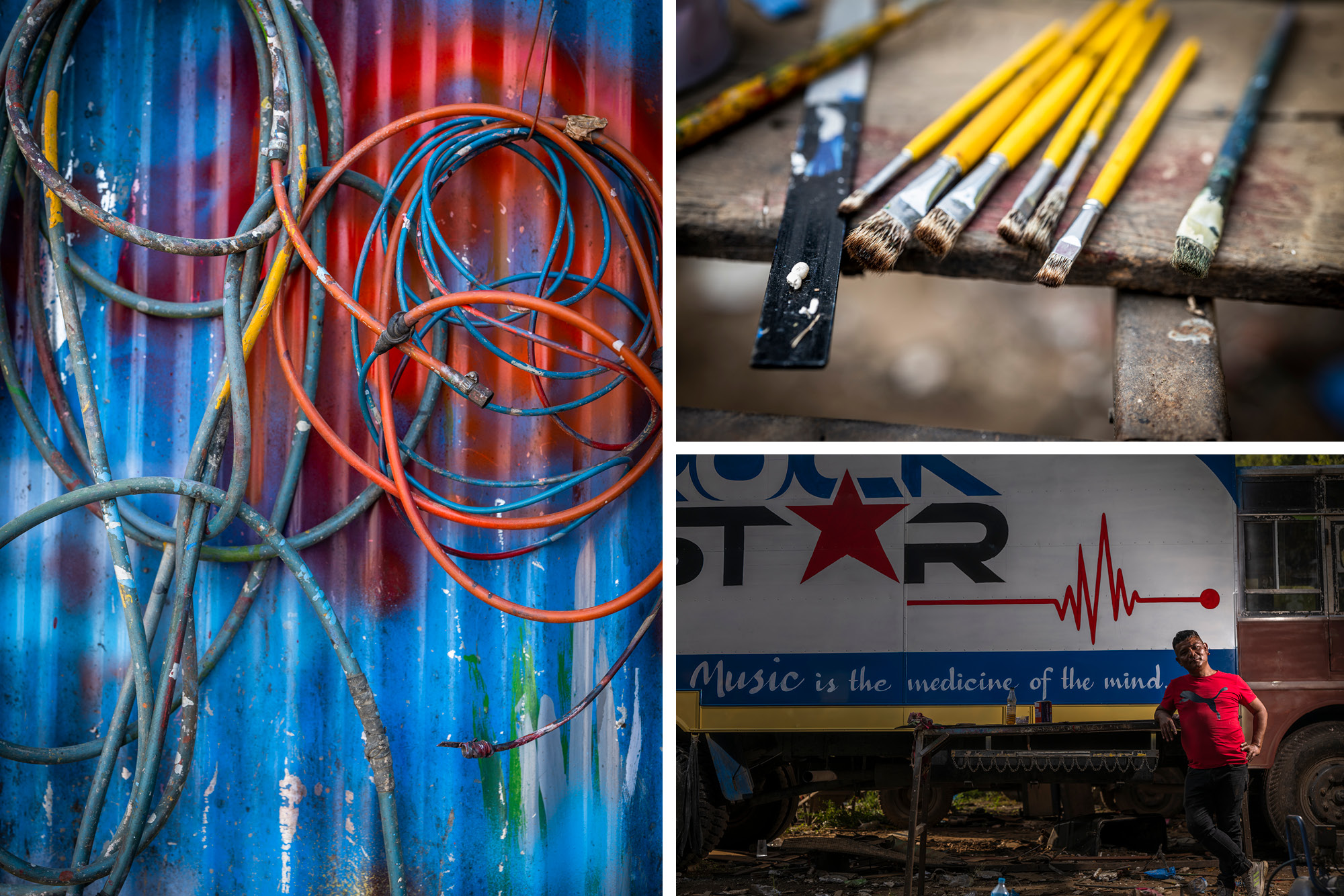
Working in a village north of Kathmandu, just 40 Kilometres from the Chinese border, he explains that this 20-foot (seven metre) container truck had been “wrecked” on the China-Nepal road and subsequently “rebuilt”. When asked what instruction he had been given for the side panel that now reads “Rock Star. Music is the medicine of the mind” he replied,
“I was just told it had to look better than before!”