- Details
- Written by: Sophie Nicholson
 Can you really fit everything you need to complete a six-day trans-alpine trek in a bag small enough to fit under an aeroplane seat? It sounded plausible on paper. But as I stood in the departure queue staring at my bulging bag and doing everything I could to avoid eye contact with the orange-clad EasyJet staff, the whole idea felt simultaneously wildly ambitious, and completely absurd. Inside that ridiculously titchy bag was five days of running kit, including proper waterproofs, a lightweight down jacket, a full change of running clothes, poles, a sleeping bag liner, micro-toiletries, visor, basic first aid, chargers, and just enough civilised clothing to pass as a functioning adult at either end of the trip.
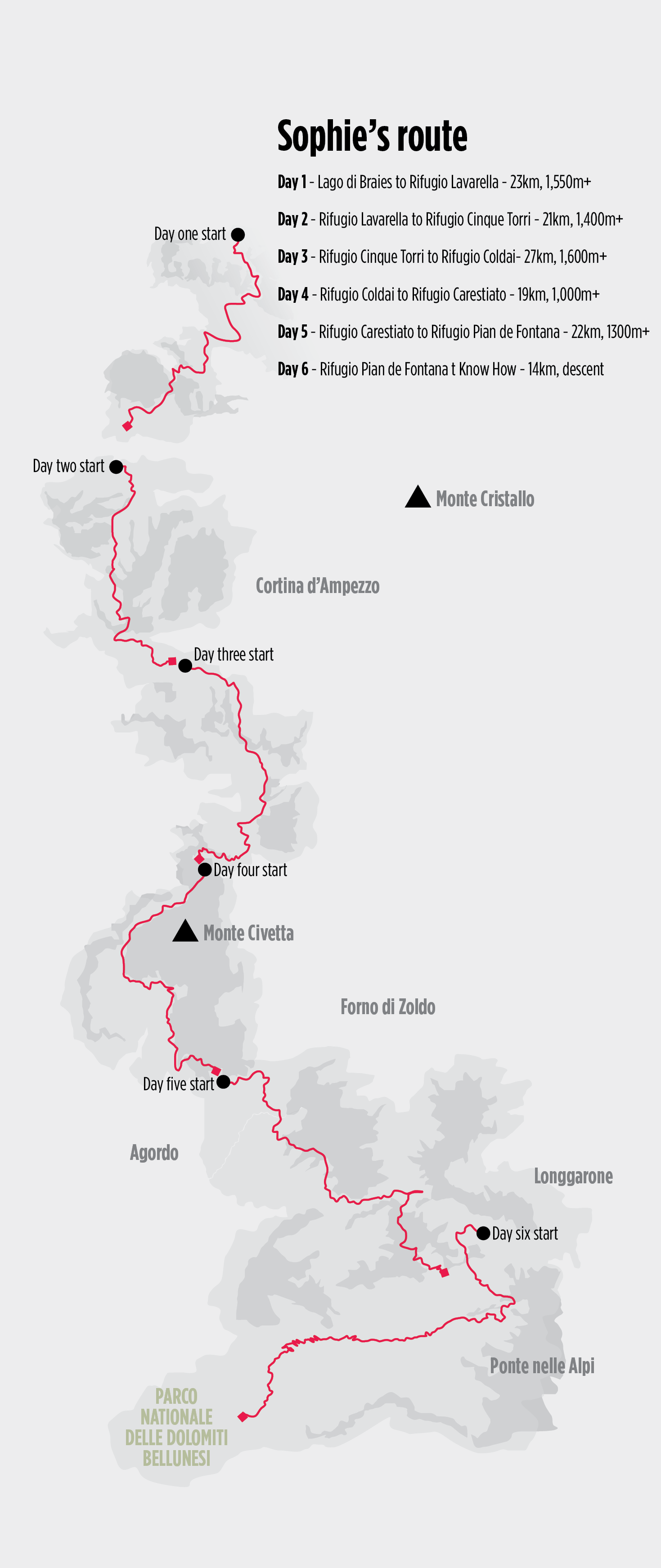
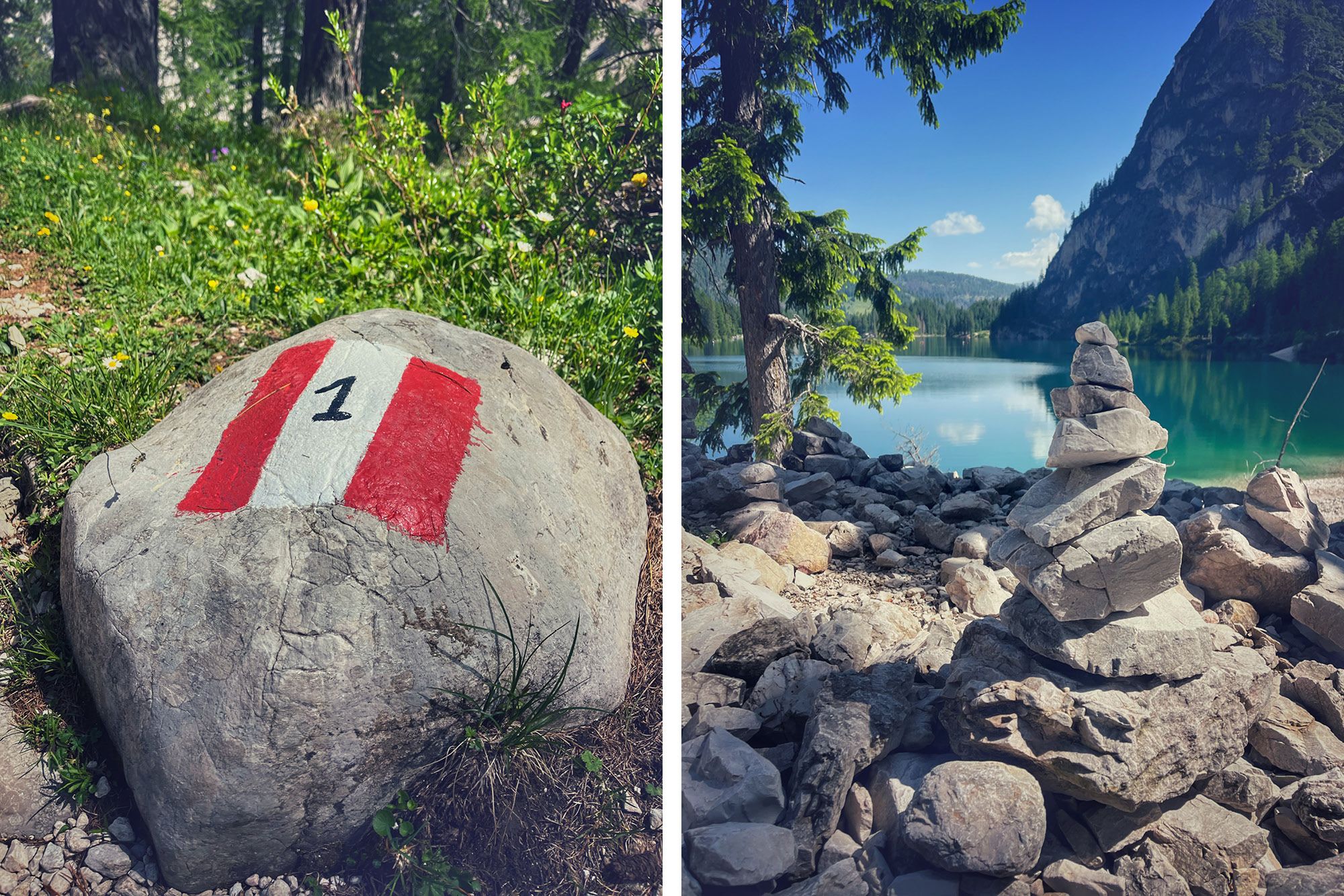
The adventure gatekeeper—aka EasyJet’s clear and non-negotiable luggage rules—allowed one small bag only, maximum dimensions 45 x 36 x 20 centimetres, and it simply had to fit into their preposterously small baggage gauge. Get it right and I’d be unbearably smug for the next seven days, with everything I needed to run the 140km-long route across the Dolomites, known as the Alta Via 1 (or “High Road One”). Get it wrong and I’d be making another generous donation to Stelios’s retirement fund—something I’ve reluctantly had to do many times in the line of duty as an adventure travel writer.
As luck would have it, my slightly reckless experiment in minimalism paid off, thanks to a family grappling with lost passports at the desk. Their faffing absorbed the full attention of the airline staff and allowed me to glide past unnoticed. I was perspiring more than I wanted to at this stage on the journey, but I muttered a celebratory “forza” under my breath as I settled into my seat.
A few hours later, I was on a FlixBus out of Venice airport: the landscape transitioned from flat-land lagoons to Dolomite-y as we rolled into Cortina d’Ampezzo. And I’d arrived just in time for last orders at the Hotel Aquila with my fellow, long-distance trail tacklers, Nikki, Sam, Hannah, John and David. We toasted the week ahead over monstrously large pizzas and similarly-sized beers, airport nerves completely forgotten as the scale of the mountains around us—and the quad-busting adventure ahead—began to sink in.
Wilderness and wild flowers
A taxi dropped us at Lago di Braies the following morning. Ringed by pine trees and peaks, this alpine lake is incredibly beautiful, but it’s also one of the most famous sites in the Dolomites, and often incredibly crowded. The place was already swarming with selfie sticks, pedalos, and linen dresses by 10AM when we arrived. Threading our way through the crowds and out onto the Alta Via proper, our focus quickly transitioned from curated social media feeds to the natural world. The first climb up from the lake rose steeply under the brutal alpine sun. The limestone radiated heat. The first of two sets of running kit was already caked in salty sweat, and we were running low on water. The reality of the self-imposed challenge began to take hold. And then the flowers appeared.
Cobalt-blue alpine gentians nestled into the grass just off the trail. Edelweiss beside them, improbably delicate. Clusters of arnica glowing gold, and campanula gently nodding in the barely-existent breeze. Alpine roses spilling pink along the trail edges, saxifraga clinging delicately yet firmly to rock. The vibrancy of these alpine wonders was contagious. Uplifted and inspired, we pushed on to the Rifugio Biella for a well-earned lunch, before weaving our way onwards towards our basecamp for the night—the Rifugio Lavarella. Home to the highest brewery in Europe, the Rifugio Lavarella offers exactly the kind of rest and recovery I tend to seek after a long day on the trail. We arrived at 5PM as the sky darkened. The first thunderclap landed as our beers did.
We watched the storm roll across the sky from the safety of the terrace, rain lashing sideways across the lake, marmots belting across the plateau in search of their own refuge underground, neon lightning turning the sky into a plasma globe. To say it was a relief to be indoors was an understatement. If yesterday’s victory over EasyJet had left me with elevated smugness levels, today’s tip-top trail timing took it to a whole new level. Tomorrow, however, would be different.
We left the Rifugio Lavarella in bright sunshine just after 8AM, with the marmots out again, serenading us as we began the immediate steep climb up to the Passo di Limo. The air was clear and cool, allowing for swift progress as Nikki and Sam—owners of The Adventure Running Company, who’d organised our trip as a recce of this route—set a steady, chatty pace.
The next climb up to Forcella del Lago (2,545m) was long but glorious. The top of the pass has to be one of the most stunning spots in the Dolomites, if not the world. The last time I was here it was on a multi-day ski touring adventure, and I spent most of the day reminiscing about this, boring the rest of the team with how much faster it was skiing down the couloir on the other side, rather than negotiating the rocky, steep terrain on foot. Helpful? Probably not.
With knees and ACLs screaming, we reached the bottom of the zig zagging path down the couloir at around 11.30am but the day was not done with us yet. The pull toward Lagazuoi at 2,750m lay ahead: higher, more exposed, more committing. The sky began to thicken. Clouds darkened to deep charcoal grey. The air felt charged. Even the flowers seemed to flatten. “That looks… ambitious,” David muttered, glancing upward. We nodded in unison, and quickened the pace. By the time we reached the high point of the day, the mountains ahead were ink-black. Thunder cracked somewhere far too close for comfort. We were high. Exposed. And holding metal poles. We didn’t hang about.
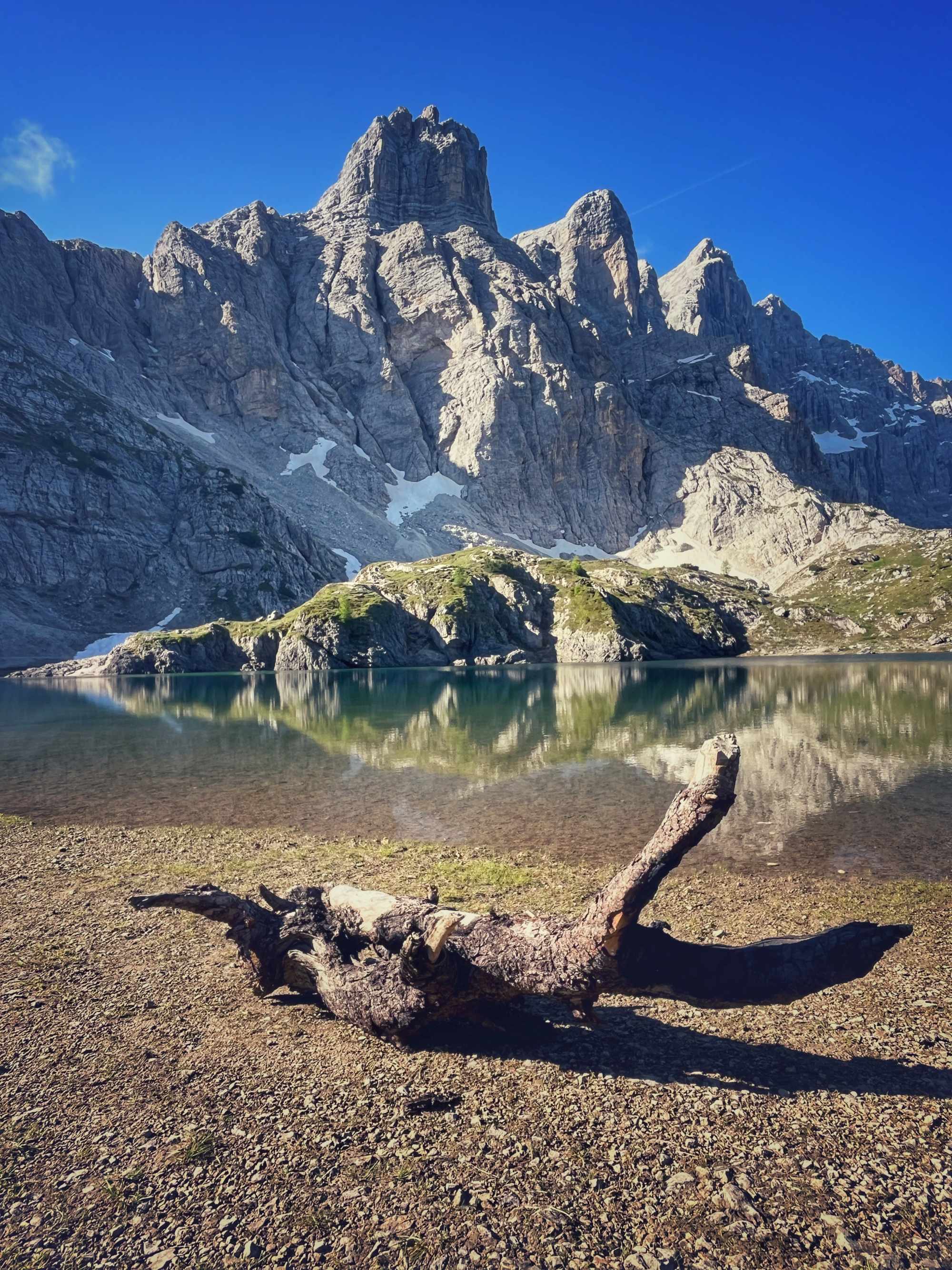
“Thunder cracked too close for comfort. We were exposed, and holding metal poles”
The descent to Passo Falzarego was unsurprisingly rapid, our legs moving faster than comfort dictated. No heroics or hysteria: just sensible urgency and waterproofs on. The rain hit halfway down—big, cold splooshy drops transforming the grassy terrain into the kind of ski slope I’d previously been dreaming about. We slipped and slid our way down the pass together, laughing about the almost complete ineffectualness of the majority of trail shoes in these conditions. We were very relieved when we finally made it to the café at the bottom with just the occasional muddy derrière to show for our efforts. Strudels all round.
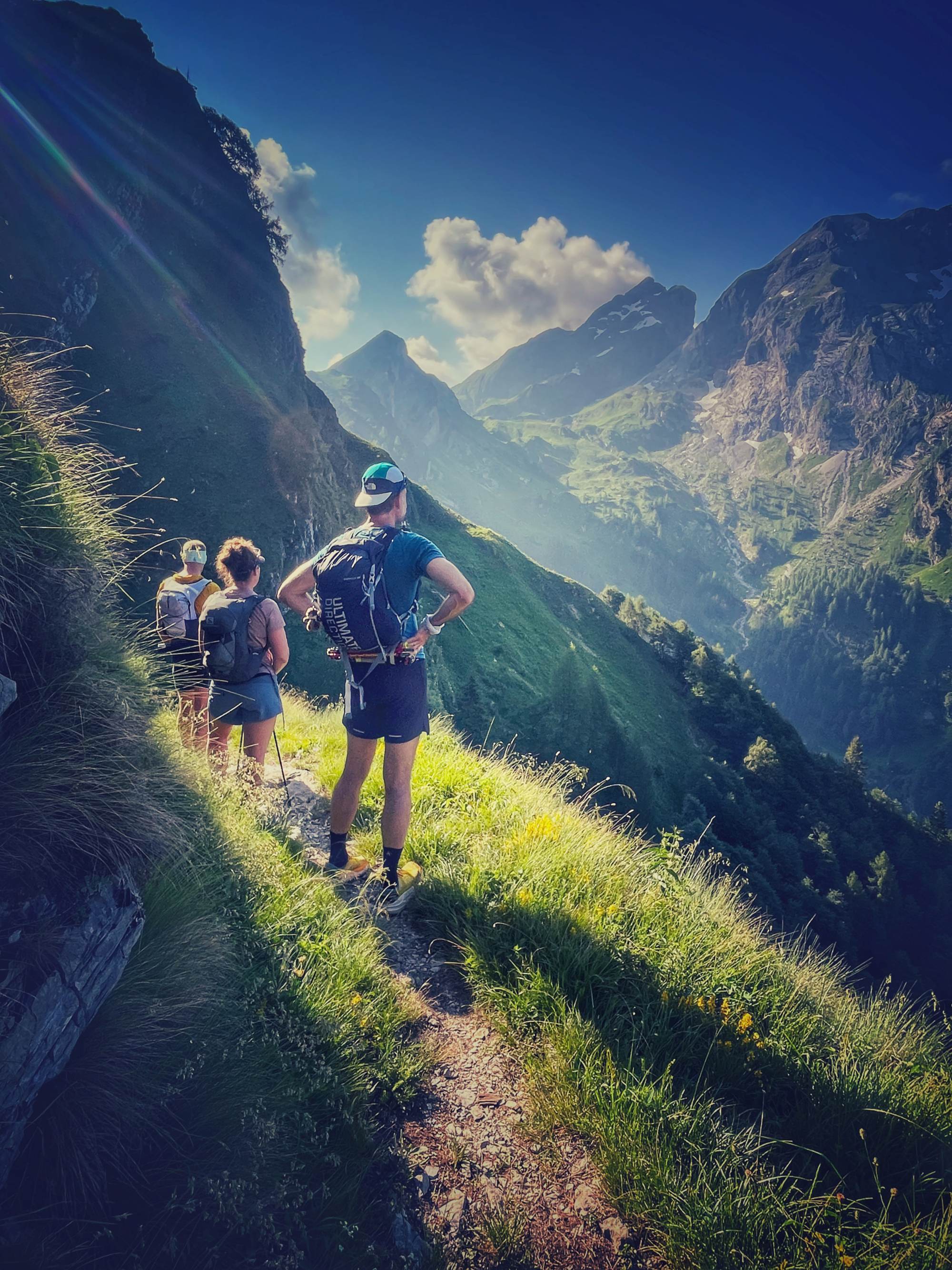
Boosted by sugar and caffeine, we got back on the trail, climbing again but this time through the forest. Soaked but safer. When we reached Rifugio Cinque Torri just after 3.30PM, the storm was behind us. That evening, the sky cleared in time for one of those Dolomite sunsets that makes you question whether someone has actually turned on the HDR function in the mountains.
We abandoned our plates of tiramisu and ventured outside the rifugio to participate in the drama. Seemingly endless cathedrals of rock surrounded us, glowing molten orange before fading to perfect pink. We looked out over the mountains in awe and quiet gratitude. I felt a huge sense of peace: of being utterly tuned into where I was, and exactly where I needed to be.
“It was one of those Dolomite sunsets that loks like someone has turned on the HDR function”
Twist and shout
If day two had deluge and drama, day three was all about near misses. The morning passed smoothly enough, but with T minus 30 mins to lunchtime, Yorkshireman John twisted his ankle so violently time stood still. We all inhaled in unison. Having had my own ankle reconstructed as a result of numerous breaks, it made for extremely uncomfortable viewing. If ever there was a moment that deserved the word “triggering,” this was it. We were triggered.
For a moment it looked catastrophic. His shin looked like it had been through a cheese grater, while the ankle itself had sprouted a lovely little golf ball. He sat down, jaw tight, testing weight cautiously. “There’s a lot to be said for a well run-in engine and a bit of grit,” he declared eventually, standing up. And somehow, impossibly, he continued. Talk about dodging the proverbial trip ending bullet.
The afternoon brought a long valley descent followed by a technical, unrelenting climb up to Rifugio Coldai. The heat returned in force. We passed a group of young male British hikers carrying what looked like full expedition loads—60-litre packs bulging with peanut butter jars and protein tubs. One of the group glanced at us, then at our small packs.
“How on earth do you fit all your gear in those?” he asked, sweating and staggering to gain balance on the steep, rocky ascent. “A combination of experience and a refusal to pay additional baggage fees,” I replied. “Being from Yorkshire or Scotland kind of helps focus the mind when it comes to the latter,” John laughed.
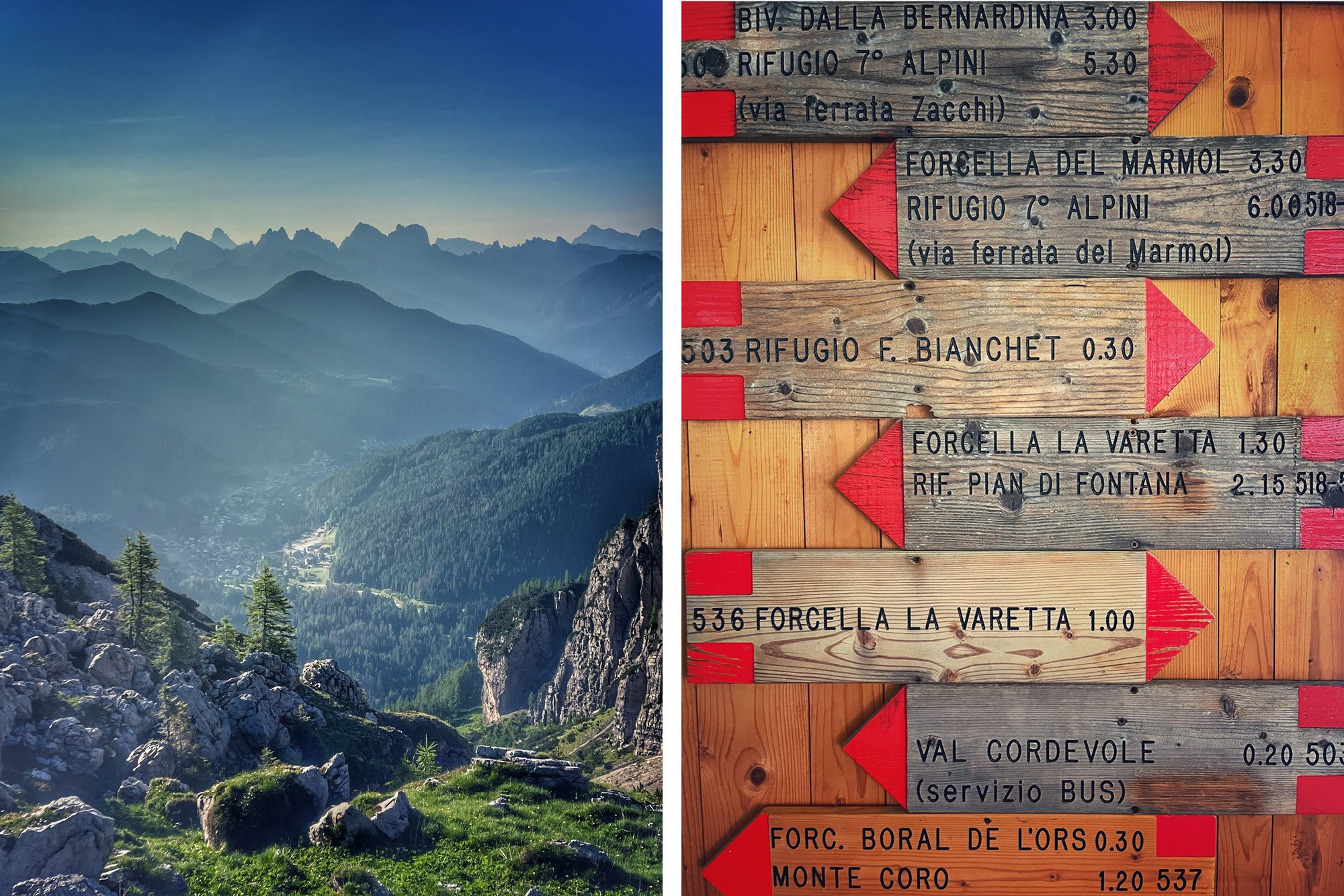
We skipped past them, poles in packs, hands on rock, as we made fast work of the final climb of the day. After what felt like a seriously challenging day on the trail, the gradient finally eased and the Rifugio Coldai (2,135m) came into view.If ever there was a dream location for a refuge, this was it. Perched high above the valley, sheltered by towering limestone peaks behind with epic 180-degree mountain views, it was a spot to savour. That evening’s sunset was outrageous. Again. I could definitely get used to this, I thought.
The next day dawned with a real feeling of positivity, in no small part down to this being the assigned day for a complete change of running kit. In the real world, I might recommend a hit of ashwagandha or caffeine to help lift your spirits. But when you’re three days into a multi-day mountain adventure, I can assure you that a merely changing socks can be a massive mental health booster.
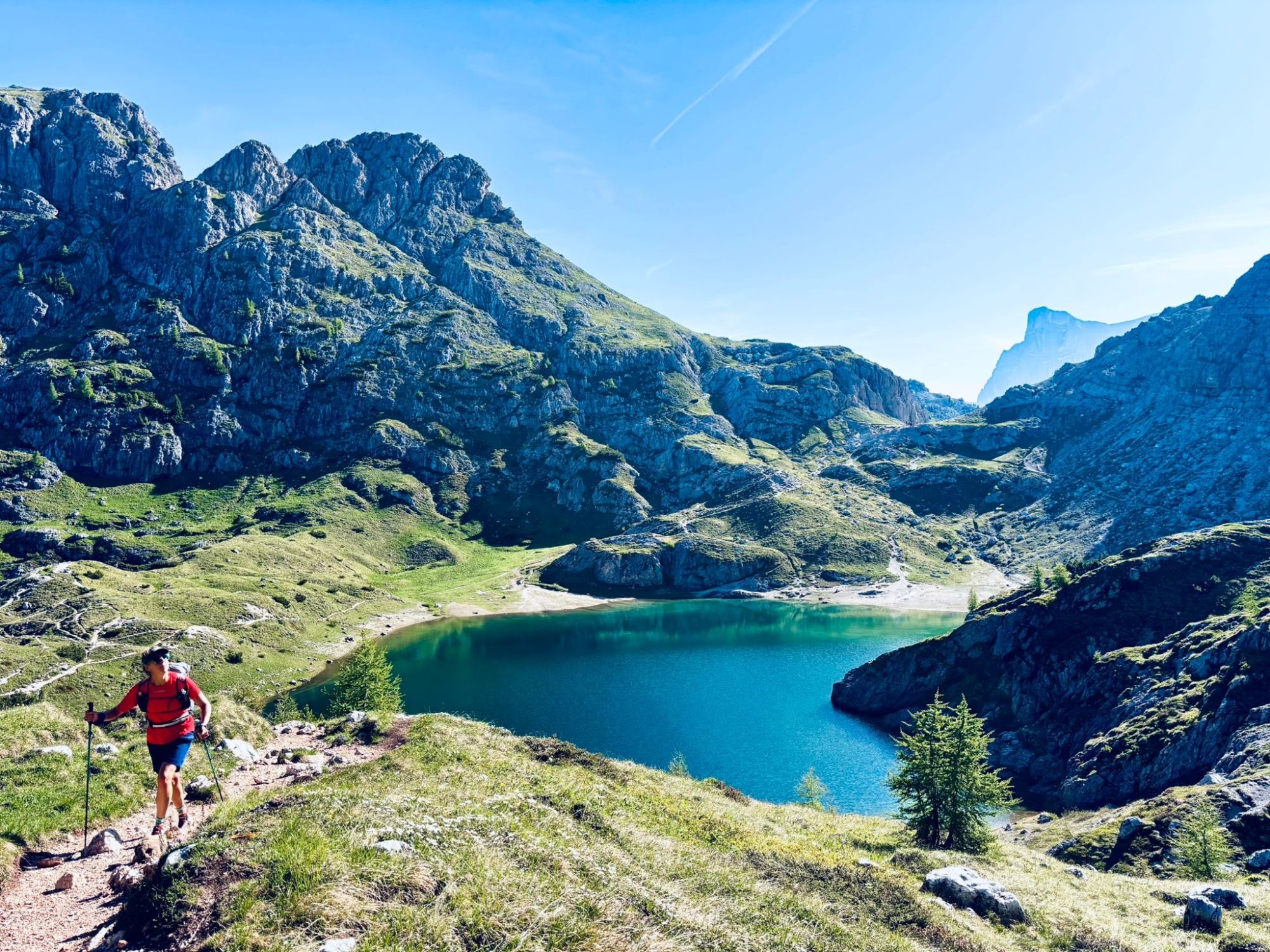
Clad in our shiny, new, non-stinky kit, we headed out early from the refuge and onto arguably the dreamiest sequence of the whole trail. Blue sky. Just the right level of light and shadow. Alpine lakes. Marmots darting between rocks. Meadows bursting with gentians and edelweiss. The Alta Via threading its way through the kind of landscapes you only ever see on Instagram. It helped too that the Rifugio Agordino was, without exaggeration, the most beautiful lunch spot of my life. We sat in a bowl of limestone giants, sunlight ricocheting off pale rock, plates steaming with ridiculously tasty (and affordable, Yorkshire John reminded me) pasta. It honestly felt unreal.
The afternoon continued in the same vein. Wild alpine passes in every sense of the term, technical trails to keep you honest and kilometre after kilometre of life-affirming scenery.
With five kilometres to go, however, we were running seriously low on water and temps were tipping the scorchio scale. Despite it being early summer, the alpine streams were surprisingly dry. Energy levels were low but there was little else to do other than dig in. Left foot, right, foot. Repeat. Ad infinitum. With mere minutes to go before we turned into lizards, the Rifugio Carestiato appeared. Another haven of hydration and friendliness perched high on an alpine plateau. The pints of coke were nectar. The fried cheese at dinner… less so.
Onwards and upwards
We left the Rifugio Carestiato before 8AM, aware that this would be a more self-sufficient day. No refuge open for lunch meant managing water carefully and carrying just enough calories to get us over the high ground. We’d also be traversing what the guidebook described as “a very exposed ridge.” The morning air was cool enough to feel optimistic, but the forecast promised yet more energy-sapping heat.
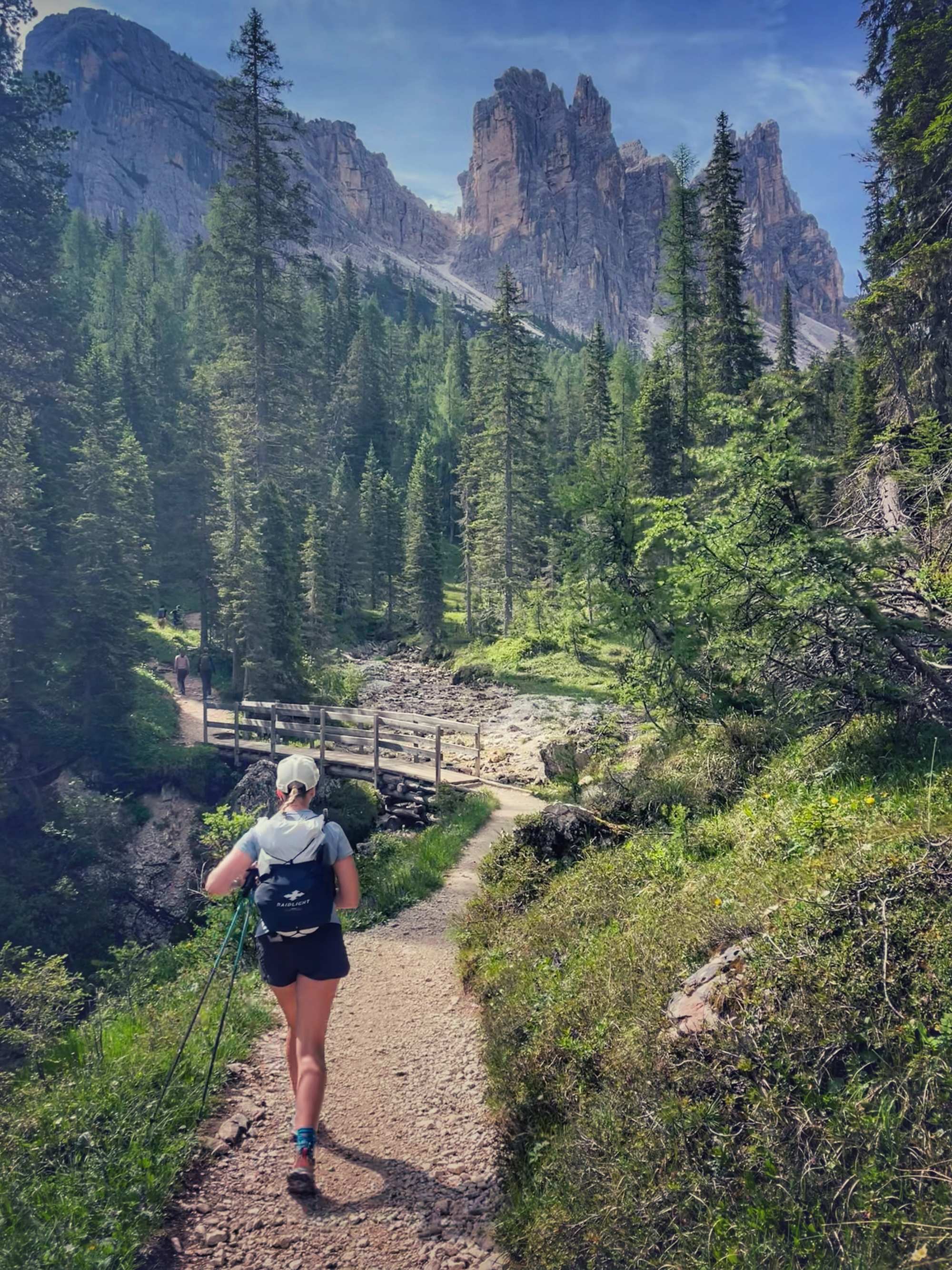
The path steepened and grew rockier, weaving across slabs, small snowy sections and broken limestone. Cairns marked the way and we followed them steadily higher, the views opening with each step—valleys unfolding behind and ahead of us, endless ridgelines layered in the haze. Eventually the zigzags steepened toward Forcella de Zita Sud at 2,351 metres, the highest point of the day.
Ahead lay the much-discussed exposed ridge. We watched a couple ahead of us traverse it without apparent drama, walking upright rather than clinging to the rock, which immediately reduced any collective anxiety. When our turn came, it demanded attention, but not panic. There were moments where hands came into play, brief clambers over limestone blocks, but nothing particularly technical.
The descent began benignly enough but once we dropped below around 2,000 metres, the terrain took on a different character. The trail narrowed into tight, relentless zigzags carved into the mountainside. Huge uneven steps. Loose rock and scree underfoot. Poles suddenly became essential rather than optional. After five-plus hours on our feet, with legs beginning to tire, the downhill demanded as much concentration as any climb.
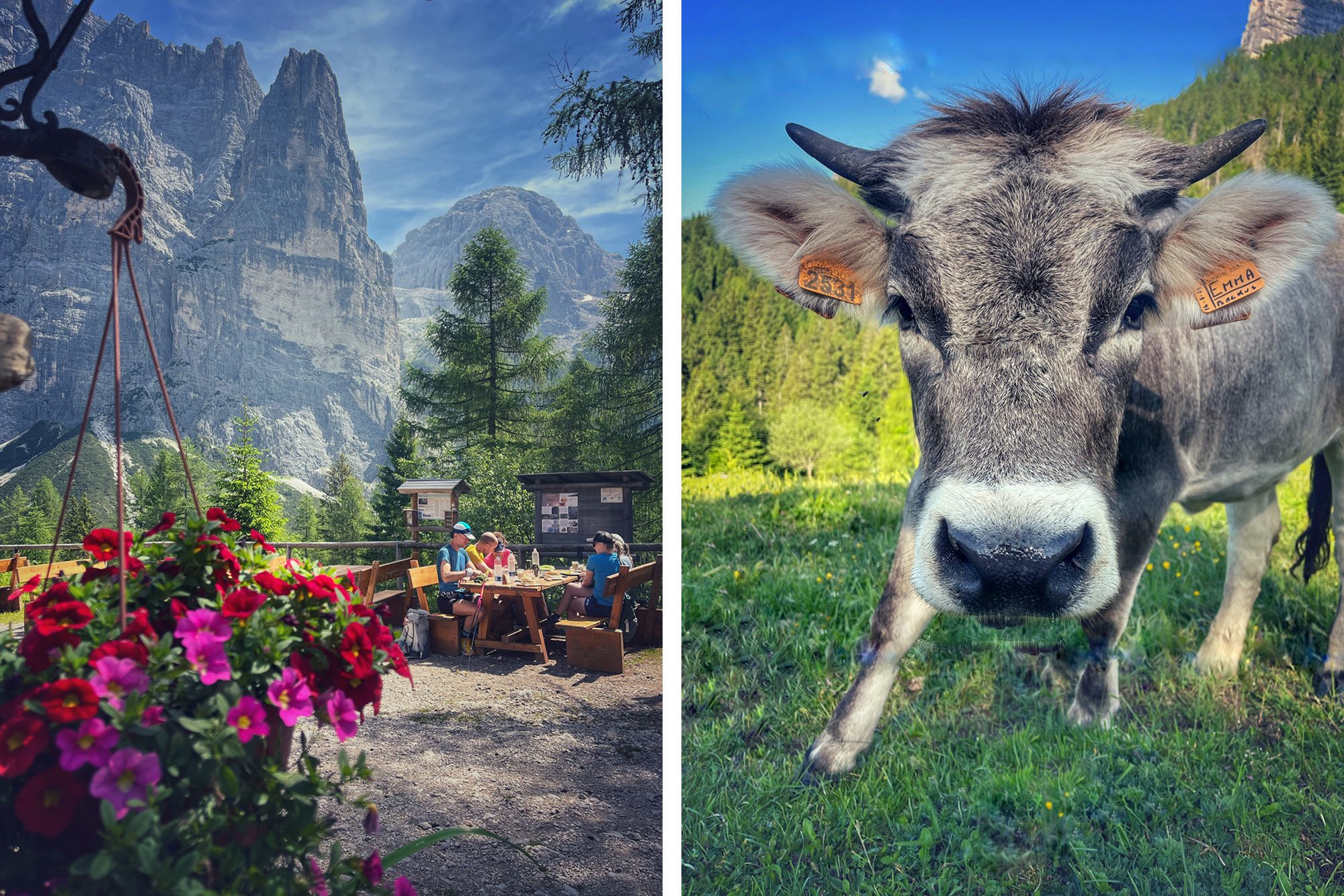
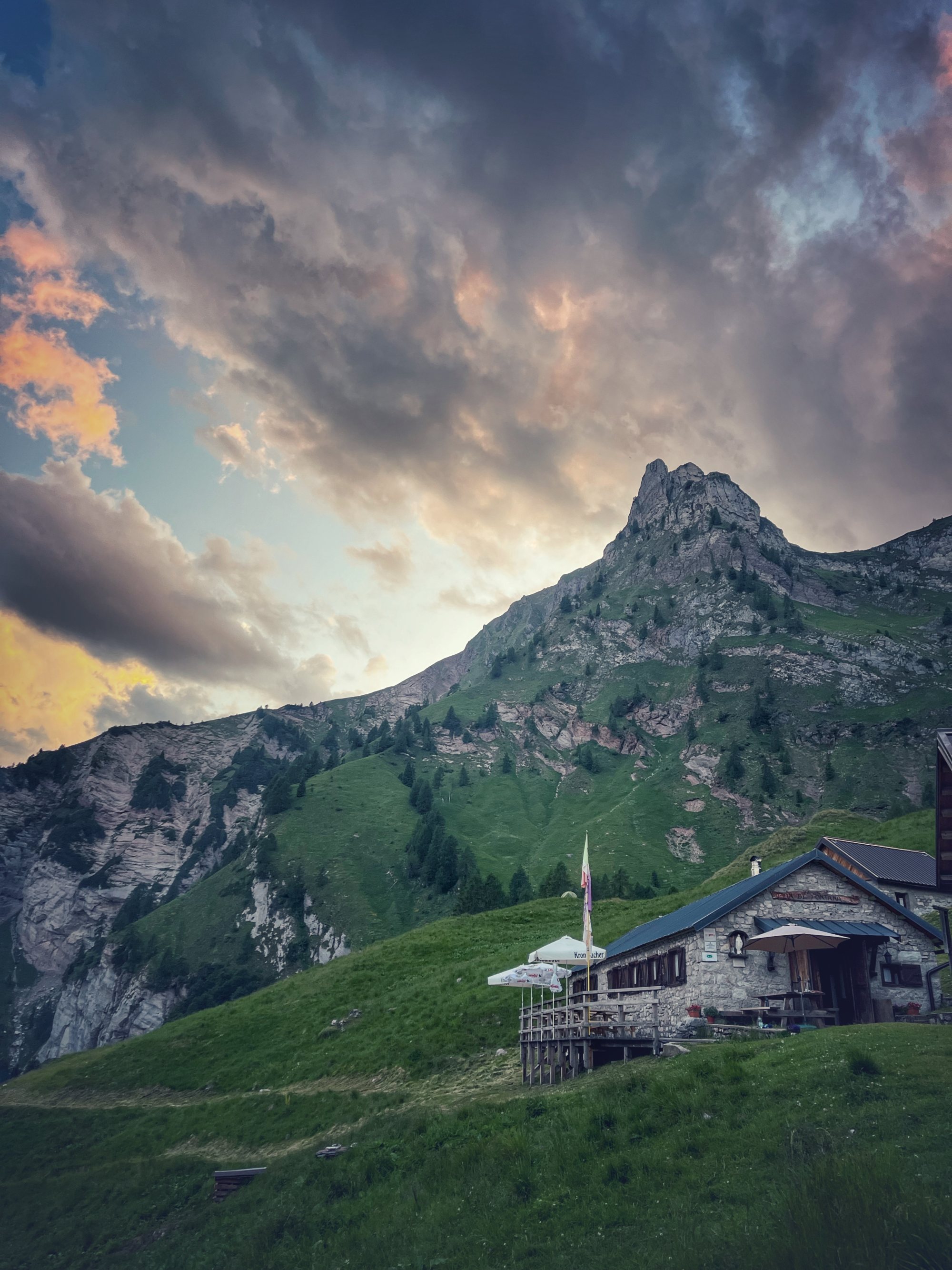
There were a few slips on shifting stones. Knees complained. Conversation thinned. The refuge—visible far below at 1,632 metres—seemed deceptively close yet stubbornly distant, a visual trick the mountains tend to play often. By the time we finally reached Rifugio Pian de Fontana at around 4PM, we were salt-streaked and ready for cold drinks and a shower. There was no hot water—a detail that would have horrified Day One, airport me—but the goulash was magnificent and the beer tasty enough to wash away any lingering concerns.
“We were salt-streaked and ready for cold drinks and a shower”
The final morning was almost absurdly short in comparison to what had gone before. A mere 14 kilometres, and critically, mostly downhill. We left the rifugio at 8AM and by 11.30 were standing beside a random layby opposite a quarry—the most incongruously average of endings to an extraordinary adventure. From high-altitude dreaming to industrial gravel in under four hours. Talk about a comedown. A pre-arranged taxi picked us up and whisked us back to Cortina. First stop upon return to civilisation? Gelato. Second stop? Gelato. That evening, back at the Hotel Aquila, we clinked beers and revelled in a post-adventure glow. Six days. Five nights in huts. 140km. 7,500m of climbing.
Our fast and light gamble had paid off. The Alta Via 1 works best as a hut-to-hut itinerary. No tent, stove or sleeping bag required. Just the essentials—running kit, emergency gear, and whatever you need for the day. Lunch and espresso at refuges. Beer at altitude. Proper beds at night. Va bene. Travelling light changed the experience too. The climbs felt freer. The descents more fluid. The heat less punishing. The storms less all-encompassing. There was space, physically and mentally, to look up. To notice the alpine wildflowers. To actually be in the moment To be at one with your mates in the most extraordinary place. To make the whole experience actually feel like Type-one fun.
Back at the airport the next morning, I slid the wee bag I’d been carrying all week under the seat in front of me. It felt impossibly ordinary. And yet it contained everything needed to transport me across a mountain range. Mini, yet Dolomighty. It’s true what they say, I thought, as a settled into my seat: the best things do come in small packages.
Know How
Our trip
Sophie’s trip was organised by The Adventure Running Company, who run a similar Alta Via 1 itinerary from £2,495 per person. The package includes accommodation, transfers to/from Cortina to the trailhead, expert trail-running coaching and guiding from a qualified International Mountain Leader.
Getting there
easyJet fly to Venice from £22 one way, with baggage restrictions. Alternatively, RyanAir, whose baggage restrictions are even tighter, fly to Venice from £17 one way. From the airport, Flixbus runs regular services to Cortina d’Ampezzo, the start of Alta Via One.
Where to stay
We stayed in the 3-star Hotel Aquila in the heart of Cortina at the start and end of the trip. Each rifugio along the route handles its own reservations, and there’s no single booking platform for the whole itinerary. Most have online reservation forms on their websites - others require email or phone bookings directly with the hut. Rifugios open for the summer season at slightly different times, so it pays to check early and send your booking requests as soon as your dates are fixed.
Spaces fill up quickly during the peak summer months - especially July and August - and popular huts can be fully booked months in advance, so many hikers start booking as early as the winter before their trip. Shoulder seasons (late June or September) are a little more flexible, with some availability a few months ahead, but the general rule is: the earlier you book, the better.
Because each accommodation operates independently, you’ll usually need to pay a small deposit to secure your booking, and many huts are cash-friendly rather than card friendly - another good reason to get those reservations locked down early. The official Süd-Triol and Belluno province tourism websites have details on refuges and how to book.