- Details
- Written by: Sophie Nicholson
“There is no doubt that those who first climb Kangchenjunga will achieve the greatest feat in mountaineering, for it is a mountain which combines in its defences not only the severe handicaps of wind, weather, and very high altitude, but technical climbing problems and objective dangers of an order even higher than those we encountered on Everest.”
—Sir John Hunt, leader of the 1953 Mount Everest expedition
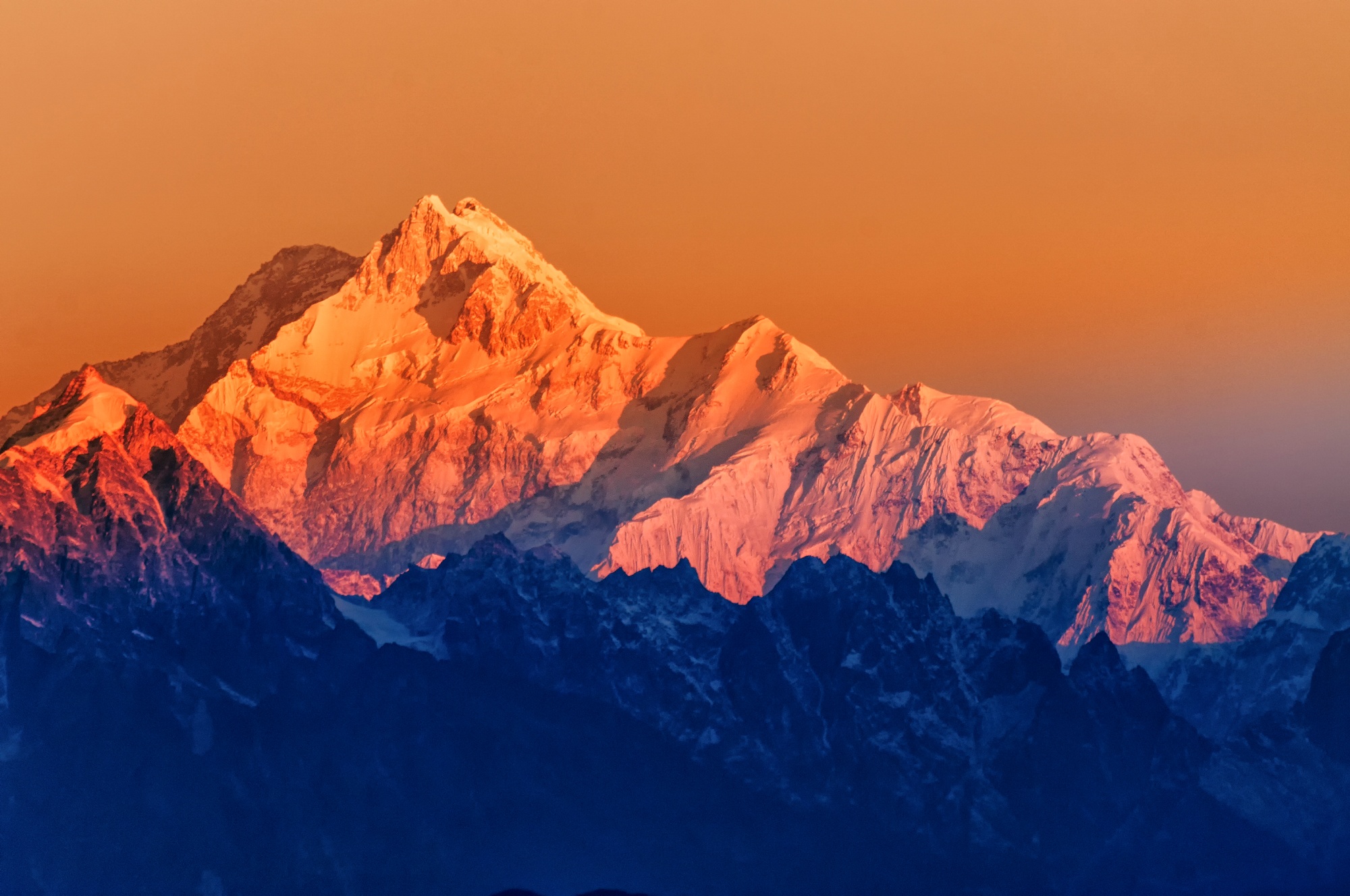
May 25, 1955, marked a pivotal moment in mountaineering history. At 2:45 pm, British climbers Joe Brown and George Band reached the summit of Kangchenjunga, the world’s third-highest peak at 8,586 meters. Just two years after the historic 1953 British Mount Everest expedition, Brown and Band’s ascent was a massive milestone in the mountaineering world, signalling the dawn of a new chapter in technical Himalayan climbing. Located on the border between Nepal and the Indian state of Sikkim, Kangchenjunga has long been considered one of the world’s most formidable peaks due to its treacherous and technically-challenging terrain, frequent avalanches, constantly shifting icefalls, and notoriously unpredictable weather.
Hostile yet majestic, the mountain also holds deep spiritual significance for the local Sikkimese people, who regard its summit as sacred. Before making their attempt, Brown and Band visited the Chogyal of Sikkim, the region’s spiritual and political leader, and promised to stop a few metres short of the sacred peak itself—a remarkably culturally-sensitive gesture, given the prevailing British attitudes of the time, and one that most (but not all!) subsequent summiteers continue to follow to this day.
Led by the 36-year-old Liverpudlian surgeon, Charles Evans (who had already made a name for himself on the successful 1953 Mount Everest expedition), the British team was a mix of seasoned climbers and fresh faces. As it was originally considered a reconnaissance mission rather than a serious summit attempt, the Alpine Club, which organised it, were comparatively relaxed about team selection.
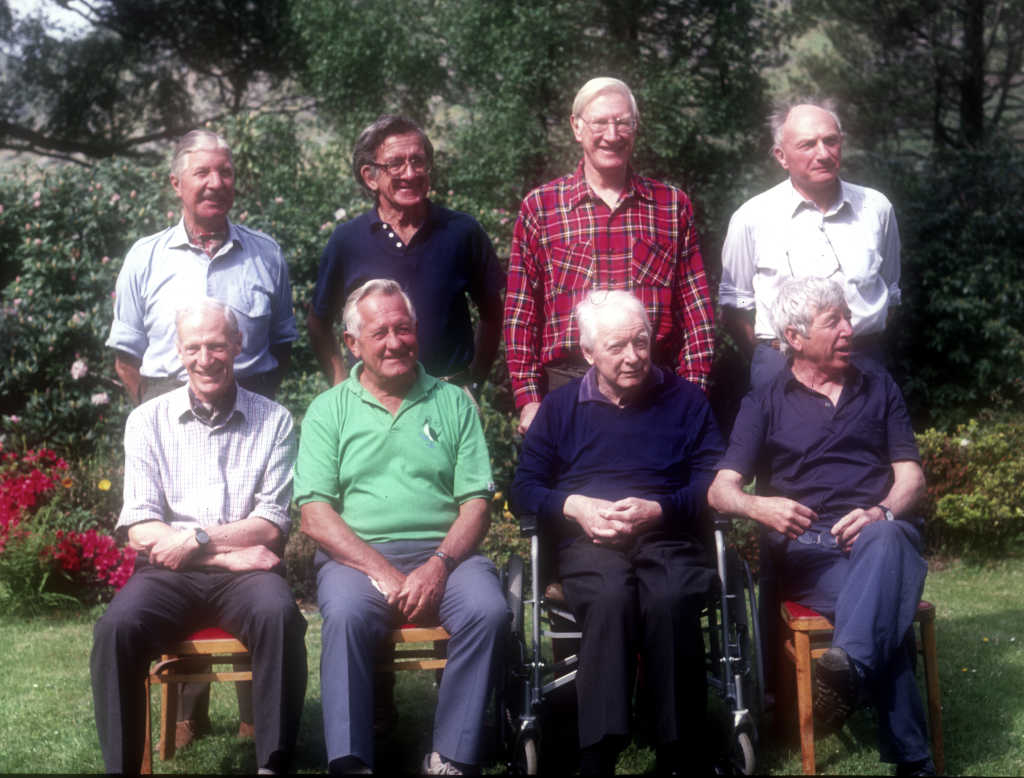
Enter Joe Brown, a 24-year-old plumber’s apprentice from Manchester. Brown, an outstanding rock climber who’d honed his skills in the Peaks, was the first working-class Brit to be selected for a British expedition. In an era where climbing was traditionally dominated by the elite, this was a mould-breaking moment. George Band was a far more predictable choice—a 26-year-old Cambridge graduate, who had played a crucial role in the successful 1953 Everest expedition. But he worked incredibly well with Brown demonstrating—and ultimately proving—that boldness, skill, and determination could break through barriers, both on the mountain and in society. “We spent two days of the most exhilarating ice-climbing of our lives,” George Band wrote in his account of the climb, published in the 1955 edition of the Alpine Journal. “Trying to find a route through made [Everest’s] Khumbu Icefall look like a children’s playground.”
The journey began in Darjeeling, from where the team began their 14 day trek into the Yalung Valley, eventually establishing basecamp at the foot of Kempe’s Buttress. After several thwarted attempts to negotiate the extremely complex icefall, the team identified an alternative route up the Yalung Face, one originally attempted by Aleister Crowley’s 1905 expedition. After braving storms, avalanches, and the threat of the impending monsoon, Brown and Band made their final bold push for the summit on May 25th. They reached it after five hours of continuous climbing, with just one hour of oxygen left in their tanks. Their expedition teammates Norman Hardie, a Kiwi, and Tony Streather, a fellow Brit, followed the triumphant duo in making a second successful summit attempt the following day.
Looking back on the 70th anniversary of this remarkable feat, it’s impossible to ignore the broader impact of this ascent. Brown’s crucial role paved the way for people who had been overlooked by the traditional climbing elite, opening the floodgates for the wave of working class climbers who followed. Seen from today’s vantage point, the expedition was more than simply reaching a summit—in its respect for local traditions, its technicality, and its choice to prioritise climbing skill over social standing, it was a truly trailblazing triumph.