- Details
- Written by: Jazz Noble
All photos: Jazz Noble
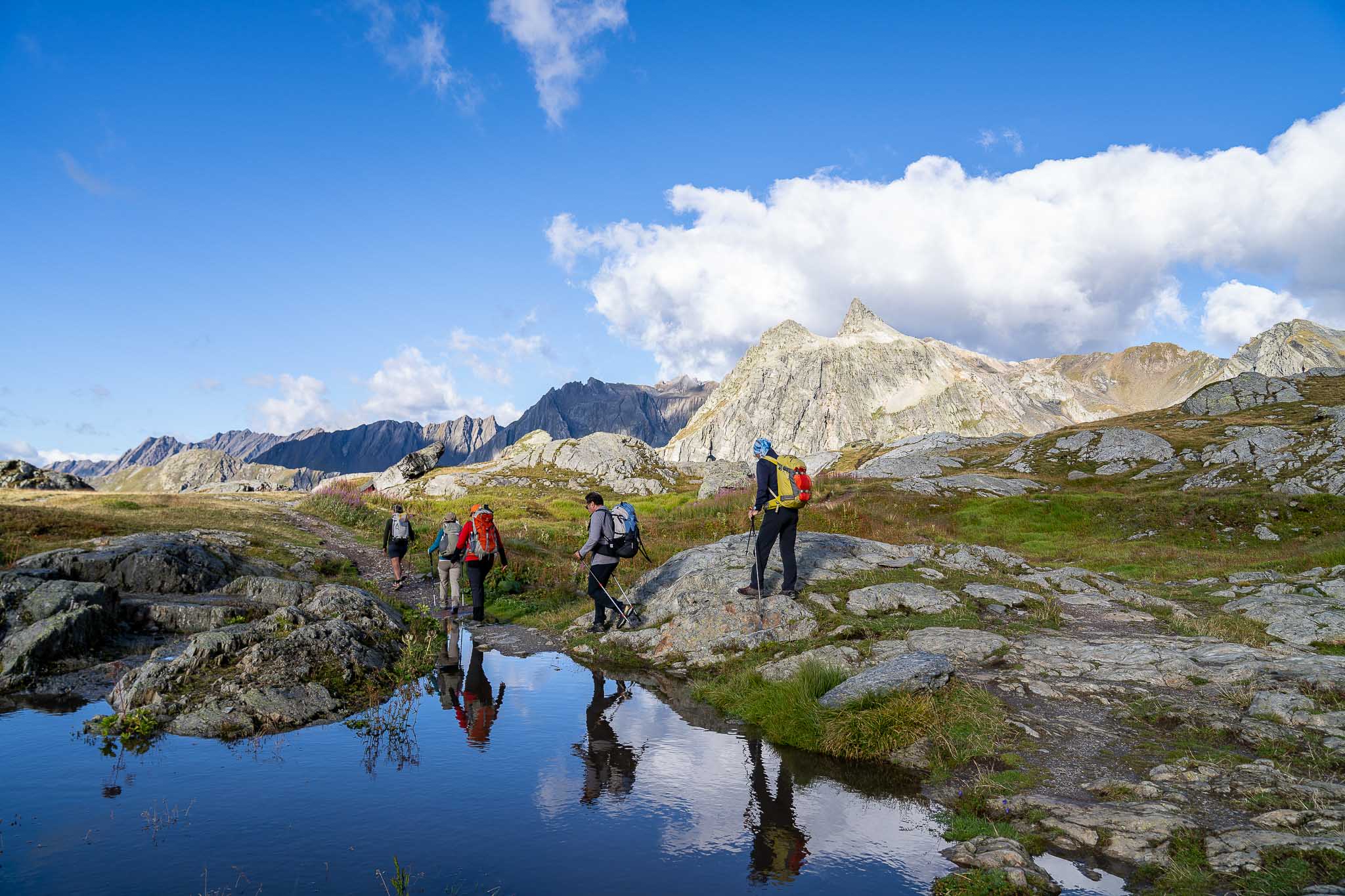
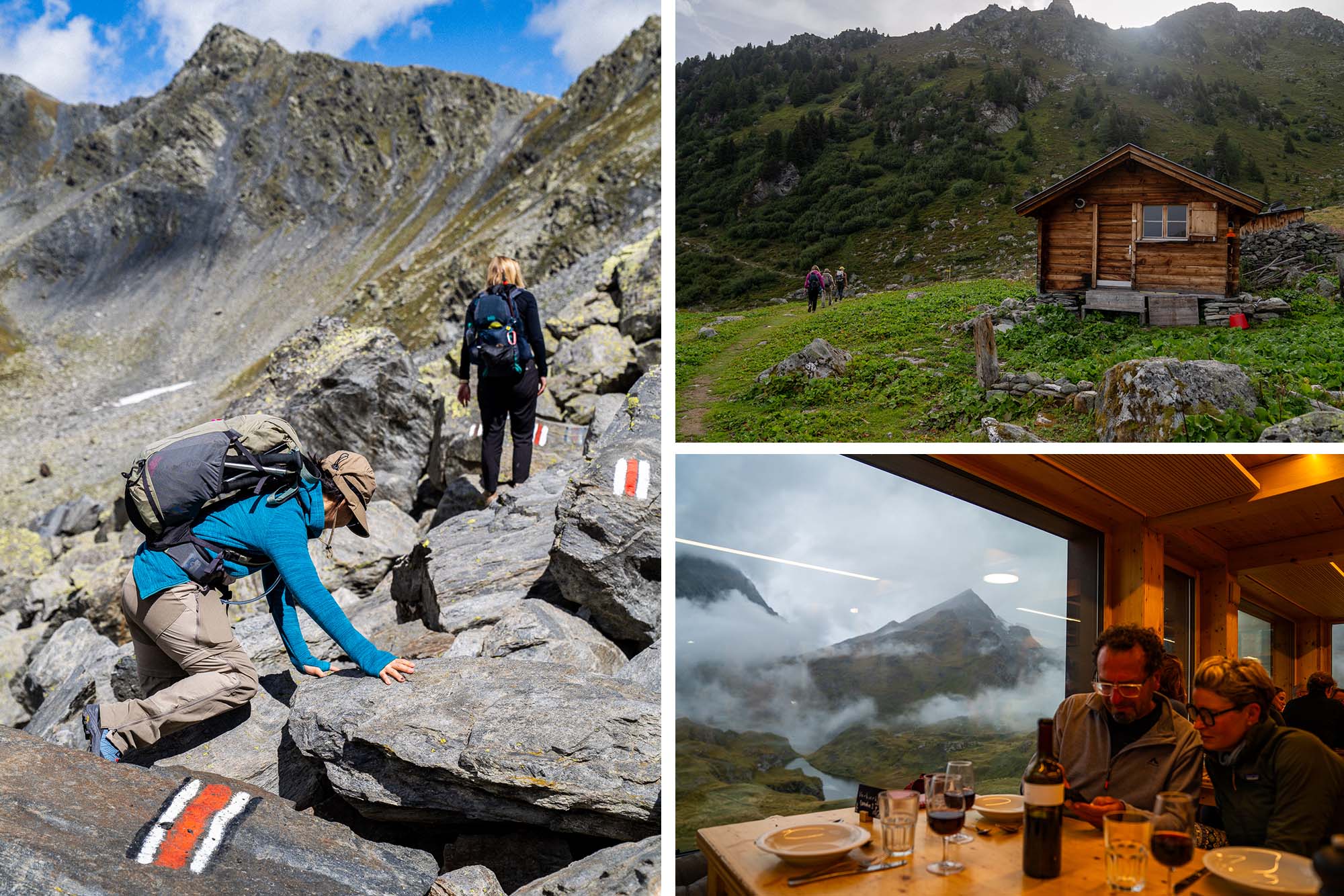
There’s 300 metres of ascent to go before we reach our hut for the evening and I’ve become strangely fixated with the trail floor. For the past hour or so, thousands of grasshoppers have been darting and diving from one side of the path to the other, narrowly (but consistently) avoiding my feet each step of the way.
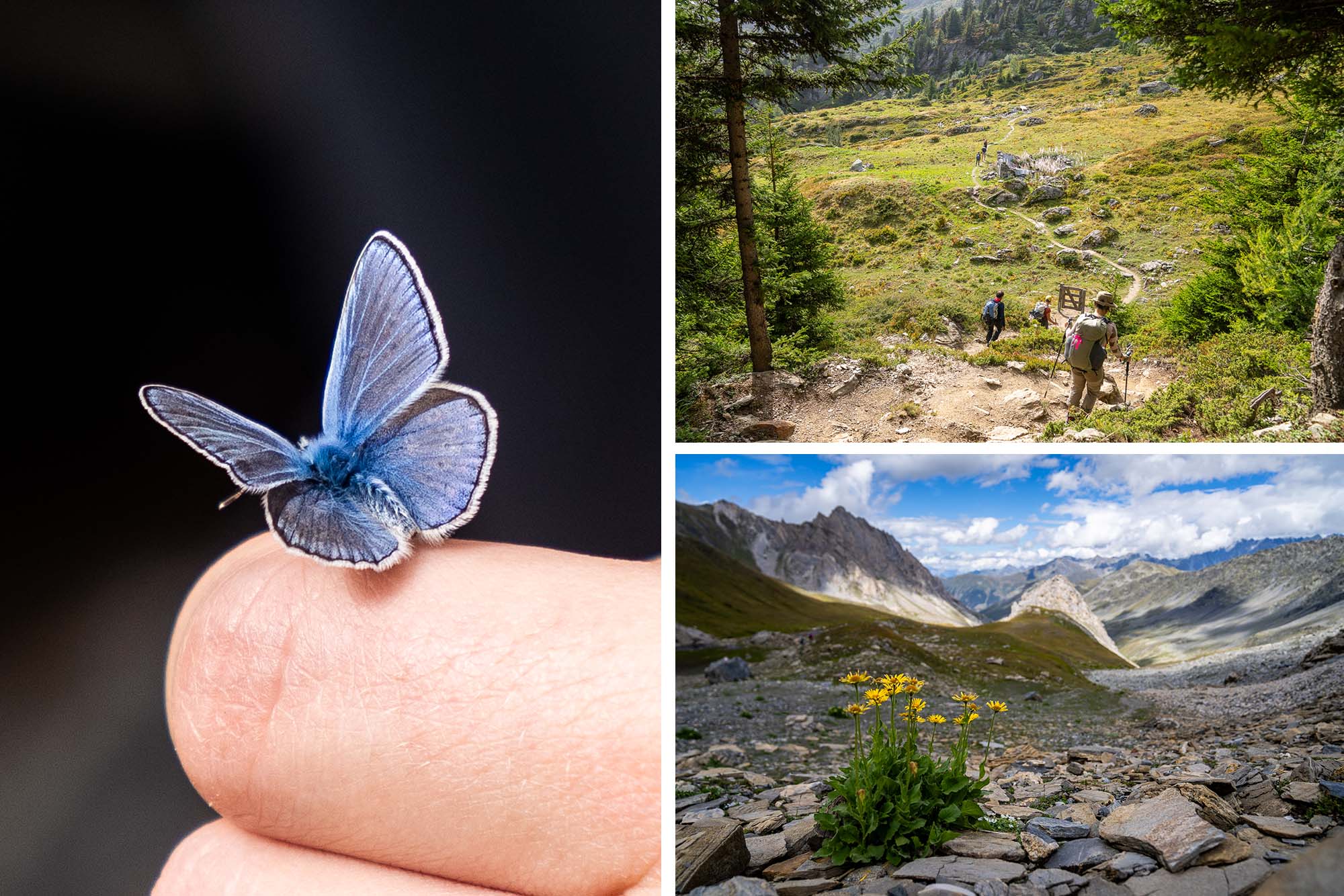
While some are camouflaged with intersecting patterns of brown, others jump out at me with fluorescent green shells, both trapezing their way through the bilberry shrubs as I tactically avoid looking at the steep incline ahead. Grasshoppers might seem like the least interesting thing about these mountains but, as I’m discovering more and more each day, the peaks, while magnificent, are only one part of the story of the Grand Tour des Combins.
"If a marmot whistles once, look up."
The Grand Tour des Combins is a multi-day alpine trek that circles the Grand Combin massif along the Swiss-Italian border. It wiggles roughly 87 miles (140km) in and around the massif, with 8,450 metres (27,750 feet) of ascent. I’m taking on the Swiss portion, with a swift but necessary coffee stop over the line into Italy.
The Swiss section - which makes up around 60% of the overall route - explores the beautiful canton of Valais, crossing through Val de Bagnes and Val d’Entremont along the way. My hiking guide, Mélanie Mantel, is a local to Valais and knows this route like the back of her hand.
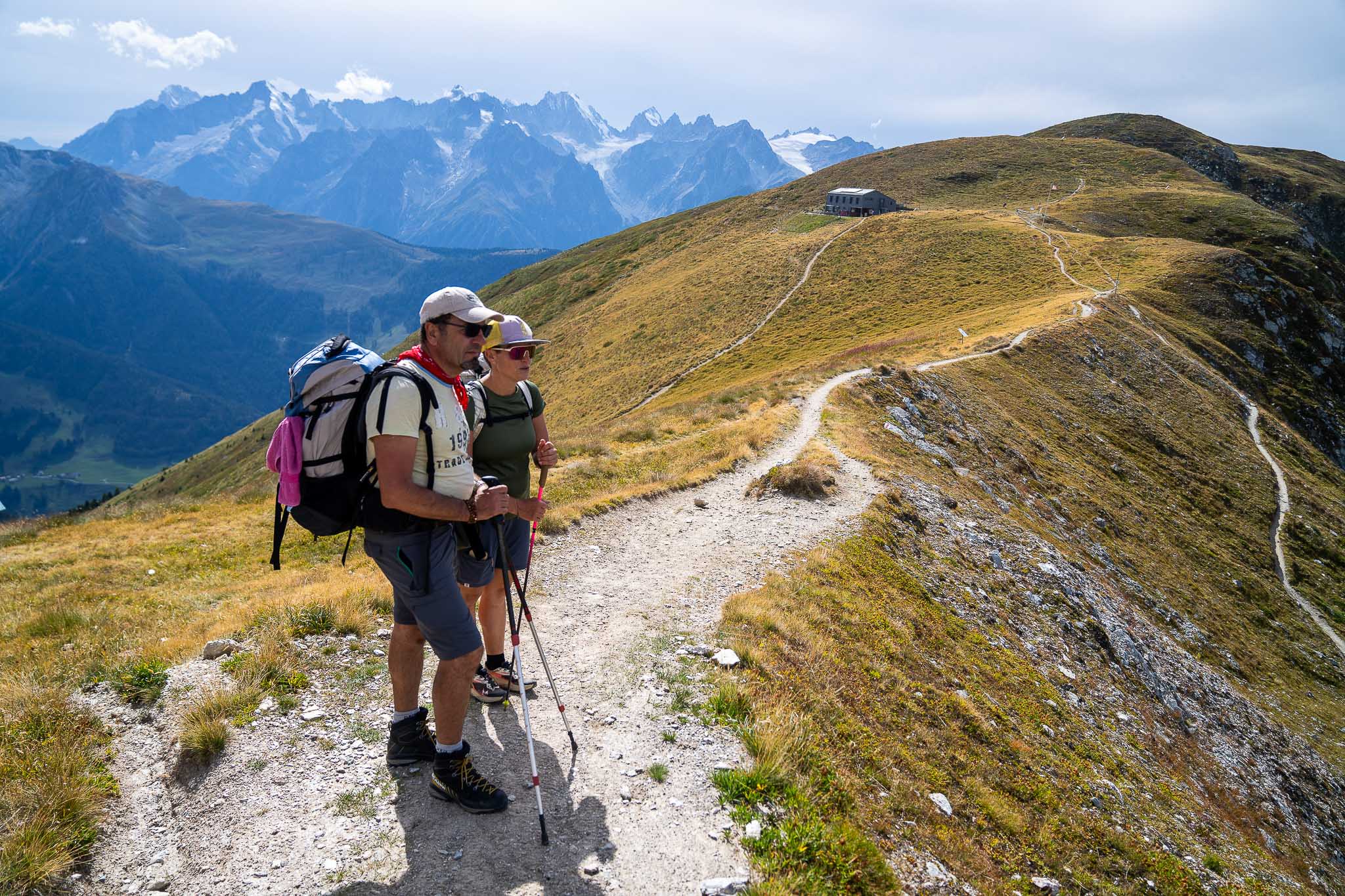
“The Grand Combin has been part of my life for more than 20 years,” she explains. “From working on the ski slopes in Verbier to guiding hikers along the wild Tour des Combins route - the massif stays with me through all four seasons.”
Related: The Best Hiking and Biking Routes in Verbier, Switzerland
Within the first two hours of hiking the route, I can hear this wildness firsthand. In between brief gusts of wind, and the scattering of rocks beneath our feet, small whistling sounds can be heard in the shadows of Tête de Fonteinte. “If a marmot whistles once, look up”, Mélanie says.
Eyes skyward, a golden eagle soars from behind a nearby pinnacle and surveys the scene before disappearing back behind the rock face. The single marmot whistle was a warning, I’m told, of potential danger from above. A series of repeated whistles, on the other hand, signals a threat from ground level, say, from an alpine fox, or a hiking human.
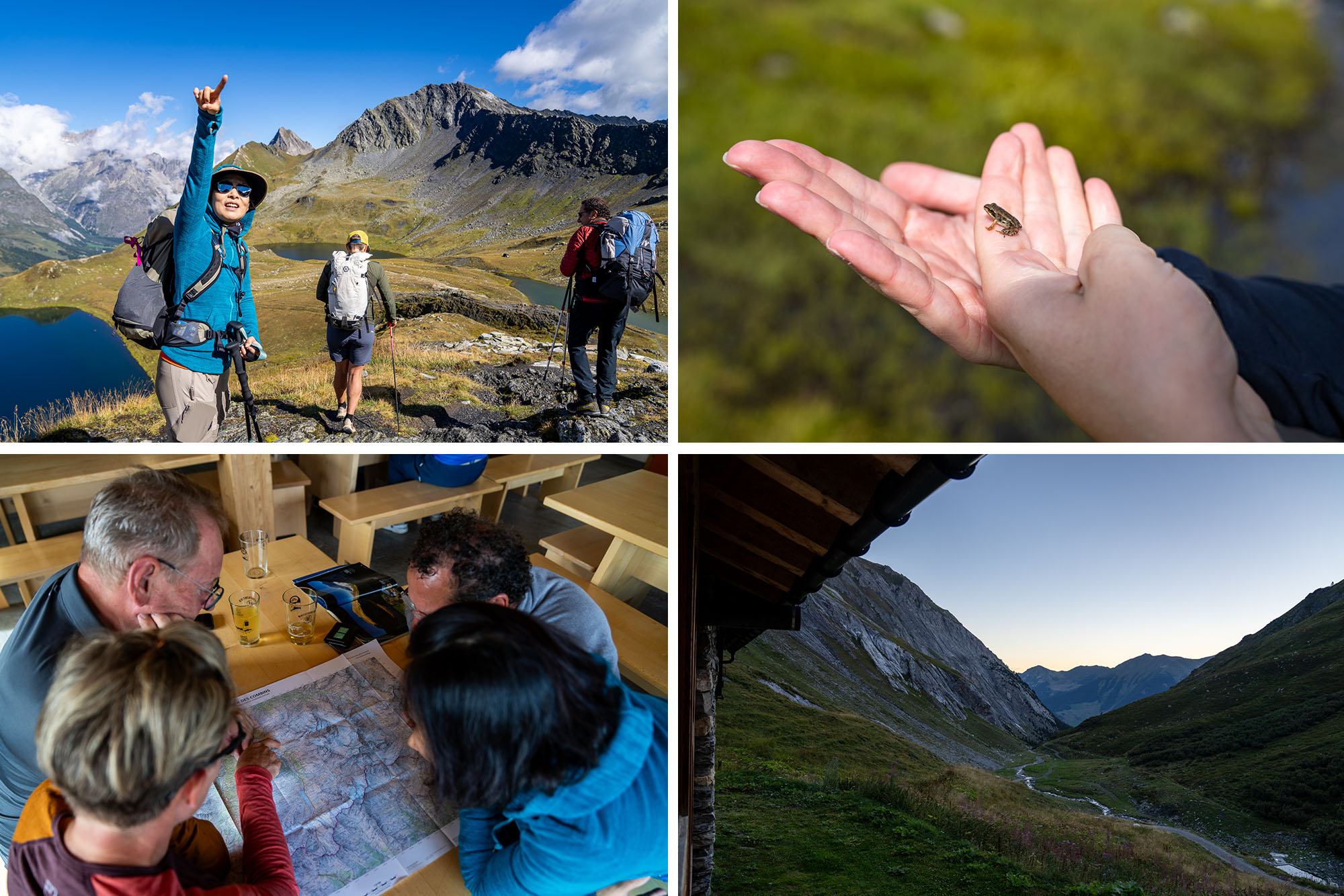
My group and I are all transfixed by the spectacle. Now less focused on where each foot lands, I’m suddenly aware that we’re the only people in this valley; since we set off some time ago from the Hospice du Grand-Saint-Bernard, we’ve crossed paths with just two other hikers who’ve long disappeared into the landscape ahead.
It takes a village (or four)
Compared to the neighbouring Tour des Mont Blanc (TMB), the Grand Tour des Combins (GTC) is considered one of the quieter hut-to-hut treks in the Alps. While the TMB had an estimate of 73,000 to 78,000 walkers on its trails in 2025 - hikers and local guides describe an altogether different experience on the GTC.
“It’s wilder and quieter than the Tour du Mont-Blanc”, Mélanie tells me, “while remaining very accessible to a range of different hikers. You’re never in a crowd either, and above all, you stay at altitude the whole time, which makes the experience even more special.”
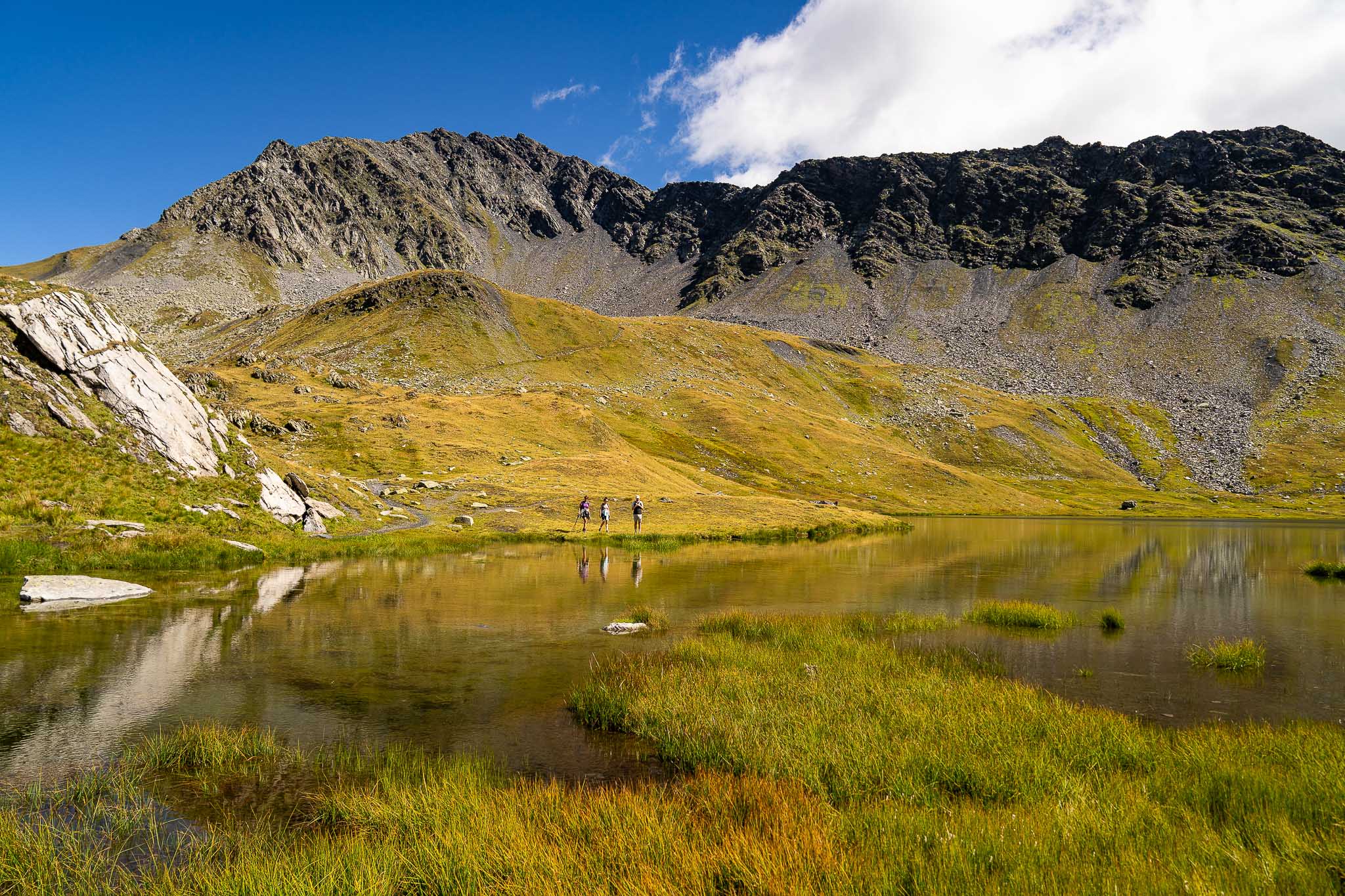
Despite the quiet trails and moments of shared solitude with my group, the huts still have a distinct buzz to them. There’s folks from all around the world here and - partly thanks to the lack of phone service I suspect - a chatty atmosphere full of curiosity about each other’s experiences on the tour, and crucially, ruminations on what time dinner is served.
To bide the time until then, we’re splayed across the table, beers in hand, tucking into a colourful plate of Assiette Valaisanne - a platter of cured meats and cheeses local to the Valais.
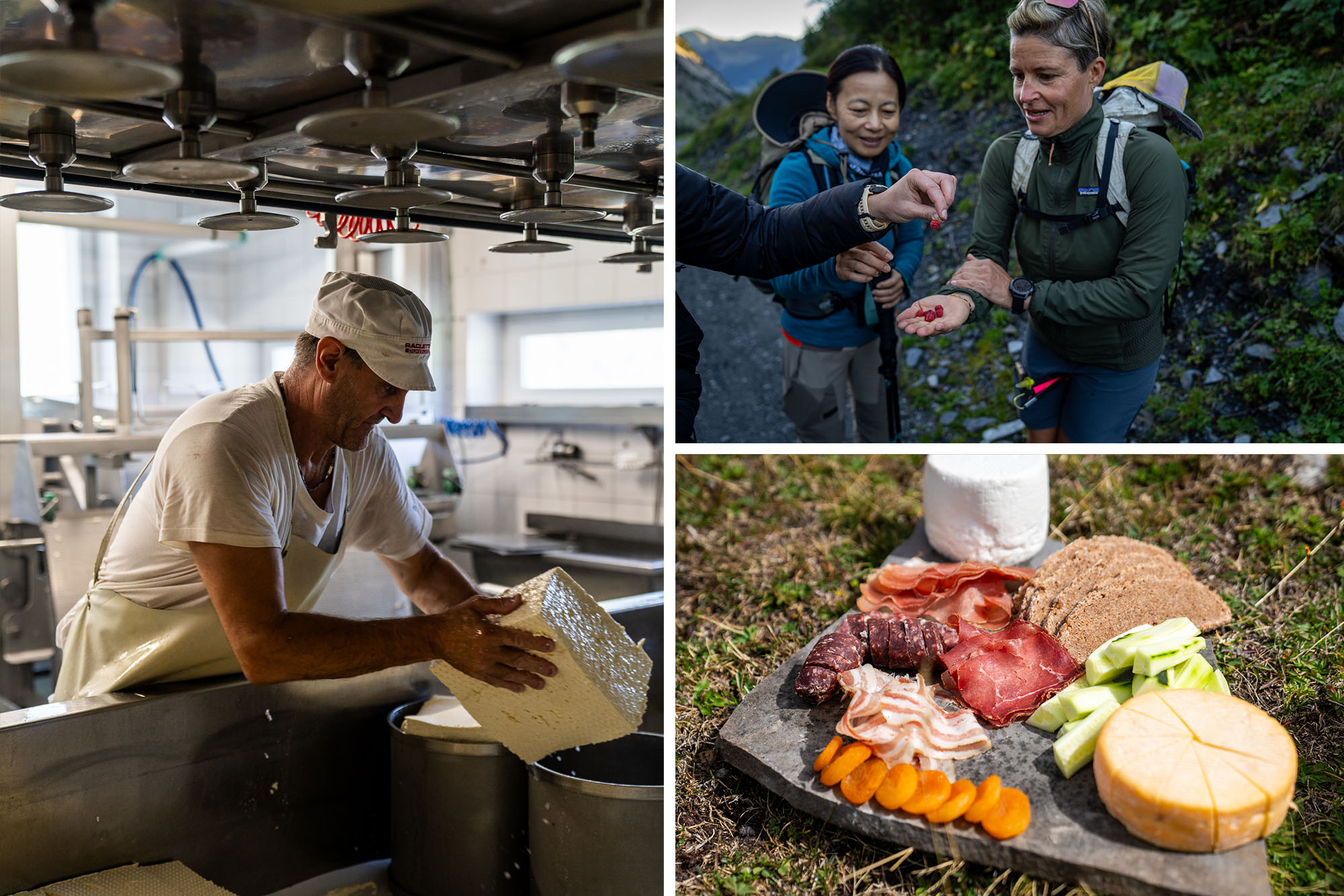
This is accompanied by homemade bread that, in Cabane de la Tsissette’s case, is made by gardien Fabienne in the communal bread oven down in the village of Liddes. The flour that made the bread, on the other hand, came from Fabienne’s brother.
Local culture, I’m learning, is the real backbone of this route.
Into the Grand Combin
As we cross the valley by way of the local cheesemaker and raclette-specialist Laiterie de Liddes, the tour takes us along a steep balcony of trails at the foot of Mont Rogneux before settling on a panoramic terrace that sits directly between the Val d’Entremont and the Val de Bagnes.
The path then curves round the mountain, crossing alpine pastures and undulating moraines - the remnants of ice ages long past - before opening up into a different landscape entirely.
Slowly but surely, scenes of luscious green shrubs and Swiss stone pine trees morph into stark grey moonscapes as rugged as they are fragile. Crossing the Corbassière footbridge - which opened in 2014 in direct response to the thinning of the Corbassière glacier - is a striking reminder of this.
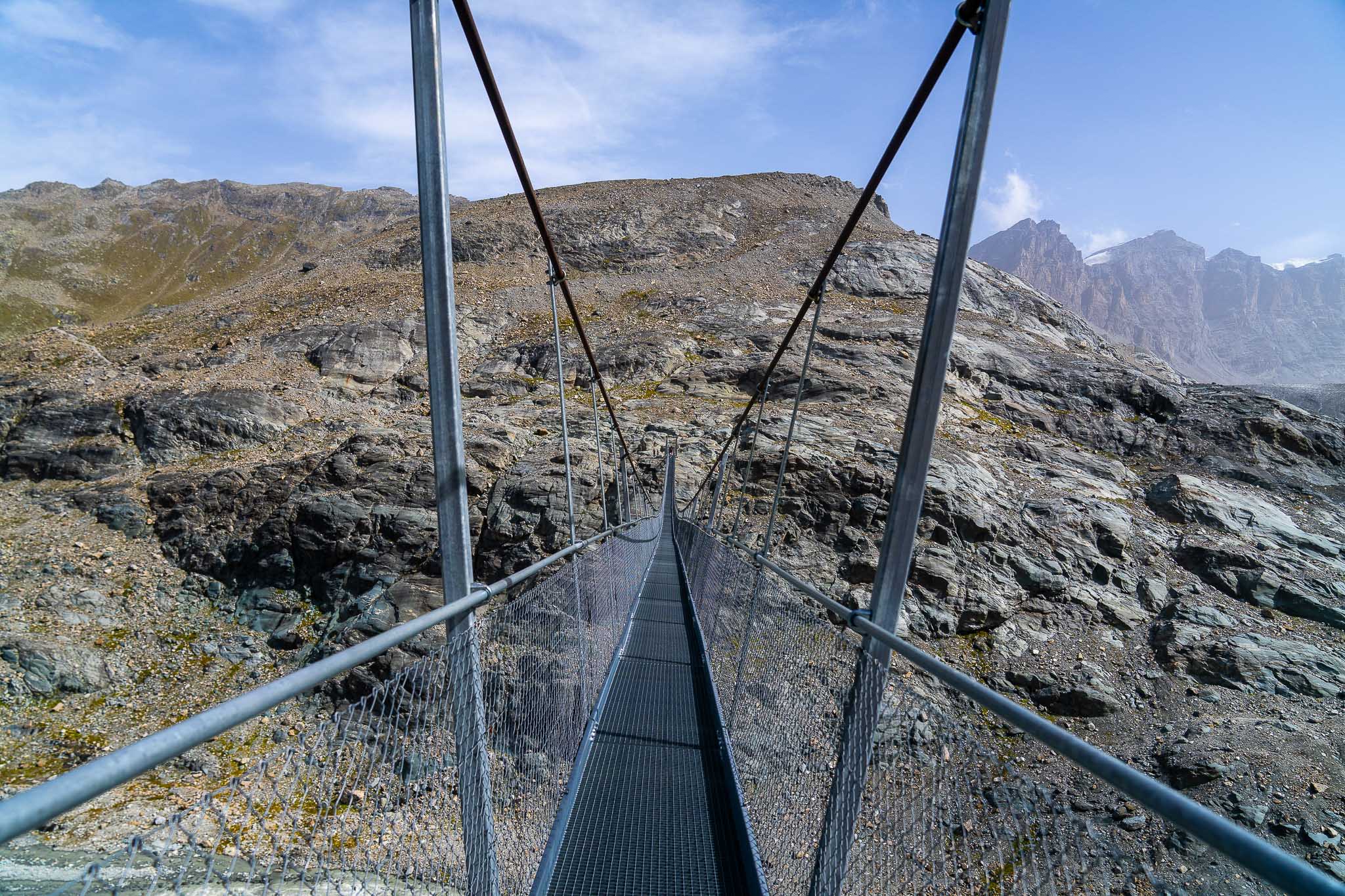
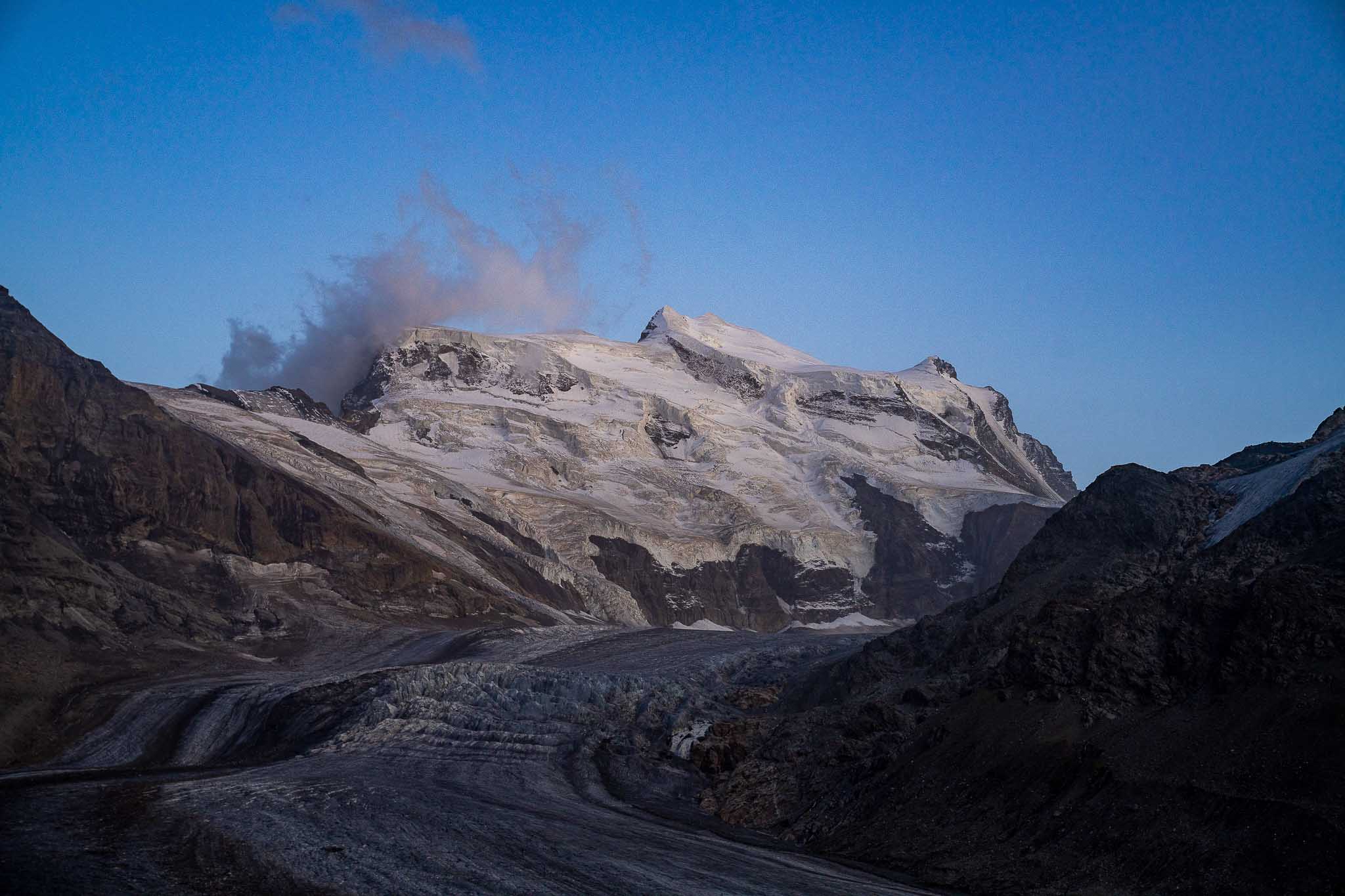
A destination in and of itself, the bridge offers a safer passage across the valley, avoiding the now unstable moraine path used in years gone by. It’s both sobering and spectacular to take in, stretching 210 metres across and 70 metres above the fast-flowing glacial waters below.
The wind’s moving fast now too, followed shortly by the dust swirling up from the trail beneath us. A good time to be heading indoors, I think, as we reach the highest hut of the route, Cabane FXB à Panossière (2641m), our resting point for the day.
Back down to earth
The following morning begins with rain jackets which, in true alpine fashion, are taken on and off several times before ultimately staying put. For a Celt like myself, a break from the summer sun gives me a new lease of life.
I’m now racing down the descent - 1000+ metres or so of steep switchback - in the direction of Mauvouisin Dam, the tallest arch dam in Europe. There’s endless ways to chop and change the tour to your liking, and we’re choosing to trace Lac de Mauvouisin’s edge before ascending towards our final hut of the trip, Cabane de Chanrion.
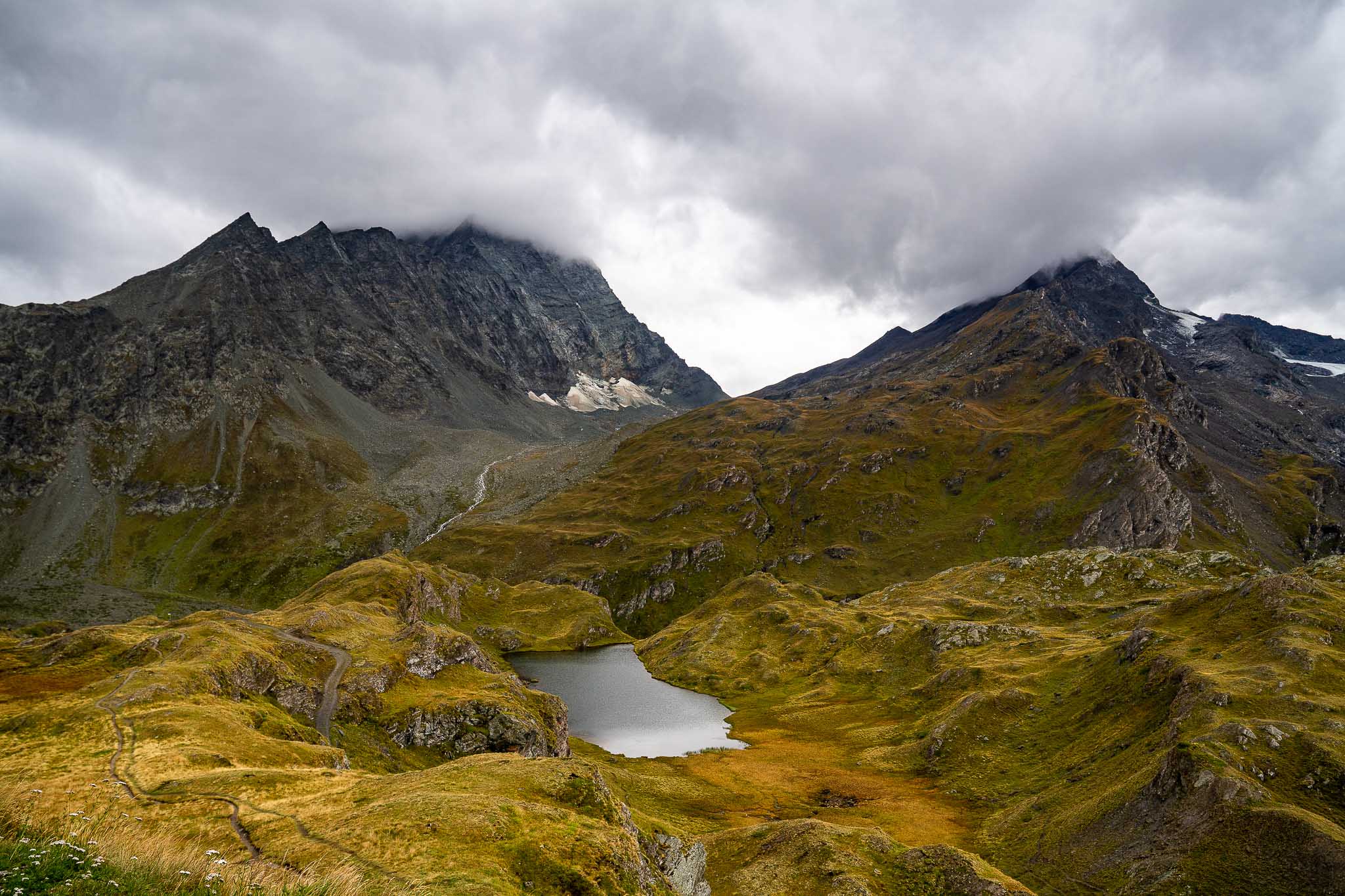
Chanrion (2363m) sits in our second nature reserve of the trip, Haut Val de Bagnes, coincidentally the second largest reserve in Switzerland. Looking across the landscape at shapes and textures that wouldn’t look out of place in the Scottish Highlands, yesterday’s moonscapes feel like a lifetime ago.
Seracs and crevasses now replaced with carpets of yellowy-green grasslands, subalpine plantlife, and marmots darting in and out of small burrows in the ground; my view from the hut looks like a valley on the precipice of change. We’re late into August and autumn, I think to myself, is well on its way.
Alpine starts and alpine finishes
5am marks the final alarm and, bar one of Chanrion’s gardiens who’s kindly preparing an early breakfast, we’re the first ones up in the hut. Though I’ve never been an early riser, ibex, I’m told, most definitely are, so the thought of a sighting carries me out my bunk, and along the trail.
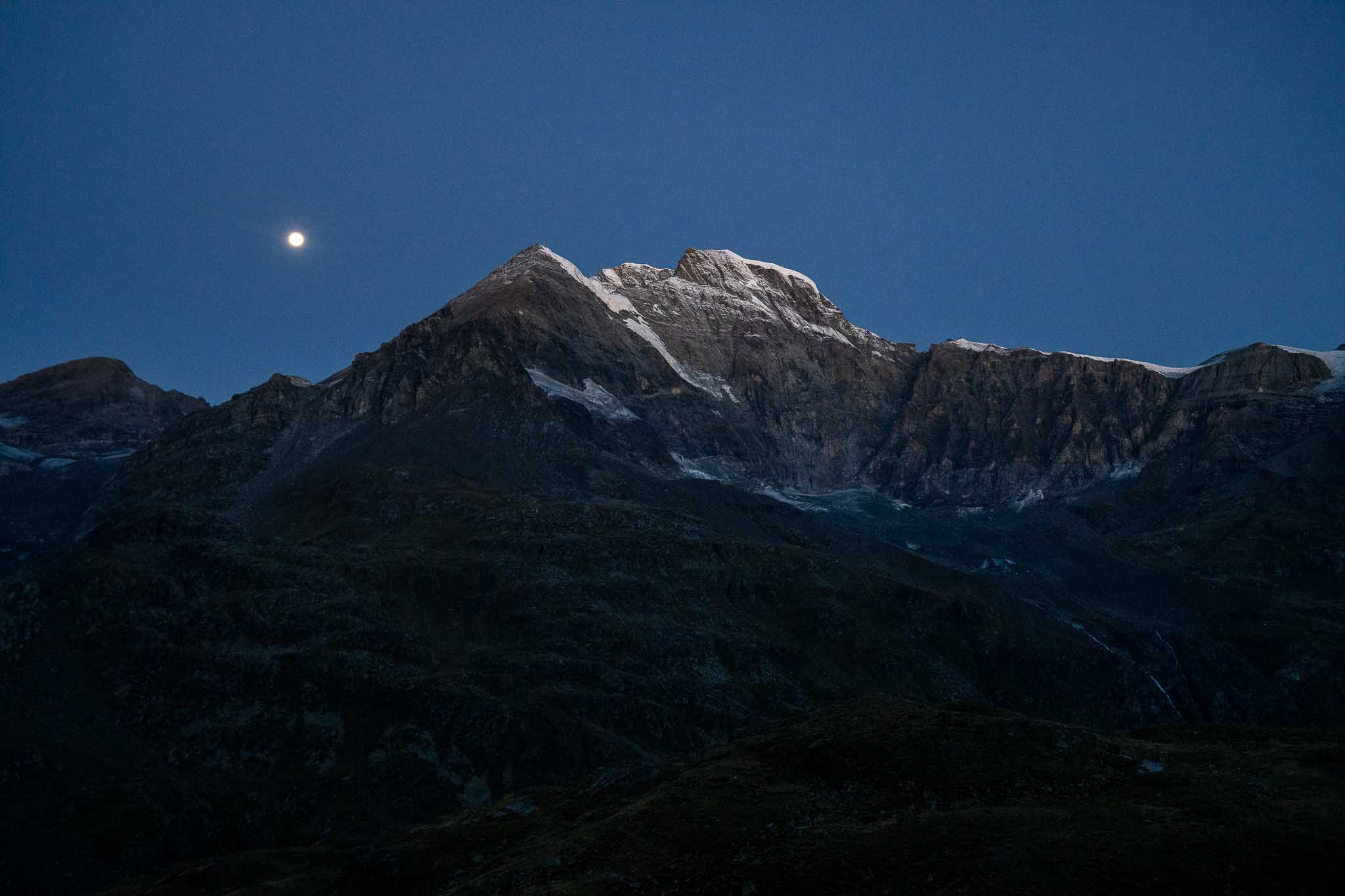
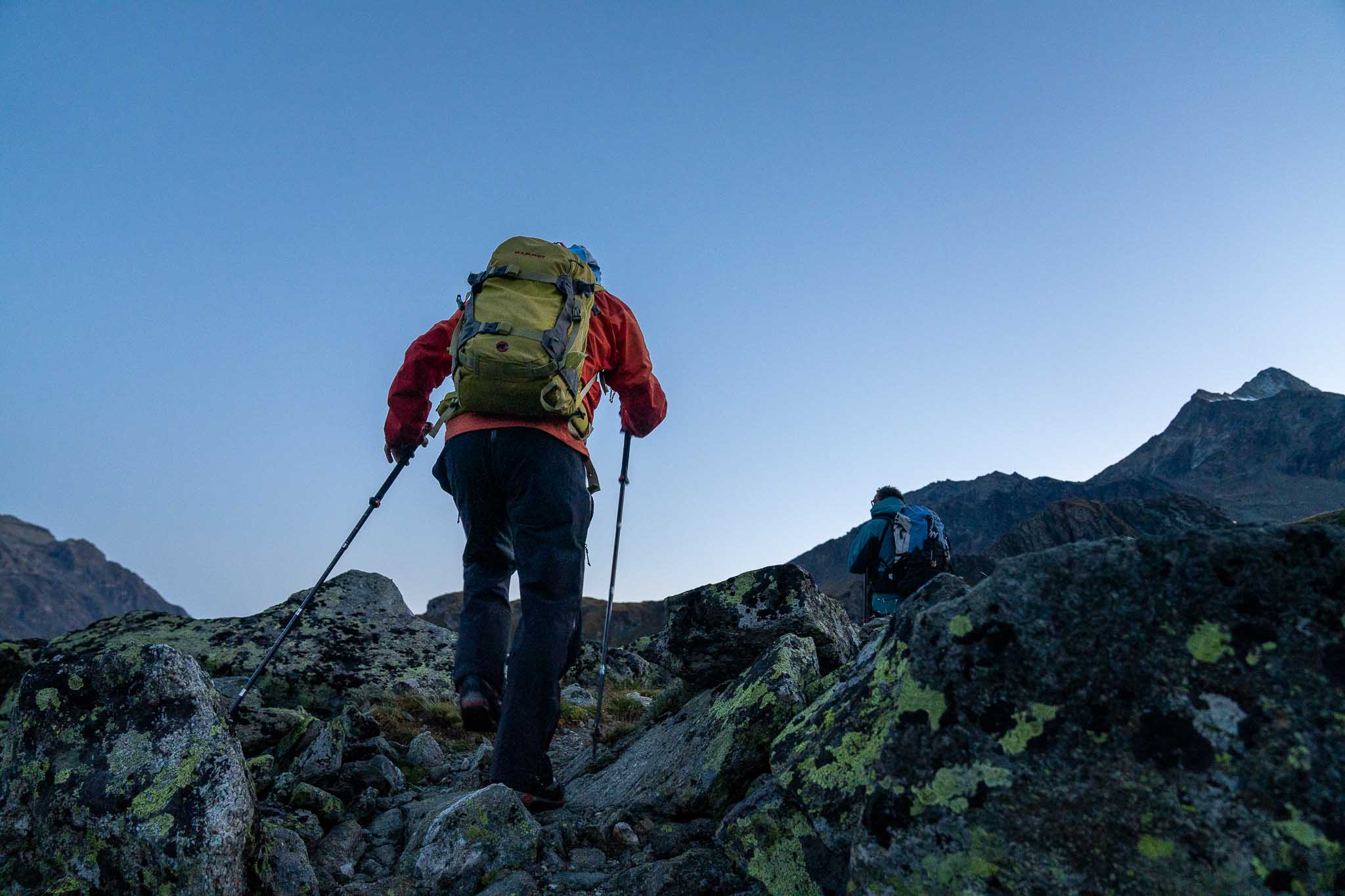
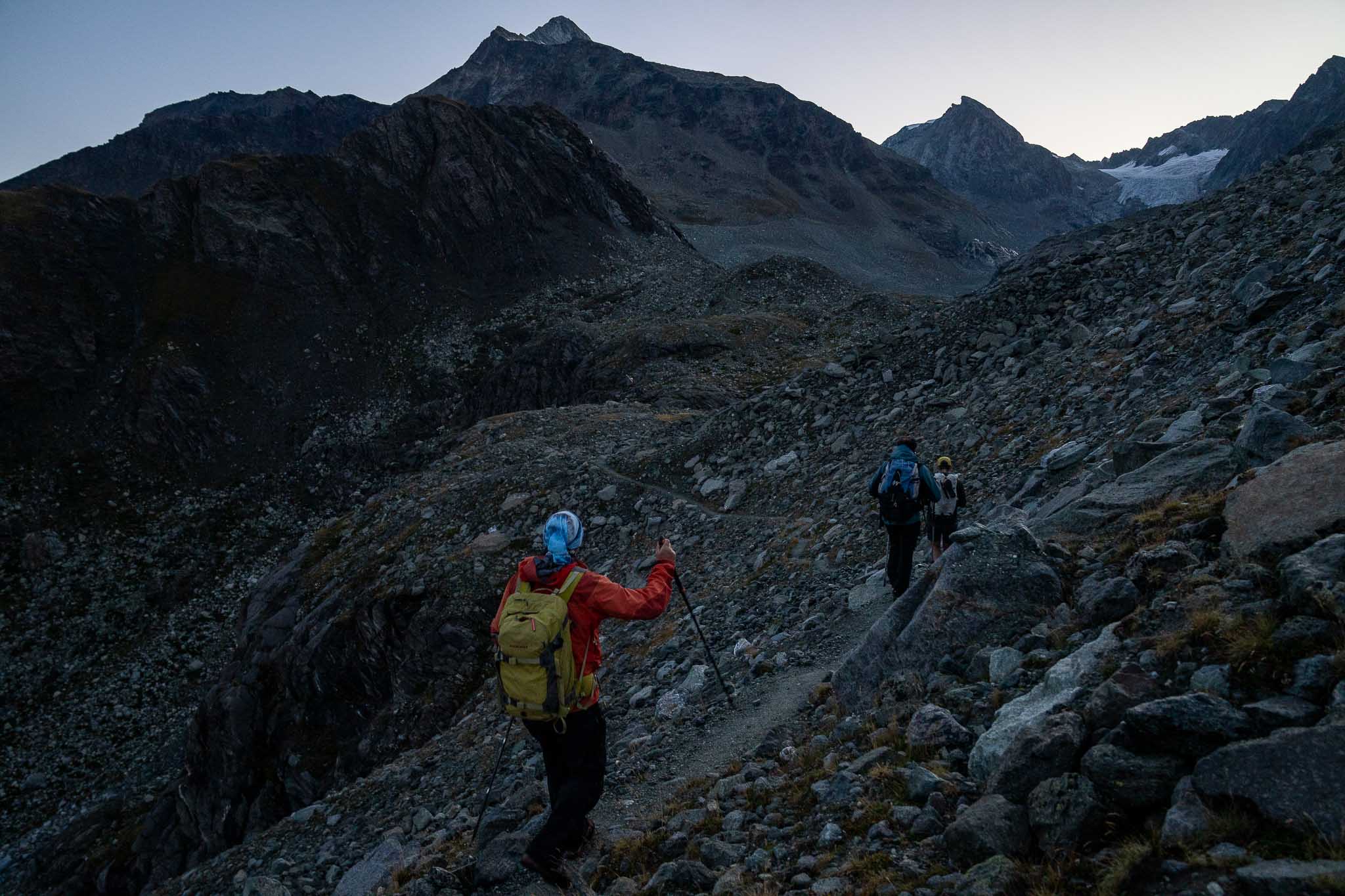
Backlit by the moon and a pink-blue sky that’s about to meet the morning sun, we make our way up the Col de Tsofeiret and sure enough, there they are. Camouflaged amongst the different shades of brown, Mélanie points towards a section of hillside at the top of the pass ahead. I have to squint my eyes at first, but once I spot one, suddenly my eyes adjust and I can see them all: a whole herd of female ibex with their kids in tow, trailing clumsily by their mothers' legs.
We stay fixed to the path for five minutes or so and, once again, I’m conscious of the quiet around us. Bar the four of us hikers and the herd of ibex, there’s not another soul in sight.
Given the popularity of the region, and the new TMB regulations set in place for 2027, I later ask Mélanie what she sees for the future of the Grand Tour des Combins. “I hope it will grow gently: small groups, respect for the huts’ capacity and real benefits for local people, so that it keeps the authentic character that makes it so unique.” With plans already forming in my head about when I can finish the Italian portion of the tour, I really hope so too.
Know how
Our trip
Jazz's's trip was supported by the Valais Tourism Board. Their website offers tips on what to see, where to go and how to book. Alp Inspiration is the mountain guide company that was used.
Where to stay
Before the trek commenced, Jazz stayed in the Hospice du Grand-Saint-Bernard in the beautiful Pays du St-Bernard. Thereafter, she stayed in mountain huts including: Cabane de la Tsissette, Cabane de Mille, Cabane FXB à Panossière, and Cabane de Chanrion, with a short cake stop in Cabane Brunet.
Getting there
Swiss International Air Lines (SWISS)
SWISS connects Switzerland with the world, offering more than 160 weekly flights from
London Heathrow, London City, Manchester, Birmingham and Edinburgh to Zurich or Geneva.
One-way fares start from £76 to Zurich and from £54 to Geneva, and include all taxes, fees
and surcharges, one piece of checked luggage weighing up to 23kg and one piece of hand
luggage. SWISS also transport your first set of ski or snowboard equipment and boots free of
charge in addition to your standard hold baggage allowance (subject to availability, excludes
hand-luggage-only).
Travel Switzerland
There are many reasons to explore Switzerland by public transport; not only is it the best way
to enjoy unparalleled panoramic views in a relaxed atmosphere, but also seamless
connections are guaranteed – whether by train, bus, boat or mountain railway. Point-to-point
tickets start at £40 one-way; Swiss Travel Passes start at £254 for three days; find out more at
swisstravelpass.com.